mlv45n1bww Error Code Troubleshooting Guide
Urgent troubleshooting guide for the mlv45n1bww dryer error code. Quick fixes, diagnostics, step-by-step repair, safety tips, and prevention from Easy DryVent.


mlv45n1bww is a venting/airflow fault flagged by the dryer's diagnostic system. The quickest fix is to stop the cycle, unplug the machine, and perform a rapid vent check: inspect the lint trap and housing, verify the lint screen is clean, and look for kinks or crushes in the vent hose. If the code remains, schedule a deeper vent cleaning or professional service.
What mlv45n1bww Means for Your Dryer
mlv45n1bww is a venting/airflow fault flagged by the dryer's diagnostic system. When the system detects insufficient exhaust, it pauses operation to prevent overheating and moisture buildup. According to Easy DryVent, these codes are designed to prompt immediate action to prevent overheating, moisture buildup, and potential fire hazards. The code often appears after heavy loads, long cycles, or in homes where the exterior vent is restricted by debris, wildlife, or weather-related clogs. In practical terms, mlv45n1bww means your dryer cannot safely exhaust hot air and should be treated as urgent. The accurate first step is to verify the vent path is accessible and safe to inspect with the dryer unplugged. Start with the most accessible components: lint trap, lint screen housing, and the vent hose that connects to the dryer. If you find obvious blockages or damage, address them immediately and re-test. If the code remains after this quick check, proceed to more thorough vent inspection and cleaning.
Quick Diagnostics When the Code Appears
mlv45n1bww triggers a warning that points to airflow restrictions. To diagnose quickly, begin with a visual check of the lint trap and the lint screen housing; ensure the lint is fully removed and the screen seats properly. Next, inspect the vent hose for kinks, crushing, or detached clamps; replace or straighten as needed. Check the interior duct run for obvious obstructions that you can safely reach. Finally, examine the exterior vent cap for debris, bird nests, or snow blockages. If airflow improves after these checks but the code returns, you likely have a deeper blockage or a partially collapsed duct that requires more advanced service.
Common Causes in Order of Likelihood
- Blocked lint path (high): lint buildup restricts airflow and can trigger mlv45n1bww. 2) Crushed or kinked vent hose (high): a bent hose or compressed duct reduces exhaust flow. 3) Exterior vent cap blocked (medium): outdoor obstructions reduce performance. 4) Sensor or control board fault (low): rare, but possible if other components check out.
Immediate Fixes You Can Try Now
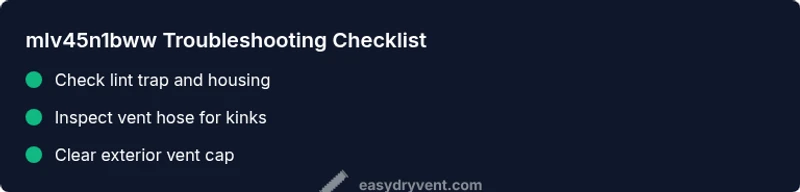
- Power down and unplug the dryer; safety first. - Remove and clean the lint trap and housing; reseat the screen securely. - Inspect the vent hose for kinks or crushing; straighten or replace as needed. - Clear exterior vent cap and surrounding debris; ensure the damper opens fully. - Run a short test cycle and observe airflow; if mlv45n1bww persists, proceed to more thorough vent cleaning or seek professional help.
Step-By-Step Fix for the Most Likely Cause
This section provides a structured, safe approach to restore airflow if the most likely cause is a clogged lint path. Follow these steps in order, pausing for safety if anything feels risky. If you’re unsure at any point, contact a professional rather than forcing access to internal components.
Additional Causes and How to Address Them
If the above fixes don’t resolve mlv45n1bww, further causes may include a partially blocked duct further inside the run or a failing blower motor or control board. In those cases, you’ll want to perform a more detailed inspection or call a qualified technician. Replacing a control board can cost significantly more than a vent cleaning, often ranging from $150–$400 in parts plus labor. A professional diagnosis will help narrow this down without guesswork.
Safety, Maintenance, and When to Call a Pro
Safety comes first. Always unplug the dryer before inspecting ductwork and never disassemble high-voltage components unless you’re trained. If you see signs of heat, melted wires, or smoke, shut it down immediately and call a pro. Regular vent cleaning every 1–2 years (or more often in homes with pets or heavy usage) helps prevent mlv45n1bww and improves efficiency.
Prevention Tips to Avoid mlv45n1bww in the Future
Set a maintenance reminder to clean lint traps after each load and schedule professional vent cleaning as needed. Use shorter, hotter cycles carefully to avoid overheating and ensure the exterior vent remains unobstructed. Periodically inspect the vent hose for cracks and replace if worn. A well-maintained system reduces energy use and lowers the risk of this fault.
Verdict and Next Steps
The mlv45n1bww error signals a venting/airflow issue that should be treated as urgent. Start with the easiest fixes (lint trap cleaning, vent hose inspection) and escalate to professional vent cleaning if needed. Easy DryVent recommends validating the entire vent path and scheduling a preventive cleaning to reduce recurrence.
Steps
Estimated time: 45-90 minutes
- 1
Power down and safety check
unplug the dryer, pull the plug, and verify the area is safe. Do not touch exposed wiring or internal components without training.
Tip: Keep a flashlight handy to inspect the vent path visually. - 2
Clean lint trap and housing
Remove the lint screen and vacuum or brush out the trap cavity. Wipe clean and reseat the screen securely.
Tip: Vacuum from the trap into the duct to loosen deeply embedded lint. - 3
Inspect vent hose for kinks
Check the entire hose for folds, kinks, or crushing. Replace if damaged and reroute to avoid sharp bends.
Tip: Use a straight run with minimal turns to maximize airflow. - 4
Clear exterior vent cap
Go outside and remove debris from the vent cap. Ensure the damper opens fully and there is no obstruction.
Tip: Wear gloves when handling outdoor caps to protect from sharp edges. - 5
Run a test cycle
Plug back in, set a short cycle, and observe airflow and temperature. If mlv45n1bww persists, document any signs of leakage or heat buildup.
Tip: Listen for a steady air flow and check for exhaust venting loudly. - 6
Decide on next steps
If the code reappears after these steps, plan professional vent cleaning or vent hose replacement. Budget: DIY costs $0-$25; professional service typically $100-$250.
Tip: Keep notes on what you checked and the results for the technician.
Diagnosis: Error mlv45n1bww appears on the display; the dryer stops and won't complete cycles
Possible Causes
- highClogged lint trap or housing
- highCrushed or restricted vent hose
- mediumBlocked exterior vent or vent cap
- lowControl board or sensor fault
Fixes
- easyClean lint trap, housing, and accessible duct
- easyStraighten or replace vent hose, check for kinks
- easyClear exterior vent cap and surrounding debris
- mediumTest run; if code persists, schedule professional vent cleaning
Common Questions
What does mlv45n1bww indicate?
mlv45n1bww indicates a venting/airflow fault detected by the dryer's diagnostic system. It usually points to airflow restrictions in the vent path or lint buildup. Follow the diagnostic flow and implement the quick fixes first.
mlv45n1bww is a venting fault indicating restricted airflow. Start with lint removal and vent inspection, then proceed to deeper cleaning if needed.
Can I fix mlv45n1bww myself?
Yes, many cases are solved with a simple lint trap clean, hose inspection, and outdoor vent cleaning. If the dryer continues to overheat or code persists, stop using it and call a professional to avoid safety risks.
Many cases can be fixed with lint cleaning and vent inspection, but if the code sticks, get a professional.
How much does vent cleaning cost?
DIY lint cleaning costs little to nothing, while professional vent cleaning typically runs from about $100 to $250, depending on accessibility and required cleaning depth.
Expect roughly one hundred to two hundred fifty dollars for professional vent cleaning.
Is mlv45n1bww dangerous?
Yes. A blocked vent increases the risk of overheating and fire. Treat it as urgent and avoid running the dryer until airflow is restored.
Yes—blocked vents can cause overheating and fire risk; shut it down until fixed.
When should I call a professional?
Call a professional if you notice heat, burning smells, smoke, or if the code persists after basic DIY fixes. A pro can diagnose control board or sensor faults that DIY can't safely resolve.
Call a pro if you see heat or the code keeps returning after basic fixes.
How often should vent cleaning be done?
At a minimum, have the vent system inspected or cleaned every 1-2 years, or more often with heavy usage or pets.
Aim for vent cleaning every couple of years, more often if you run many loads.
Watch Video
Key Points
- Inspect lint trap and vent path first.
- Prioritize vent hose integrity and exterior vent clearance.
- Escalate to professional cleaning if code persists.
- Maintain routine vent maintenance to prevent recurrence.