Is a Dryer Belt Easy to Replace? A DIY Guide
Discover whether is a dryer belt easy to replace, the tools you need, a clear step-by-step plan, safety tips, and how to verify your dryer runs smoothly again. Easy DryVent shares practical guidance for homeowners and DIY enthusiasts.


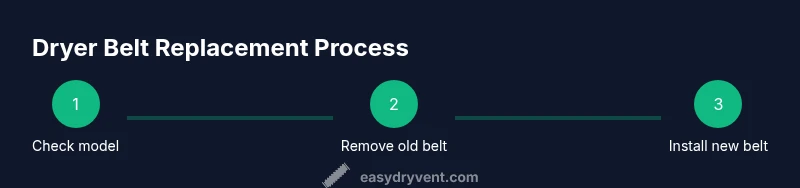
Replacing a clothes dryer belt is a doable DIY repair for most homeowners. You'll need a few basic tools, a replacement belt matched to your model, and a safe work area. The process involves disconnecting power, removing the drum, locating the belt, installing the new belt, and testing the dryer.
What the dryer belt does and signs it's worn
The dryer belt is the rubber loop that turns the drum by connecting the motor pulley to the drum itself. When the belt wears, you may notice slow drying, a squealing beat, or a drum that stops turning. If your dryer sounds like a car squeal or refuses to tumble, you might be facing a worn belt. From Easy DryVent's perspective, is a dryer belt easy to replace? Generally yes for many models, but it depends on belt routing and access. The straightforward answer is that with the right belt matched to your model and careful disassembly, you can complete the job with common hand tools. Clues that a belt needs replacement include frayed edges, missing ridges, or visible glazing. Regular inspection can prevent unexpected breakdowns and improve drying efficiency.
How replacement belts vary by model
Not all dryer belts are created equal. Belt width, length, the number of ribs, and the routing path differ by brand and model. Front-loading versus top-loading designs change how you access the belt area, and some belts wrap around an idler pulley while others involve a tension pulley. When planning replacement, confirm the exact belt part number for your model and purchase a belt that matches that specification. Easy DryVent emphasizes that a wrong belt can slip or fail quickly, so model-specific fit is essential for ease of replacement and reliable operation.
Safety first: unplug and prepare
Safety should always come first. Before touching any dryer components, unplug the unit from the wall outlet and move it away from the wall to gain space. If you’ve just used the dryer, allow it to cool to avoid burns. Use a well-lit, clean workspace and keep small screws contained in a labeled container. This is not the moment to rush; a careful, methodical approach reduces the chance of damaging other parts.
Preparation and planning: know your model
Before you begin, locate your dryer's model number and belt type. The model information is often on a data tag inside the door frame or on the back panel. With the model in hand, verify belt width and the correct routing path. Keeping the correct belt ready avoids mid-project trips to the parts store. Easy DryVent reminds homeowners that preparation reduces downtime and helps you complete the replacement more quickly and confidently.
Belt routing and orientation: why it matters
The belt must route around the drum and connect to the motor pulley in a specific way. A misrouted belt can slip, wear prematurely, or fail to turn the drum. Consult your model’s diagram or photograph your setup before removing the old belt. If you’re uncertain, take a photo at each stage so you can recreate the exact routing during reassembly.
Accessing the belt area on different designs
Some dryers require removing a back panel, while others demand accessing the belt through the front panel or by dropping the drum. The common thread is that you’ll need to free the drum to remove the worn belt and thread the new one into place. Expect to disconnect a few connectors or wires only if your model’s design explicitly requires it; otherwise, you can complete most access without unplugging any essential harnesses.
Installing the new belt: routing and tension
Position the new belt so it sits around the motor pulley first, then route it to the drum. Ensure the teeth or ribs align with the drum’s grooves as described by the belt manufacturer. Rotate pulleys by hand to confirm smooth movement before reassembling. A belt that’s too tight can overstrain bearings, while one that’s too loose can slip during dramatic drum turns.
Reassembly and testing: bring it all together
Reassemble the drum, front panel, and back panel as needed, then plug the dryer back in. Run a short test cycle without laundry to verify the belt tracks smoothly and the drum spins evenly. Listen for unfamiliar noises or rubbing sounds that indicate misalignment. If everything runs quietly and the drum spins freely, you’re ready for a full dry cycle.
Easy DryVent's verdict: practical maintenance reminders
Is a dryer belt easy to replace? For many models, the answer is yes when you approach the task with the right belt, the proper tools, and careful attention to routing. If you encounter persistent issues after replacement—like unusual noises, non-spinning drums, or belt glazing—pause the project and consider professional help. Regular inspections and timely belt replacements can extend dryer life and improve efficiency. Easy DryVent emphasizes safety first and recommends keeping a simple maintenance routine to prevent downtime.
Tools & Materials
- Replacement dryer belt (model-matched)(Check model number and belt length before purchasing)
- Phillips head screwdriver(Have #2 size handy)
- Flat-head screwdriver(Useful for prying panels gently)
- Shop vacuum or lint brush(Clean lint from housing before reassembly)
- Nut driver or small socket set(Helpful for cabinet screws)
- Work gloves(Protect hands while handling metal components)
- Flashlight or headlamp(Illuminates tight spaces inside the cabinet)
Steps
Estimated time: 45-90 minutes
- 1
Unplug and prepare the workspace
Unplug the dryer and move it away from the wall to access the back panel. Clear the area and remove any loose items. Having a helper can make handling panels easier and safer.
Tip: Label screws or store them in a small container to avoid misplacement. - 2
Remove the access panel to reach the belt area
Remove the required screws to open the belt access area. Some models require removing the front panel instead of the back. Keep track of screws and set them in order.
Tip: Take a quick photo of the panel orientation before removing it. - 3
Document belt routing before removal
Take photos or notes of how the belt sits around pulleys and the drum. This routing will guide the new belt installation and prevent misalignment.
Tip: Use a simple sketch if photos aren’t clear. - 4
Loosen and remove the drum belt
Loosen the tension pulley or remove the drum to access the belt. Gently slid the belt off the drum and motor pulley, inspecting for wear as you go.
Tip: Inspect for cracks, glazing, or fraying on the belt and pulleys. - 5
Install the new belt around the drum
Place the new belt around the drum, aligning it with the drum grooves. Route it through the pulleys according to your notes or photos. Ensure no twists are present.
Tip: Twists in the belt can cause noise and uneven operation. - 6
Re-seat pulleys and verify tension
Position the belt so it sits evenly on pulleys and drums. Manually rotate the drum to ensure smooth movement without catching. Use the tensioning method described in your manual if applicable.
Tip: Turn pulleys by hand to confirm smooth rotation before reassembly. - 7
Reassemble the dryer cabinet
Carefully reattach the front or back panels and secure all screws. Make sure the belt is not pinched or misaligned as you close the cabinet.
Tip: Double-check that all wires and connectors are reset to their original positions. - 8
Test the dryer and observe for issues
Plug the unit back in and run a short test cycle with no laundry. Listen for unusual noises and watch the drum spin evenly. If it runs smoothly, proceed with a full dry cycle.
Tip: If you hear grinding or rubbing, power down and recheck belt alignment.
Common Questions
Is replacing a dryer belt safe for beginners?
Yes, with proper precautions: unplug the dryer, keep the area dry, and follow a model-specific guide. If components are unfamiliar or you encounter wiring, stop and seek professional help.
Yes, it’s doable for beginners as long as you unplug the dryer and follow the model's steps. If anything looks confusing, pause and contact a professional.
What if the dryer belt is replaced and the drum still doesn’t spin?
There could be issues with the idler/pulley or motor. Re-check belt routing and tension, and inspect the pulleys for wear. If the problem persists, professional service may be needed.
If the drum won’t spin after replacement, re-check routing and pulleys; if it still won’t turn, consider a professional inspection.
How do I know which belt to buy for my dryer?
Find the model number on the dryer’s data tag and buy the belt that matches the exact part number or belt specification for that model. If in doubt, check the manual or manufacturer website.
Check the model number and buy the belt that matches the exact specification for your dryer model.
Can I replace the belt with the drum still in place?
Most models require removing the drum to access and replace the belt. Always follow the service manual for your specific design to avoid damaging components.
Usually you must remove the drum to replace the belt properly.
How long does a belt replacement typically take?
A typical replacement ranges from 45 to 90 minutes depending on model and access. Allow extra time for unfamiliar designs or difficulties.
Most people complete it in about 45 to 90 minutes with the right belt.
Are tools required beyond basic screwdrivers?
Most replacements use basic hand tools. Some models may require a Torx driver or a nut driver for specific screws.
Generally, basic tools are enough, but check your model for any special fasteners.
Watch Video
Key Points
- Is a dryer belt easy to replace? Yes, with the right belt matched to your model and careful routing.
- Preparation and model verification save time and prevent errors.
- Proper belt routing and tension are critical for long-term performance.
- Always prioritize safety: unplug, cool-down, and work in a clean space.