If Dryer is Not Drying Clothes: Quick Troubleshooting Guide
Urgent, practical guide to fix a dryer not drying clothes. Learn safe checks, airflow tests, and a step-by-step plan to restore performance and prevent future problems with Easy DryVent.


If dryer is not drying clothes, start with the easiest fixes: clean the lint screen, inspect and clear the vent hose, and check for a blocked vent or dryer vent obstruction. Many slow or non-drying results come from lint buildup or a clogged exhaust. If the problem persists after these steps, avoid running long cycles and call a professional for a safe, thorough inspection.
Why a dryer stops drying
When a dryer fails to dry clothes, the issue is rarely mysterious. Most often it’s an airflow problem or a heat delivery problem. The reader should focus on restoring proper airflow and ensuring the dryer can reach and sustain the required heat. According to Easy DryVent, the two most common culprits are lint buildup within the lint screen and a blocked vent path that restricts exhaust. Without adequate airflow, hot air can’t circulate, and moisture stays trapped in fabrics. As you diagnose, keep in mind that dryer performance is a system: lint management, vent integrity, heating, and control mechanisms all interact. Also consider the load size and cycle settings, because an overstuffed drum or a mismatched cycle can extend drying time even when airflow is clear. By approaching the problem as a system issue, you’ll identify root causes faster and reduce the risk of overheating or fire.
Quick safety checks you can perform safely
Before touching any components, unplug the dryer and move to a well-ventilated area. Safety first keeps you and your home protected while you troubleshoot. Here are immediate checks you can perform:
- Inspect the area around the dryer for heat or fumes; if you smell burning, stop and call a professional.
- Open the lint screen and inspect the lint trap for clogs; a clogged screen reduces airflow dramatically.
- Check the exterior vent cap outside your home for obstructions like leaves, birds, or a collapsing screen. A blocked cap can trap exhaust inside the ductwork.
- Confirm the drum turns smoothly and the dryer starts on a heat setting. If the drum won’t turn or the drum belt is broken, professional repair is likely needed.
- If you have a moisture sensor, avoid overloading the drum and ensure your clothing isn’t heavily coated with fabric softener, which can give a false dry signal. Pro tip: document any prior repairs and settings so you echo the pattern during diagnosis.
In many households, these quick checks will resolve the majority of non-drying symptoms. If not, proceed with the diagnostic flow below and prepare for a deeper inspection.
Most common causes and quick tests
There are several likely causes when clothes stay damp after a full dry cycle. Start with the simplest tests and progress to more involved checks as needed. Here are the top culprits and how to test for them:
- Lint buildup in the lint filter or inside the vent: Clean the lint screen thoroughly and check for lint behind it. A clogged lint trap can dramatically reduce airflow and baking heat in the exhaust.
- Blocked vent or ductwork: Visually inspect the vent hose for kinks or crushing and feel for any resistance when air flows. A blocked vent can prevent hot air from escaping, causing damp clothes.
- Overloading the drum or insufficient cycle selection: Remove some clothes and use a longer, warmer cycle if needed. Overloading decreases air movement and can trap moisture within fabrics.
- Heating system issues: If the dryer runs but the heat is weak or intermittent, the heating element or thermostat may be failing. This usually demands professional evaluation.
- Moisture sensor or electronic control problems: A faulty sensor can misread moisture levels and end cycles early. If your dryer deviates from normal cycle behavior, this may be the cause.
Key takeaway: start with airflow and heat delivery checks, then move to mechanical or electrical faults if needed. Easy DryVent emphasizes airflow as the most frequent root cause, followed by vent integrity.
Diagnostic flow at a glance
This section presents a practical workflow to diagnose drying problems without jumping to complex repairs. Use it as a decision tree during hands-on testing:
- Step A: Confirm airflow. If you can feel strong airflow at the external vent, airflow is likely adequate; otherwise, fix the vent path.
- Step B: Check heat delivery. If heat is absent or weak, inspect heating element or gas burner (electric vs gas) and thermostat for safety and function.
- Step C: Test for electrical faults. If the dryer starts but won’t heat, a thermal fuse or control board issue may exist.
- Step D: Assess load and settings. If the cycle is too short or the load too large, adjust and re-run a test cycle with a minimal load.
- Step E: Re-test after fixes. Run a 15–20 minute cycle with a small load to verify drying performance before returning to normal use.
If you find a component that you’re not confident in inspecting, stop and call a professional. This approach minimizes risk and protects your home.
Step-by-step fix for the top cause (lint blockage and airflow)
If airflow is blocked by lint buildup, follow these steps to restore exhaust efficiency and drying performance. This is the most common fix for not drying clothes:
- Unplug the dryer and move it away from walls to access the vent path. Inspect the lint screen and remove all lint; wipe the slot clean with a dry cloth.
- Detach the vent hose from the dryer and from the exterior wall or vent cap. Use a brush or vent cleaning kit to remove lint from the interior of the hose and the dryer outlet.
- Inspect the exterior vent cap for obstructions; clear debris and ensure the cap can open and close freely.
- Reconnect the vent and run a brief air test by starting a dry cycle with no clothes to listen for steady airflow.
- If you notice resistance or poor airflow, consider a professional vent cleaning service, especially if the duct is long or has multiple turns.
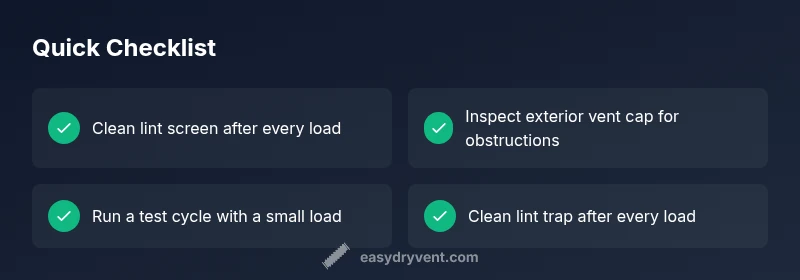
- Clean the lint filter thoroughly after every load, and never bypass the lint trap during operation.
- Re-run a normal load and observe drying time; compare to your previous cycles to assess improvement.
- Schedule regular vent maintenance every 1–2 years depending on usage and household conditions.
Tip: Wear a dust mask when cleaning ducts to avoid inhaling lint particles.
Maintenance tips to prevent future problems
To keep a dryer performing reliably, integrate simple maintenance into your routine. Regular lint management, vent inspection, and mindful loading can prevent the most common drying issues. Here are practical tips:
- Clean the lint screen after every load. A clogged filter is a major airflow limiter and a fire risk.
- Schedule annual vent inspections and cleaning by a professional if you have a long duct or multiple bends.
- Avoid overloading the drum; oversized loads restrict air movement and extend drying times.
- Use the correct cycle for fabric type and moisture setting. Improper settings can leave clothes damp despite a functional dryer.
- Listen for unusual sounds, check for overheating, and monitor drying times after maintenance. If drying times increase suddenly, investigate the vent and heat system immediately.
- Keep the area around the dryer tidy; remove lint from behind the dryer and ensure the surroundings are clear of flammable materials.
- If you own a moisture sensor dryer, occasionally wipe the sensor bars with a soft, damp cloth to remove residue that could cause false dry signals. Pro tip: note the dryer model and maintenance dates for future reference.
These steps help prevent a repetition of the exact problem: if dryer is not drying clothes you’re likely dealing with an airflow issue that becomes progressively worse if neglected.
Real-world scenarios and when to call a pro
Real-world scenarios illustrate common outcomes and when professional help is warranted. Scenario A involves a unit that runs but never heats properly; this points to a heating element issue or thermostat failure that a trained technician should service. Scenario B features an external vent cap blocked by debris or bird nests; this is a common cause of poor drying and requires vent cleaning and possibly duct repair. Scenario C focuses on persistent moisture after a complete cycle even after lint and vent cleaning, suggesting a moisture sensor fault or control board problem. In all cases, if you smell burning, hear unusual noises, or see smoke, shut off power immediately and contact a licensed technician. Ongoing maintenance and timely repairs reduce the risk of dryer fires and extend the life of your appliance. The Easy DryVent team recommends addressing airflow issues quickly and implementing prevention to keep your dryer performing reliably.
Steps
Estimated time: 45-75 minutes
- 1
Power down and prep
Unplug the dryer and move it to access the lint trap and vent. Prepare a flashlight and a brush to clean lint and debris.
Tip: Always unplug before working on electrical components. - 2
Inspect lint screen
Remove the lint screen and clean with warm water and a soft brush. Dry completely before re-installing.
Tip: Lint residue can hide small tears that let lint escape into the duct. - 3
Check the vent hose
Disconnect the vent hose from the dryer and the exterior wall. Look for kinks, crushing, or blockages and remove lint.
Tip: Use a vent cleaning brush or flexible rod to reach inside the duct. - 4
Inspect exterior vent cap
Go outside and inspect the vent cap for obstructions. Clear leaves, nests, and ensure the flap opens freely.
Tip: Remove any screen that traps lint if present; re-install securely. - 5
Test airflow
With everything reconnected, run a test cycle with no load to listen for a steady airflow and warm exhaust.
Tip: A strong, steady airflow indicates good exhaust health. - 6
Assess load and settings
Remove excess clothes and select a longer or hotter cycle suitable for the fabric. Avoid short, cool cycles for heavy fabrics.
Tip: Dryer efficiency improves with properly sized loads. - 7
Dryer heat check
If heat seems weak, consult the manual to locate the heating element or thermostat test points. If unsure, skip to professional service.
Tip: Do not attempt electrical elements without training. - 8
Verify outcome and plan next steps
Run a full normal load and compare drying times before using the appliance as usual. Schedule vent maintenance if results are unchanged.
Tip: Document results for future reference.
Diagnosis: Clothes come out damp after a full dry cycle
Possible Causes
- highBlocked lint screen or lint trap
- highVent or ductwork obstruction
- mediumOverloading the drum or wrong cycle
- lowHeating element or thermostat failure
- lowMoisture sensor or control board fault
Fixes
- easyClean lint screen and vent connections; test airflow with a quick cycle
- easyClear exterior vent cap and inspect duct for kinks or crushes; vacuum the duct if accessible
- easyReduce load size and choose a longer/heavier drying cycle; verify cycle settings
- mediumTest heating element/thermostat with a multimeter or professional diagnosis
- mediumCheck moisture sensor and control board for faults; replace if necessary via professional service
Common Questions
Why won't my clothes dry even after a tumble dry?
Most often the issue is airflow—lint filters or vents blocked. Check lint screen, then vent path, and test with a small load. If heat is present but airflow is restricted, address the duct or call a pro.
Most cases come from airflow issues like lint buildup or vent blockages. Check the lint screen and vent path first, then test with a small load.
Is a blocked lint screen dangerous?
A blocked lint screen reduces airflow and can cause overheating. Clean it after every load and inspect for tears or damage that could let lint escape into the ductwork.
Yes. A blocked lint screen can overheat and is a fire risk. Clean it after every load and inspect for damage.
Can a blocked vent cause a fire?
Yes. A blocked vent restricts exhaust, causing overheating that could ignite lint. If you smell burning or see excessive heat, stop using the dryer and call a pro.
Yes. A blocked vent can overheat and ignite lint. Stop and call a pro if you notice burning smells or excessive heat.
What if I overload the drum?
Overloading cuts airflow and lengthens drying time. Remove items and dry in smaller batches. This improves vent efficiency and drying results.
Overloading reduces airflow. Dry smaller batches to improve drying.
Should I DIY heating element problems?
Heating element issues can be hazardous. If you’re not trained, have a professional diagnose and replace heating components.
If the heater is faulty, call a pro rather than attempting DIY repairs.
How often should I clean the lint trap?
Clean the lint trap after every load. Deeper vent cleaning every 1-2 years or as needed based on usage and duct length.
Clean the lint trap after every load, and schedule vent cleaning every 1-2 years.
Watch Video
Key Points
- Inspect airflow first; lint and vent issues top the list.
- Always unplug before maintenance and follow safety steps.
- Reduce load size and select appropriate cycles for better results.
- Schedule regular vent cleaning to prevent future drying problems.