Why Your Dryer Isn't Drying and How to Fix It
Learn practical steps to diagnose why your dryer is not drying and restore performance safely. This guide covers lint buildup, vent blockages, and heating issues with a clear, step-by-step approach from Easy DryVent.


Most dryer not drying issues start with restricted airflow or a failing heat source. The most common culprit is a clogged lint screen or a blocked vent, which traps heat and prevents efficient drying. Quick fix: clean the lint filter, inspect and clear the vent hose, and run a timed cycle with a lower heat setting. If the problem persists, avoid overloading and call a professional.
Quick health check and why airflow matters
If your clothes come out damp or you notice heat building up without proper drying, you may be facing airflow problems. According to Easy DryVent, airflow is the single most important factor in a dryer's performance. Start with the simplest checks: ensure the lint screen is clean, the drum rotates freely, and the door seal is intact. These quick checks often uncover the root cause before you dive into more involved steps. A healthy airflow path lets hot air circulate, carries moisture outside, and prevents heat from lingering inside the drum. If airflow is restricted at any point along the path, clothes will never dry fully, even if the heating element is functioning correctly.
Common causes of a dryer not drying
There are several reasons a dryer may fail to dry clothes completely. The most frequent culprits fall into three buckets: airflow restrictions, heating problems, and load-related issues. Airflow issues include a clogged lint screen, lint buildup inside the vent hose, or a blocked exterior vent. Heating problems can involve a failed heating element, a faulty cycling thermostat, or a blown thermal fuse. Overloading a dryer or packing towels and heavy fabrics together can drastically reduce drying efficiency. Easy DryVent’s analysis shows airflow-related issues are the leading cause of damp-load problems, so start by checking the vent path and lint screen.
Inspecting the exhaust path: lint, vent, and duct
A thorough vent inspection is essential. Remove and clean the lint screen, then examine the vent hose for kinks, crush points, or disconnections. Use a vent brush or flexible rod to clear lint from the duct, moving from the lint screen toward the exterior vent. Check the exterior vent for blockages such as bird nests, leaves, or dust buildup. A simple test is to run the dryer on a short cycle and observe air flow at the exterior vent opening. If air is weak or patchy, you likely have a vent restriction that needs removal.
Diagnosing with a simple airflow test
Conduct a basic airflow test to locate where airflow is restricted. With the lint screen removed, run a short cycle on high heat and stand by the exhaust vent outside. A strong, steady flow of warm air indicates good airflow; a weak breeze points to a blockage further down the line. If the air is strong at the vent but clothes stay damp, the issue is more likely heat-related. Document the results and compare across tests.
Step-by-step fixes for the most common cause
Step 1: Unplug the dryer and remove the lint screen. Clean it thoroughly with warm soapy water and a stiff brush, then dry completely. Step 2: Inspect the vent hose for lint buildup—disconnect and vacuum or brush out lint from both ends. Step 3: Clear the exterior vent opening, ensuring it opens freely to the outside. Step 4: Reconnect everything, run a short test cycle, and confirm airflow is reaching the exterior vent. Step 5: If airflow is good but clothes still take long to dry, inspect the heating system: check for tripped breakers, test the element with a multimeter if you have the tools, or schedule service. Step 6: Avoid overloading; dry similar fabrics in smaller batches and allow space for air to circulate.
Safety, prevention, and when to call a pro
Safety first: always unplug the dryer before inspecting electrical components or ducts. Do not run the dryer with a damaged power cord or if you smell burning insulation. Regular maintenance—including lint trap cleaning after every load, annual vent inspection, and prompt replacement of worn ducts—dramatically reduces fire risk and keeps performance high. If a test reveals a faulty heating element, blown thermal fuse, or inconsistent cycling, contact a licensed technician.
Quick maintenance routines to prevent future clogs
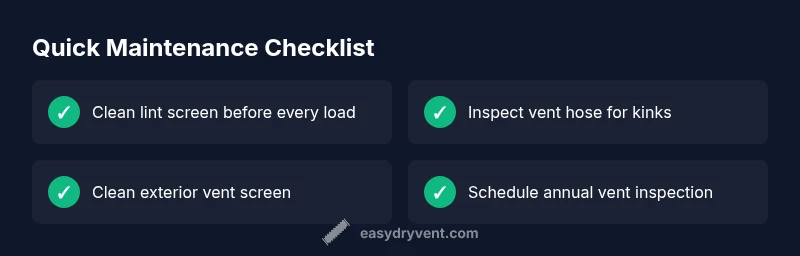
- Clean the lint screen before every load to maintain airflow.
- Inspect and clean the vent hose monthly, especially if you run high-lint loads like towels or bedding.
- Schedule professional vent cleaning annually or as recommended by local codes.
- Use appropriately sized loads and avoid mixed heavy fabrics with light fabrics.
- Run a dryer with a vent cover outdoors to ensure a clear exhaust path.
Steps
Estimated time: 60-90 minutes
- 1
Power down and remove the lint screen
Unplug the dryer for safety. Remove the lint screen and wash it with soap and water to remove built-up residue. Dry completely before re-installing.
Tip: Clean lint screen with a soft brush to loosen stubborn fibers. - 2
Inspect the vent hose for obstructions
Detach the vent hose from the dryer and the wall, then inspect for kinks, crush points, or lint buildup. Use a long brush or vacuum attachment to clear the interior.
Tip: Work in a well-lit area and avoid forcing lint through bends. - 3
Check the exterior vent and screen
Go outside to verify the vent opening is clear. Remove any obstructions and ensure air flow is visible when the dryer runs on a short cycle.
Tip: Close the damper manually if it doesn’t open freely to avoid backdrafts. - 4
Run a test cycle to evaluate airflow
Reconnect everything and run a 15-minute cycle with no heavy fabrics. Observe airflow at the exterior vent and note any damp residuals in clothes.
Tip: If air is weak, the blockage is likely inside the duct. - 5
Assess heating performance
If airflow is good but clothes aren’t drying, check electrical supply and heating components. Confirm the circuit breaker hasn’t tripped and test the heating element if you’re comfortable with electrical testing.
Tip: Never touch live wiring; call a pro if unsure. - 6
Adjust loads and re-test
Dry smaller, evenly distributed loads. Seal the door and run a standard cycle to confirm consistent results.
Tip: Avoid mixing towels with t-shirts in the same load.
Diagnosis: Dryer not drying (clothes come out damp or excessive heat with poor airflow)
Possible Causes
- highRestricted airflow due to lint buildup in lint screen
- highBlocked vent hose or exterior vent
- mediumFaulty heating element or cycling thermostat
- lowOverloading or improper load distribution
Fixes
- easyClean lint screen before each load; inspect vent hose for kinks or crush points
- easyVacuum and brush lint from ducts; ensure exterior vent is clear and unobstructed
- mediumTest the heating system (element, thermostat, thermal fuse); replace components if defective
- easyReduce load size and distribute items evenly to allow free air flow
Common Questions
Why is my dryer not drying even after cleaning the lint screen?
If cleaning the lint screen doesn't fix the problem, check the vent path for blockages and inspect the exterior vent. Airflow should be strong at the exterior vent; a weak flow indicates a downstream blockage or vent issue.
If cleaning the lint screen doesn't fix it, check the vent path for blockages and ensure strong airflow at the exterior vent.
Can a clogged vent cause damp clothes even if the lint screen is clean?
Yes. A clogged vent reduces airflow, preventing heat from drying clothes efficiently. Clear the vent hose and exterior vent, then re-test with a shorter cycle.
Yes. A clogged vent reduces airflow and stops effective drying; clear the vent and re-test.
Is a faulty heating element the main cause of not drying?
A failing heating element or thermostat can prevent clothes from drying even if airflow is good. If you suspect this, test the element or call a pro for a proper diagnostic.
A bad heating element or thermostat can stop drying even with good airflow. Consider testing or contacting a technician.
Can overloads cause damp clothes in a dryer?
Overloading blocks air circulation and causes damp results. Dry smaller batches and rearrange items to improve airflow.
Overloading can keep clothes damp; try smaller batches for better airflow.
Do moisture sensors affect drying performance?
Yes. Damaged or coated moisture sensors can misread moisture levels, causing extended drying times. Clean or replace sensors if needed.
Moisture sensors can affect drying; clean or replace if misreading moisture.
When should I call a professional?
If airflow is clear but drying remains poor, or you encounter electrical issues, safety hazards, or unfamiliar smells, contact a licensed technician.
If airflow is fine but drying stays poor or you sense electrical issues, call a professional.
Key Points
- Improve airflow first: lint screen and vent path are key.
- Test heating components if airflow is clear but drying remains poor.
- Avoid overloading and distribute laundry evenly for best results.
- Regular maintenance prevents future clogs and fires.
- Call a pro for electrical or safety-related issues.