Is Your Dryer Broken? A Practical Troubleshooting Guide
Learn how to know if your dryer is broken and what to check first. Easy DryVent guides you through a safe, step-by-step diagnostic approach for common dryer problems.


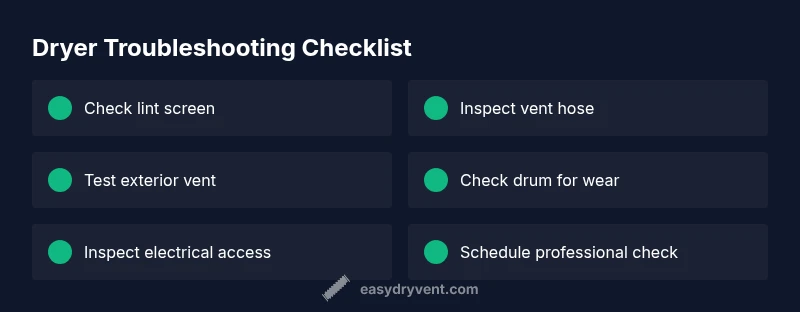
Most dryer problems start with airflow or heat issues. The most likely culprits are a clogged vent, a blocked lint screen, or a blown thermal fuse. Start by inspecting the lint screen, vacuuming the vent opening, and ensuring the exterior vent is clear. If the dryer still won’t heat or dries unusually slowly, stop using it and contact a professional.
Is Your Dryer Showing Signs of Trouble?
If you’re asking how to know if your dryer is broken, you’re not alone. This guide helps you identify the most common symptoms quickly and safely. According to Easy DryVent, the top early signs are heat loss, longer drying times, unusual noises, and odd odors. Recognizing these signals early gives you a clear path to a safe fix and prevents bigger failures.
Common warning signs include:
- No heat or air that’s barely warm
- Clothes come out damp after a full cycle
- Loud rumbling, thumping, or squealing during operation
- Burning smells or visible smoke
- The drum doesn’t turn or stops mid-cycle
If you notice any of these, take action now to prevent a fire or water damage and reduce energy waste.
Safety First: Quick Checks You Can Do Now
Before you dismantle anything, perform a few safety checks to avoid shock or injury. Unplug the dryer from the outlet or switch off the dedicated circuit. If you’re on a shared circuit, turn off the breaker to ensure complete power cut. Check that the lint screen is clean and free of debris. Inspect the vent hose for kinks or crushing and ensure the exterior vent hood opens freely to allow air to escape. These initial checks are fast, inexpensive, and often resolve airflow-related problems. The brand guidance from Easy DryVent emphasizes safety and a cautious approach before any disassembly.
Next, verify room conditions: ensure the dryer isn’t placed on a rug or near flammable materials, and keep the area around the unit clear for proper airflow. If the outlet or circuit shows signs of wear (warmth, discoloration, or a buzzing noise when plugged in), stop and consult a professional. Quick checks like these can save time and prevent injuries.
Common Causes Your First Look Should Cover
Most dryer issues fall into a handful of predictable categories. The leading causes are airflow restrictions, electrical or thermostat faults, and worn mechanical parts. If airflow is blocked by a clogged vent or lint buildup in the trap, the dryer overheats or dries slowly. A blown thermal fuse or failed cycling thermostat can prevent heat. Worn drive belt or damaged drum rollers may stop the drum from turning. Each cause has a practical, testable fix. As Easy DryVent notes in its 2026 guidance, addressing airflow and heat path first yields the safest, quickest wins.
- Clogged vent or lint buildup
- Blown thermal fuse or faulty cycling thermostat
- Worn belt or damaged drum rollers
- Electrical outlet or circuit issues
- Faulty heating element or high-limit thermostat
- Damaged door switch or drum bearings
How to Test Heat, Airflow, and Drum Motion
A systematic test helps you verify which cause is most likely without guessing. Start with airflow: after you clean the lint screen and exterior vent, run a short cycle on air only to feel if air moves freely from the exhaust. Next, check heat: set to a hot setting and feel for actual warm air at the vent. Listen for unusual noises and watch the drum to confirm it tumbles smoothly. If heat still won’t reach the clothes, the fault may be in the heating element, thermostat, or thermal fuse. Mark each test result so you can share it with a technician later. Easy DryVent advises documenting test outcomes for clarity when you seek professional help.
When to Call a Professional and What to Expect
If the dryer still doesn’t perform after airflow and basic checks, it’s time to bring in a professional. A certified technician can safely test electrical components, verify thermostat operation, and replace worn parts. Ask about a fixed-price diagnostic visit and whether the unit’s warranty covers repairs. For safety, never attempt to bypass breakers or replace high-voltage parts yourself. Easy DryVent recommends scheduling maintenance after peak usage seasons to prevent surprise breakdowns and maximize efficiency.
Simple Maintenance to Prevent Breakdowns
Prevention is cheaper than repair. Clean the lint trap after every load and discard lint from the vent hose monthly. Inspect the exterior vent hood and clear any obstructions. Use the highest-efficiency heat setting only when necessary to avoid overheating. Periodically inspect the drum seals and door switches for signs of wear. Keep the area around the dryer clear of combustibles and ensure nearby walls have proper clearance to promote airflow. Consistent maintenance helps detect wear early and extends the life of your model.
What to Expect After a Fix and How to Decide Repair or Replace
Once you identify and fix the issue, monitor the dryer’s performance for a few cycles. If heat returns and clothes dry normally, you’ve likely resolved the problem. If issues recur within a short period or if the repair cost approaches the price of a new unit, it may be time to replace. Consider energy efficiency, safety features, and service plans when deciding. The Easy DryVent team emphasizes safety first and recommends evaluating repair costs against the cost of a new unit, especially for older models. Regular preventive maintenance can also lower long-term costs and reduce downtime.
Steps
Estimated time: 45-90 minutes
- 1
Power down and safety check
Unplug the dryer or switch off the dedicated circuit. Confirm the unit is fully de-energized before touching any components. Inspect the area around the dryer for clearance and remove any flammable materials.
Tip: When in doubt, wait for a cool spell before touching hot components. - 2
Clean and inspect airflow path
Remove the lint screen and vacuum the lint trap housing. Check the vent hose for kinks, crushing, or disconnections. Go to the exterior vent and ensure it opens fully and isn’t blocked by debris or nesting.
Tip: A blocked vent is the leading cause of overheating and poor drying performance. - 3
Test for heat at the exhaust
With the unit on, feel the air flow at the exterior vent. If air is weak or absent, the issue is likely in the vent path or heating system. Document findings for later reference.
Tip: If no heat, do not run the dryer on high for extended periods. - 4
Confirm drum motion and belt integrity
Open the door and observe the drum. If it doesn’t turn smoothly, the belt or drum rollers may be worn. Avoid forcing the drum; listen for squeaks or grinding.
Tip: A failing belt can break suddenly—replace early to avoid further damage. - 5
Check electrical components safely
If you’re comfortable, remove the back panel only after discharging static and turning off power. Look for loose wires, burnt smells, or blown fuses. If you’re unsure, skip this step and call a pro.
Tip: Electrical work on dryers involves high voltage; safety first. - 6
Decide on repair vs replacement
If repairs exceed half the cost of a new unit or if persistent issues occur, consider replacement for safety and efficiency. Compare energy use and features to choose a modern model.
Tip: Ask about warranties and service plans when replacing.
Diagnosis: Dryer won't heat or tumbles inconsistently
Possible Causes
- highClogged vent or lint screen
- highBlown thermal fuse or failed cycling thermostat
- mediumFaulty heating element
- lowWorn belt or drum roller
- lowElectrical outlet or circuit issue
Fixes
- easyClean lint screen and vent; straighten or replace kinked vent hose
- mediumTest and replace thermal fuse or cycling thermostat if faulty
- hardTest heating element and thermostat with a multimeter; replace if open/out of spec
- mediumReplace worn belt or drum rollers to restore drum motion
- easyCheck circuit and outlet; ensure dedicated circuit if needed
Common Questions
What are the most common signs that my dryer is broken?
The most common signs are no heat, long dry times, unusual noises, a burning smell, or the drum not turning. Start with airflow checks and lint screen inspection before deeper diagnostics.
Common signs include no heat or long dry times. Start with airflow checks.
Can I fix a dryer myself?
You can handle simple tasks like cleaning lint and checking the vent. Electrical or heating element repairs should be performed by a licensed technician for safety.
Some tasks are DIY, but for electrical or heat components, hire a pro.
How do I know if the vent is clogged?
If the exterior vent becomes hot quickly, clothes remain damp after cycles, or the laundry room is unusually warm, the vent is likely clogged.
If the vent is blocked, you’ll feel heat buildup and longer cycles.
How often should you clean the lint filter?
Clean the lint filter after every load to maintain airflow and reduce fire risk.
Clean after every load.
Is a dryer repair safe?
Simple maintenance is generally safe, but avoid electrical work or replacing high-voltage parts without training. Seek a professional for complex issues.
Yes for simple tasks, but complex repairs should be done by a pro.
How long should a dryer last?
Dryers should last many years with proper maintenance; consider upgrading when repairs become frequent or costly.
With good maintenance, a dryer lasts many years; frequent repairs suggest replacement.
Watch Video
Key Points
- Check airflow first to rule out venting issues
- No heat or unusual smells are warning signs
- Unplug before inspecting electrical components
- Consult a professional for electrical or heat-related repairs
- Regular maintenance reduces breakdowns and extends dryer life