Dryer Not Heating or Drying? Quick Troubleshooting Guide
Urgent, practical guide to diagnose and fix a dryer not heating or drying, with step-by-step checks, safety tips, and when to call a pro. Easy DryVent brings expert guidance for homeowners.


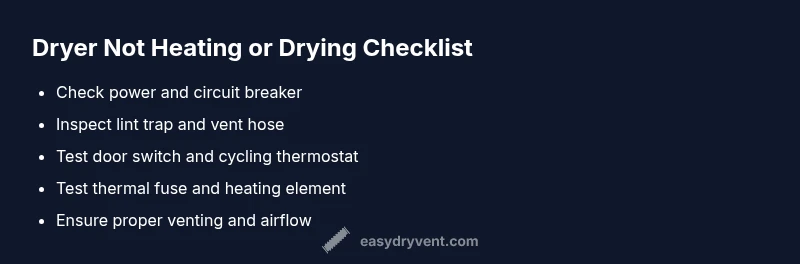
The most likely causes of a dryer not heating or drying are a blown thermal fuse, a faulty heating element, or a blocked vent. Start with the simplest checks: ensure the dryer is plugged in and receiving power, inspect the lint trap and vent hose for blockages, and confirm the circuit breaker hasn’t tripped. If these basics don’t resolve the issue, proceed with the diagnostic flow and step-by-step fixes below.
Why a Dryer Not Heating or Drying Happens
When a clothes dryer fails to heat or dry, it disrupts daily laundry routines and can signal safety risks if ignored. The root causes range from basic power issues to insulating blockages and defective components. The first response is to confirm the dryer is receiving power and the door switch is functioning. Then, inspect airflow from the lint trap to the vent, as poor ventilation can cause overheating and automatic shutdowns. According to Easy DryVent, many heating failures begin with airflow problems or simple electrical faults. A calm, methodical approach helps homeowners avoid dangerous shortcuts and costly repairs. By treating the problem as a system—power, airflow, and heat path—you can pinpoint the culprit and decide whether you can safely DIY or need a professional service.
In practice, start with power and wiring checks, then move to safety-related components like the thermal fuse. These steps are designed for homeowners and DIY enthusiasts seeking practical dryer maintenance guidance without unnecessary risk. With careful testing and adherence to safety practices, you can restore heating performance or determine that service is required.
Why a Dryer Not Heating or Drying Happens Again
When diagnosing a dryer that won’t heat, it’s essential to differentiate between a complete lack of heat versus weak drying capability. Some dryers run but only produce lukewarm air, which points to a heat path problem rather than an electrical fault. Common culprits include a blown thermal fuse, a defective heating element, a malfunctioning cycling thermostat, or restricted airflow due to lint build-up in the vent system. Regular maintenance, such as lint filter cleaning and venting checks, can dramatically reduce the risk of repeated failures. Easy DryVent emphasizes addressing airflow issues as a high-priority preventive measure since they are the most frequent cause of heat-related shutdowns.
Safety First: How to Inspect Without Risk
Before touching any internal components, unplug the dryer and, if it's a gas model, ensure the gas supply is safely shut off. Do not rely on a single test to determine a fault; instead, perform a sequence of checks that minimize exposure to high temperatures and moving parts. Wear protective gloves when inspecting ducts and access panels, and keep children and pets away from the workspace. If you smell burning or notice damaged wiring, stop immediately and seek professional service. The safety-first mindset is essential for any DIY troubleshooting and aligns with Easy DryVent's guidance on hazardous appliance repair.
Quick Checks You Can Do in 10 Minutes
- Confirm the outlet provides power and the circuit breaker is not tripped.
- Clean or replace the lint filter and inspect the vent hose for kinks or blockage.
- Check the door switch and drum light to ensure the door is properly sensing closure.
- Inspect for unusual smells or visible signs of overheating around the vent hood.
- If you have a multimeter, test for continuity on the thermal fuse and heating element in a safe, unplugged state.
If these quick checks don’t restore heat, you’re moving into targeted diagnostics that may require component testing or professional service. Always consult the owner’s manual for model-specific guidance, and consider Easy DryVent’s recommended safety practices when handling electrical components.
Diagnostic Checks Before Disassembly
After completing basic checks, focus on three major paths: power/electrical, heat path components (fuse, thermostat, heating element), and airflow. Use a process of elimination: if power is present but heat is not, suspect heat-path components; if the blower isn’t moving air, suspect vent or blower assembly. Document results as you go so you can communicate clearly with a technician if needed. This structured approach reduces guesswork and speeds up repair decisions. Remember, if you’re not comfortable testing electrical components, seek professional help.
Prevention Tips to Keep Your Dryer Heating Efficiently
- Clean the lint trap after every load and vacuum the vent opening periodically.
- Schedule annual vent cleaning if you notice reduced airflow or longer drying times.
- Use the appropriate heating setting for fabrics to avoid overheating the drum or vent.
- Replace damaged power cords or outdated fuses promptly to prevent electrical hazards.
- Keep the area around the dryer clear of dust and flammable materials to minimize fire risk.
A routine maintenance habit dramatically reduces the likelihood of a sudden heat-related breakdown. Easy DryVent’s guidance emphasizes proactive care to extend your dryer's life and ensure safe operation.
Steps
Estimated time: 30-60 minutes
- 1
Power check and safety isolation
Unplug the dryer and inspect the power cord for damage. If you have a gas model, ensure gas supply is off during any internal inspection. Verify the outlet is delivering 120V, and test the circuit breaker to ensure it hasn't tripped. Restore power only when it is safe to do so.
Tip: Always unplug before touching any internal components. - 2
Check outlet and circuit integrity
Plug the dryer into a known-good outlet or try a different outlet on the same circuit. If the breaker trips or fuse blows, address the circuit issue first or consider moving the dryer to a dedicated circuit with professional guidance.
Tip: Use a failure-safe outlet with a dedicated circuit if available. - 3
Inspect lint trap and vent hose
Remove the lint trap, clean it thoroughly, and check the vent hose for kinks or crushing. Ensure the exhaust vent outside is clear and free of obstructions. A blocked vent is a common cause of overheating and heat shutdown.
Tip: Run a vent brush through the duct to remove stubborn buildup. - 4
Test the door switch and cycling thermostat
With the unit unplugged, access the door switch and thermostat. Use a multimeter to test continuity; replace if there is no continuity when the switch is closed or the thermostat cycles abnormally. This confirms whether heat is being allowed to reach the drum.
Tip: If you’re not comfortable with electrical testing, consult a professional. - 5
Check the thermal fuse and heating element
Locate the thermal fuse and heating element assembly. Test the fuse for continuity; a blown fuse indicates an overheat condition. Inspect the heating element for breaks or breaks in the coil. Replace as needed to restore heat path.
Tip: Replace both fuse and element only if you’re confident in safe wiring practices. - 6
Test run and observe
Reconnect power, select a heat setting, and run a short cycle to verify heat returns. If the dryer still doesn’t heat, document findings and contact a technician for a deeper diagnosis.
Tip: Keep a log of failures and tests to share with a repair pro.
Diagnosis: Dryer runs but does not heat or dries clothes only partially
Possible Causes
- highPower issue or outlet miswiring
- highBlown thermal fuse or failed high-limit thermostat
- mediumFaulty heating element or relay
- mediumVentilation blockage or restricted duct
- lowDoor switch or timer fault
- lowDamaged power cord or loose connections
Fixes
- easyReset the circuit breaker and ensure the outlet has power
- mediumTest and replace the thermal fuse/high-limit thermostat if open or defective
- hardReplace or repair the heating element or relay as needed (professional recommended)
- easyClear lint buildup and inspect/replace vent duct and hood if restricted
- mediumTest and replace a faulty door switch or timer if indicated by symptoms
- mediumInspect and replace damaged power cord or loose connections
Common Questions
Why is my dryer running but not heating?
If your dryer runs but doesn’t heat, the issue is usually in the heat path: a blown thermal fuse, faulty cycling thermostat, or a blocked vent. Start by checking airflow and power; proceed to fuse testing if safe.
A dryer that runs without heat is typically caused by a heat path issue like a blown fuse or a blocked vent. Check airflow first, then test the fuse if you’re comfortable, and call a pro if needed.
Can a clogged vent cause the dryer not to heat?
Yes. A blocked vent restricts airflow, causes overheating, and can trigger safety shutoffs that stop heating. Clean the lint trap and vent regularly to prevent this.
Yes—blocked vents reduce airflow, overheat the dryer, and can stop heating as a safety measure. Regular vent cleaning helps prevent this.
Is it safe to test the thermal fuse myself?
Testing a thermal fuse requires accessing live electrical components. If you’re not experienced with multimeters and wiring, contact a professional. Never bypass a fuse.
Testing a thermal fuse can be dangerous if you’re not experienced. It’s best to hire a pro and never bypass the fuse.
What maintenance prevents dryer heating problems?
Regular lint removal, vent cleaning, and using appropriate heat settings help maintain proper airflow and heat. Schedule annual vent inspections for gas and electric models.
Regular lint removal and vent cleaning keep airflow steady and heat consistent. Schedule annual checks for safety.
When should I call a professional?
If you’ve exhausted basic checks, tested safety components, and the dryer still won’t heat, it’s time to call a professional for a safe, thorough diagnosis.
If basic checks don’t fix it, call a pro for a thorough diagnosis and safe repair.
Watch Video
Key Points
- Verify power and safety before any inspection
- Address airflow issues first to prevent overheating
- Test thermal fuse and heating path with care
- Call a pro if you’re unsure about electrical testing
- Maintain regular vent cleaning to prevent future failures