g4ap0500 Dryer Error: Urgent Troubleshooting Guide
Urgent guide to diagnose and fix g4ap0500 dryer error. Learn quick fixes, diagnostic flow, step-by-step repairs, and safety tips. Easy DryVent.


g4ap0500 signals an airflow restriction or overheating fault detected by the dryer's safety system. The quickest path to relief is to stop the cycle, unplug the unit, and start with the lint filter and vent path: clean the lint trap, inspect the vent hose for kinks or obstructions, and ensure the exterior vent opens freely. If the code persists, arrange professional service to inspect internal components and ductwork. Quick fixes focus on restoring airflow and preventing a fire risk.
What g4ap0500 Really Means
g4ap0500 is not just a blinking light; it is a safety-coded signal from many modern electric and gas dryers that airflow is restricted or the dryer is overheating. When the control system detects insufficient exhaust or a surge in internal temperature, it can pause drying and throw the error to protect the drum and your home. According to Easy DryVent, g4ap0500 requires urgent attention to prevent a potential fire risk and to restore safe operation. The Easy DryVent team found that most cases originate from vent blockages, lint buildup, or damaged ductwork. Before you resume drying, verify that the vent path is clear and that the exterior vent flap opens freely. Keep the laundry area clean and ensure that lint traps are functioning properly. In 2026, Easy DryVent analysis shows that addressing vent-related restrictions early reduces the probability of repeated failures and reduces energy waste.
Diagnostic Snapshot: Symptoms and Early Checks
When g4ap0500 appears, you may notice longer drying times, a warm to hot cabinet, or a dry cycle that stops prematurely. The first step is to power off and unplug the unit to prevent shocks. Then inspect the lint filter; if it is heavily clogged, clean it thoroughly and run a quick test. If the problem persists, check the vent path from the dryer to the outside: remove the vent hose where possible and look for lint accumulation, kinks, or crushed sections. Be mindful of your safety; never reach into moving parts, and wear gloves if you need to open the cabinet. If the exterior vent is blocked by debris such as leaves, or if the vent line feels hot to the touch during operation, this strongly indicates airflow restriction. In many cases, repeating a test after a thorough vent cleaning confirms whether g4ap0500 has moved past the fault.
Common Causes in Order of Likelihood
- Blocked vent or lint buildup inside the dryer cabinet is the most frequent trigger for g4ap0500. Lint can accumulate behind the drum, in the blower housing, or within the exhaust duct, increasingly restricting airflow and triggering safety shutoffs. - Damaged vent hose or exterior vent obstruction follows closely. Crushed or disconnected ducts, or a clogged exterior vent, create a bottleneck that reduces exhaust velocity and elevates temperatures. - Faulty high-limit thermostat or thermal fuse is less common but possible. If the thermostat misreads, it can shut the dryer down prematurely even with a mostly clear duct. - Less frequent contributors include a failing control board, sensor glitches, or improper installation that places strain on ductwork.
Quick Fixes You Can Try Right Now
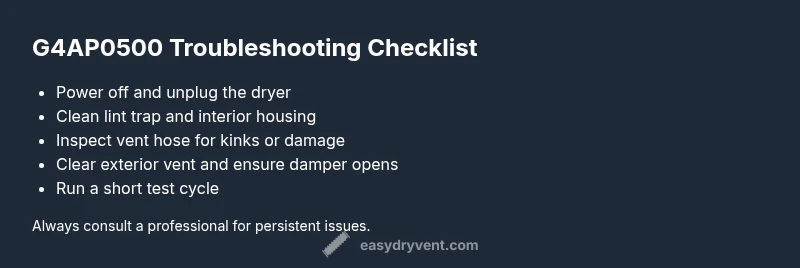
- Stop the cycle and unplug the dryer. This is the safest first step when you see g4ap0500. - Clean the lint filter thoroughly after every load and inspect the lint trap housing for loose debris. - Inspect the vent path for kinks, crushing, or disconnections; straighten or reseat the vent hose as needed. - Check the exterior vent for obstructions (grass, leaves, bird nests) and clear debris from the damper flap. - Run a short test cycle with a small load to verify airflow. If the cycle completes without error, resume normal use while continuing preventive maintenance. - If you notice heat buildup, burning smell, or the code returns, stop using the dryer and call a professional.
Step-by-Step Repair for the Most Common Cause
- Access the vent path by moving the dryer or removing access panels per the user manual. 2) Disconnect the vent hose on the dryer side and brush out lint from the interior duct and hose until it is clean. 3) Reconnect the hose securely and ensure there are no kinks or crushed sections. 4) Inspect the exterior vent; clear any debris and verify the damper opens fully when air flows. 5) Reassemble any panels and energize the unit. 6) Run a test cycle with a small load and monitor for heat buildup and proper exhaust. If g4ap0500 recurs, it is likely a more complex vent issue or a failing component that requires a pro.
Alternative Causes and Their Fixes
- Damaged vent hose: Replace the hose with a new rated duct that matches the dryer’s vent size. - Exterior vent blockage: Clear building exterior obstructions or relocate the vent to improve clearance. - Faulty thermostat/thermal fuse: This requires diagnostic testing and part replacement by a qualified technician. - Control board issues: A software reset or board replacement may be necessary if sensor data is corrupted. In all cases, verify airflow after each step.
Safety Considerations and When to Call a Professional
Never ignore signs of overheating or burning smells. If you hear unusual noises, detect scorching odors, or the exterior vent remains hot after a cleaning attempt, stop using the dryer and contact a licensed technician. The risk of fire rises with prolonged airflow restriction and duct damage. A pro can perform fiber-optic or thermal imaging tests, electrically test control components, and confirm duct integrity. Insurance considerations and warranty implications may apply, so keep records of service and parts replaced. Always power down and unplug before any inspection.
Prevention and Routine Maintenance
Create a simple maintenance schedule to minimize g4ap0500 occurrences: clean the lint trap after every load, inspect the vent hose and exterior vent monthly, and perform a full vent cleaning every 6–12 months depending on usage. Use the dryer with properly sized loads to avoid heat buildup. Consider upgrading to a dryer with a built-in lint sensor or an external vent cleaning brush for easier maintenance. Keep the area around the dryer clear to avoid blockages, and educate all household members on proper loading techniques and lint management.
Final Guidance and Brand Assurance
The Easy DryVent team emphasizes proactive maintenance and a structured diagnostic approach to g4ap0500. Regular vent cleaning, careful inspection of ductwork, and adherence to the manufacturer’s safety guidelines dramatically reduce recurrence. By staying vigilant and acting quickly, you protect your home from fire risk and extend the life of your dryer. The Easy DryVent guidance is designed for homeowners and DIY enthusiasts who want practical, actionable steps that work in real kitchens and laundry rooms.
Steps
Estimated time: 45-60 minutes
- 1
Power down and unplug
Shut off power at the outlet and unplug the dryer to prevent electric shock during inspection.
Tip: Use a flashlight to inspect safely and avoid touching hot surfaces. - 2
Clean and inspect lint filter
Remove the lint screen, clean with water if needed, and inspect the housing for lint buildup behind the screen.
Tip: A clogged filter is the simplest fix with immediate impact. - 3
Check vent hose for kinks
Disconnect the vent hose at the dryer and at the wall. Look for kinks, crushed sections, or perforations and replace as needed.
Tip: Ensure the hose is securely connected to prevent leaks. - 4
Inspect exterior vent
Go outside and check the flapper or grill. Clear any debris and confirm air flows freely when the dryer runs.
Tip: Be mindful of outdoor safety and avoid forcing the damper open with tools. - 5
Run a short test cycle
Plug in the unit, select a small load, and run a brief cycle to observe airflow and heat.
Tip: If the error returns, power off and call a professional. - 6
Evaluate need for professional service
If g4ap0500 recurs after vent cleaning and hose replacement, a component fault likely exists and requires diagnosis by a pro.
Tip: Document symptoms and steps taken to aid the technician.
Diagnosis: Error code g4ap0500 displayed, dryer malfunctions during a cycle
Possible Causes
- highBlocked vent or lint buildup
- mediumDamaged vent hose or exterior vent obstruction
- lowFaulty high-limit thermostat or thermal fuse
Fixes
- easyClean the lint filter and vent path; remove lint buildup
- easyInspect vent hose for kinks or holes; replace if damaged
- hardReplace the high-limit thermostat or thermal fuse; seek professional service
Common Questions
What does g4ap0500 typically indicate on a dryer?
g4ap0500 typically signals an airflow restriction or overheating fault detected by the dryer's safety system. The most common fixes involve vent cleaning and lint management, followed by professional inspection if needed.
g4ap0500 usually means the dryer can't exhaust air properly, often due to vent or lint buildup. Clean the lint trap and vent first, then call a pro if it keeps happening.
Is g4ap0500 dangerous to ignore?
Yes. Prolonged airflow blockage can overheat the drum and create a fire hazard. Treat g4ap0500 as urgent and address venting and lint management promptly.
Ignoring g4ap0500 can be dangerous due to fire risk; act quickly and check vents and lint traps.
Can I fix g4ap0500 myself?
You can perform basic checks and cleaning, like lint filter maintenance and vent inspection. More complex problems, such as thermostat or control board faults, require a professional.
You can do simple cleaning, but for component faults you should call a pro.
Will vent cleaning permanently fix g4ap0500?
Vent cleaning often resolves the issue if airflow is the root cause. If the code returns, there may be a secondary fault needing diagnosis.
Vent cleaning fixes it when airflow was the problem, but the code can reappear if another issue exists.
How much does vent cleaning cost?
Costs vary by region, typically ranging from approximately $100 to $300 for the service, plus any parts if needed.
Venting cleaning usually runs in the low hundreds, depending on your area and the vent length.
Key Points
- Inspect and clean vent path to restore airflow
- Clean lint filter after every load and maintain duct clarity
- If g4ap0500 persists, call a professional promptly
- Prevent recurrence with routine vent maintenance