Cost of Replacing Heating Element in Dryer: What to Expect
Learn the cost range, factors, and budgeting tips for replacing a dryer's heating element. Practical guidance on parts, labor, warranties, and saving money in 2026.


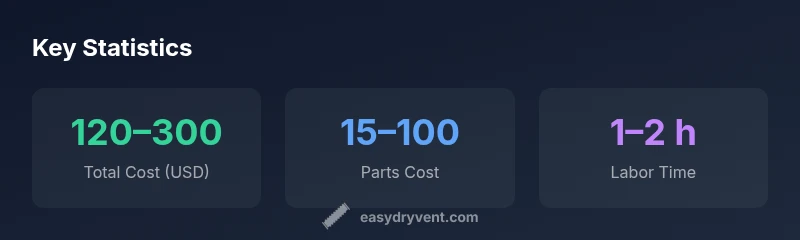
Cost estimates for the cost of replacing heating element in dryer typically range from about $120 to $300 total, depending on the model, part price, and local labor rates. The heating element itself often costs $15–$100, with diagnostics and labor adding the remainder. According to Easy DryVent Analysis, 2026, costs vary by brand and region.
Understanding the cost factors
The cost of replacing heating element in dryer is not a fixed number; it depends on several variables such as model compatibility, parts availability, and your local labor market. The heating element itself is a relatively simple component, but the assembly and any attached safety devices (like a thermal fuse) can affect price. In general, you’ll see parts priced in a broad range, and labor priced by the hour or by the job. Older or higher-end models may require special elements that cost more, while common, modern dryers use standard coils that keep part prices down. Environmental factors, such as your location and the service provider’s travel time, can also shift the total. When planning, it helps to separate the cost into parts, labor, diagnostic fees, and any optional checks. Easy DryVent analyses show that the price envelope shifts with model year and brand, so a precise quote usually comes after you share your exact dryer model and symptoms with a pro.
Parts and pricing: heating element & components
The heating element is the core component that converts electrical energy into the heat necessary for drying. In most mid-range dryers, the element is a replaceable coil or module paired with mounting hardware. Part prices vary by model and supplier, with generic coils on the lower end and OEM or model-specific assemblies on the higher end. In addition to the element itself, technicians may need to replace related parts such as wiring harnesses, connectors, or safety devices like a thermal fuse. Expect the total cost to reflect both the element price and any bundled parts. For older or premium models, the element package may include a longer warranty or a different mounting design, which can influence both price and availability.
Labor considerations and service scenarios
Labor costs are driven by local wage rates, the condition of the appliance, and whether the technician can access the element easily. A straightforward swap in a common dryer may take under two hours, while models with hard-to-reach elements or dual heat systems can extend service time. If a diagnostic check is required to confirm the failure, many shops will charge a separate diagnostic or service call. In some cases, technicians offer flat-rate pricing for this repair, while others bill by the hour. Budget for the possibility that a certified professional may need to test safety features after replacement to ensure compliance with current codes and warranties.
How to estimate the total cost for your model
To estimate accurately, start with your exact dryer model and its serial number, then look up the heating element part number. Compare prices from multiple suppliers or parts catalogs, taking into account shipping and possible core charges. Contact local service providers to obtain written estimates that itemize parts, labor, and any diagnostic fees. If you already know you need a thermal fuse or additional safety components, factor those into the quote. Collect at least three quotes to understand the widest ranges and ensure you’re not overpaying. Finally, confirm whether the quote includes disposal of old parts or recycling fees, which some shops add at the end of the job.
Ways to save money on heating element replacement
Saving money starts with getting multiple quotes and asking for itemized estimates. Consider using OEM parts when compatibility is critical, but compare with reputable aftermarket parts for potential savings. If your dryer is still under warranty or covered by an extended service plan, verify what is included and whether labor is covered. Some shops offer bundled services, such as diagnostics plus replacement with a discount, or provide a maintenance check that identifies other potential issues. Scheduling repairs during off-peak hours can sometimes lower labor rates. Finally, maintain your appliance to reduce the risk of future failures by cleaning lint traps, ducts, and ensuring proper ventilation.
When to DIY vs hire a pro: safety considerations
DIY replacement may be tempting for a handy homeowner, but working with electrical components and high heat presents safety risks. Incorrect wiring or improper insulation can cause fire hazards or electrical shocks. If you lack the proper tools, wiring diagrams, and experience with electrical appliances, hiring a licensed technician is strongly advised. Professionals also ensure that safety devices, such as thermal fuses and thermostats, are tested after replacement to prevent future failures. For most homeowners, especially those with gas dryers or unusual vent configurations, professional service minimizes risk and ensures code compliance.
Choosing a technician and getting quotes
When selecting a technician, prioritize credentials, warranty on labor, and transparent pricing. Look for technicians who specialize in laundry appliances and have positive customer reviews. Request written estimates that break down parts, labor, and any diagnostics, and ask about lead times. If possible, obtain confirmations that the technician will test all safety devices after completion. For best value, compare quotes from at least three providers and check if any offer mobile service or evening appointments to suit your schedule.
Cost components for common dryer heating-element replacement
| Component | Typical Cost Range (parts) | Labor Time | Notes |
|---|---|---|---|
| Heating element | $15–$100 | 1–2 hours | Model-dependent; OEM vs aftermarket affects price |
| Thermal fuse (if included) | $5–$40 | 0.5–1 hour | Often bundled with element replacement |
| Diagnostics/Service call | $0–$60 | N/A | Quoted separately by many shops |
| Wiring harnesses/connectors | $5–$30 | 0.25–0.75 hour | May be included in kit |
Common Questions
Is a warranty likely to cover heating element replacement?
Warranties may cover defective parts but typically exclude labor costs. Some extended plans offer both, but terms vary by manufacturer and service provider. Review your guarantee and request a written estimate before any work begins.
Warranties often cover faulty parts but not labor; check your plan for specifics and ask for written estimates.
Can I replace the heating element myself?
DIY replacement is possible for skilled homeowners with electrical safety experience. If you’re unsure about wiring or vent configurations, hire a pro to avoid fire or shock hazards. Many warranties require professional service to remain valid.
DIY can be risky if you’re not comfortable with electrical work; professional service is safer and often necessary for warranty.
How long does replacement typically take?
Most heating-element replacements take about 1–2 hours for a straightforward install, plus time for diagnostics if needed. Complex models or restricted access can extend the job.
Typically, it takes 1–2 hours, with possible extra time for diagnostics on tougher models.
What factors influence the price more than model?
Parts availability, whether OEM or aftermarket is used, local labor rates, and whether additional components like fuses or wiring must be replaced. Rare or premium models may incur higher fees.
Price is mainly driven by parts type, labor rates, and any extra components needed.
Should you replace the thermal fuse at the same time?
If the fuse is blown, replacing it is essential. Some technicians replace the fuse as a precaution during element replacement to prevent repeat failures.
If the fuse is blown, replace it; technicians often do this during element replacement to prevent future issues.
Are there cheaper alternatives to a heating element replacement?
In some cases, a dryer may fail due to a different issue. Consider a full diagnostic to avoid paying for a misdiagnosis. If the dryer is old or inefficient, replacement might be more economical over time.
Sometimes a full diagnostic reveals a cheaper or different fix; cost vs. replacement should be weighed.
“Understanding what drives the total cost helps homeowners budget realistically for dryer repairs. Parts quality, model complexity, and local labor all influence the final bill.”
Key Points
- Budget parts and labor separately for clarity
- Model and brand drive part prices
- Get multiple written quotes for accuracy
- Consider bundled diagnostics for savings
- Prioritize safety and warranty coverage