Gas Dryers for Sale: Buying Guide 2026
Explore gas dryers for sale with an expert buying guide from Easy DryVent, covering performance, venting, safety, energy costs, and installation tips for confident decisions.


Gas dryers for sale typically require a gas line and vent to outside. They can offer lower operating costs when natural gas is cheaper than electricity and usually dry clothes faster. Typical retail ranges for gas dryers are roughly $700–$1,500, plus installation, if needed. If you already have gas service and proper venting, a gas dryer can be a practical, economical choice.
Why gas dryers for sale are a compelling option
Gas dryers for sale offer a compelling alternative to electric models for homeowners who have ready access to natural gas and a vented laundry area. In many markets, gas dryers heat up quickly and can reduce drying times, especially with bulky loads. From a practical standpoint, the Easy DryVent team notes that gas-powered models typically deliver consistent performance during peak laundry periods, making them a reliable option for busy households. This section explains core reasons to consider gas dryers and how to gauge fit for your home, including gas service, venting capability, and local energy prices. When planning a purchase, also account for installation costs and potential gas-line improvements. A carefully chosen gas dryer can balance upfront cost with long-term savings for households with favorable gas prices.
Gas vs electric: A practical comparison
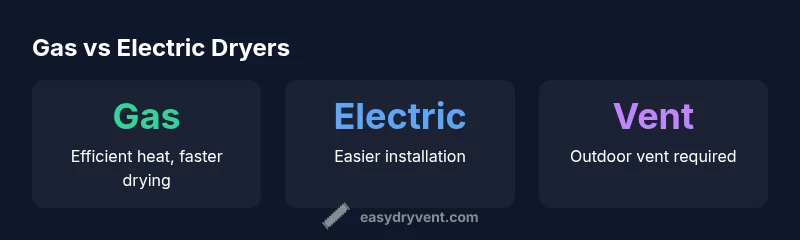
When deciding between gas and electric dryers, several factors matter: energy source, operating costs, heat generation, and installation requirements. Gas models typically use natural gas or propane, which can be cheaper per unit of energy in some areas; electric dryers heat elements directly. In the short run, gas models may incur higher upfront costs due to the need for a gas line and outdoor venting, but operating costs can be lower over time if gas prices stay favorable. Electric models are often easier and cheaper to install in homes without existing gas service, but may cost more to dry large loads over time. Climate, laundry volume, and appliance resale value also affect total cost of ownership. Easy DryVent's analysis emphasizes comparing total costs across the appliance lifespan rather than sticker price alone.
Key features to look for in gas dryers
Choosing a gas dryer hinges on several features that affect performance, efficiency, and convenience. Look for a capacity that fits your household size (measured in cubic feet), multiple heat and cycle options, and an automatic moisture sensor to prevent over-drying. A stainless steel drum improves durability, while a reversible door adds flexibility in tight spaces. Consider venting compatibility (direct venting to outdoors, with appropriate ducting) and noise levels for open-plan laundry areas. Energy Star certification (where available) indicates efficiency beyond basic code requirements. Real-world performance also depends on vent length and cleanliness, so plan for regular vent maintenance alongside feature-rich models. This section helps you prioritize features that align with your laundry needs and budget.
Venting and installation basics
Gas dryers require careful venting and a gas supply path. Plan for a vent route that minimizes length and turns to reduce lint buildup, while ensuring a heat-durable metal duct (not flexible plastic) is used. A properly sized gas line and shut-off valve are essential, and many jurisdictions require professional installation for safety and code compliance. If your home lacks a suitable outdoor vent location, you may need to relocate or extend venting accordingly. Always verify that the dryer has a dedicated vent to the outdoors and that the exhaust is not obstructed by lint or debris. This section provides practical guidelines to prepare for safe installation and optimize vent performance.
Safety considerations for gas dryers
Safety is paramount when using gas appliances. Incorrect venting or a faulty gas line can lead to carbon monoxide buildup, fire hazards, and chimney-related issues. Install detectors near the laundry area and ensure CO detectors are present on all living levels. Schedule professional gas-line testing and vent inspection after installation, and perform periodic checks for gas leaks or unusual smells. Keep lint traps and ducts clear to reduce fire risk, and never dry items that are soaked with flammable solvents. Prioritizing safety reduces hazards and prolongs the life of your gas dryer.
Cost of ownership: energy, maintenance, and installation
Total cost of ownership for gas dryers includes purchase price, installation, venting, and ongoing energy use. In many regions, gas appliances can offer lower operating costs than electric models, but actual savings depend on local energy prices and usage patterns. Regular maintenance—such as lint removal, vent cleaning, and periodic gas-line checks—extends the life of the unit and preserves efficiency. Installation costs vary with vent routing needs and gas-line work, so obtain multiple quotes to understand the full financially impact. For the budget-conscious homeowner, weigh the long-term savings against upfront installation and service costs.
How to choose the right model for your home
Start with your laundry load and space constraints. If you frequently dry bulky items or towels, consider higher capacity models. Assess the available space for vent routing and whether the laundry area has a gas line and outdoor vent access. Compare energy efficiency, warranty length, and service accessibility in your region. Check for features like a delayed start, wrinkle-prevention cycles, and easy-to-clean lint screens. Finally, verify compatibility with your existing utility setup and plan for professional installation to ensure safety and code compliance.
Common installation pitfalls and how to avoid them
Avoid common pitfalls that can reduce performance or safety. Don’t squat the exhaust through long or zigzag vent runs, which trap lint and raise fire risk. Ensure the gas line is properly sized and sealed, with a dedicated shut-off valve installed nearby. Don’t reuse old ducts that are dented or crushed; replace with smooth metal ducts to improve airflow. Avoid venting directly into attics or crawl spaces. Have a licensed professional perform the installation and a follow-up inspection to confirm the setup meets local codes and manufacturer guidelines.
Maintenance tips to extend life and prevent hazards
To maximize longevity and safety, commit to regular lint screen cleaning after every load and periodic vent cleaning—at least annually or more often with heavy usage. Inspect the gas line and connections for signs of corrosion or leaks and replace worn components promptly. Keep the dryer area clear of flammable materials and ensure spacing around the unit allows for adequate airflow. Schedule professional service before and after the heating season and whenever you notice abnormal sounds, heat, or odors. Consistent maintenance reduces the risk of fires and CO exposure while keeping performance stable.
Gas vs electric dryers: upfront costs, venting needs, and ownership
| Factor | Gas Dryer | Electric Dryer | Notes |
|---|---|---|---|
| Typical purchase price | $700-$1,500 | $500-$1,200 | Prices vary by capacity and features |
| Annual energy cost | Varies by usage | Typically higher | Gas can be cheaper per unit energy in some markets |
| Ventilation requirement | Dedicated vent + gas line | Vent needed | Both require outdoor venting; gas adds line considerations |
| Installation costs | $200-$900 | $0-$400 | Gas installations usually need a licensed technician |
Common Questions
Are gas dryers safer than electric dryers?
Both types can be safe when installed correctly. Gas dryers require proper venting and CO detectors due to combustion byproducts. Electric models avoid combustion gases but still need venting for moisture control. Always follow the manufacturer’s safety guidelines and local codes.
Gas dryers are safe when vented correctly and CO detectors are in place; always install per local codes.
Can I switch from electric to gas dryer in an existing home?
If your home has a gas line and outdoor vent ready, you can switch, but you’ll need professional gas-fitting and possibly vent work. Some homes require plumbing and ventilation upgrades to support a gas dryer.
Switching to gas is possible with proper gas line and vent work by a licensed pro.
Do gas dryers require special venting?
Yes. Gas dryers need a vent to outdoors and a properly installed exhaust duct. Avoid plastic ducts and ensure the vent path is as short as possible to reduce lint buildup and heat loss.
Gas dryers vent outdoors with a proper metal duct; avoid flexible plastic paths.
How often should I clean the dryer vent?
Vent cleaning frequency depends on usage but aim for at least once a year; more frequent cleaning may be needed in homes with heavy loads or long vent runs.
Clean the vent at least once a year, more if you dry large loads often.
What affects installation costs for gas dryers?
Costs vary with gas-line work, vent routing, and local permitting. Additional fees apply for required inspections and potential trenching or exterior venting alterations.
Gas-dryer installation cost depends on gas-line and vent work plus local permits.
Is a gas dryer a good option for apartments?
Gas models can be used in some apartments with existing gas service and venting. Check building codes and HOA rules, and ensure safety clearances and CO detectors are in place.
Gas dryers can work in apartments with proper hookups and approvals.
“Gas dryers for sale offer strong drying performance when venting and installation are handled correctly. Prioritize safety checks and professional installation to maximize efficiency and minimize risk.”
Key Points
- Evaluate total cost of ownership, not just sticker price
- Ensure proper venting and a ready gas supply before buying
- Gas dryers can dry faster, with potential energy savings
- Safer operation requires professional installation and detectors
- Regular vent maintenance extends dryer life and reduces hazards