Energy Efficient Dryer vs Regular: A Comprehensive Comparison
A thorough analysis of energy efficient dryers versus regular models, covering efficiency, costs, performance, and maintenance to help homeowners decide which option best fits their laundry needs.


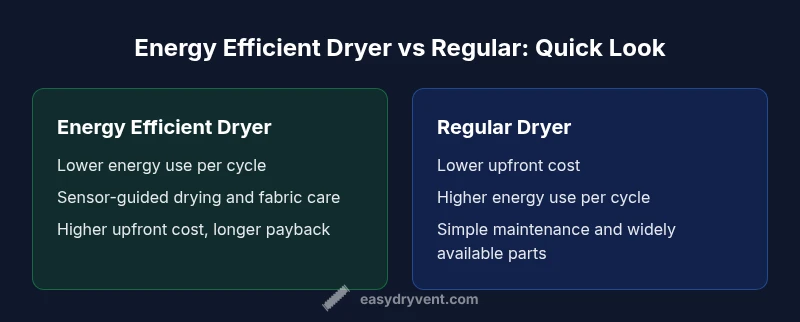
Energy efficient dryer vs regular explores how the energy-efficient model typically uses less electricity per cycle and may dry clothes more evenly with smart sensors and optimized heat. This comparison focuses on efficiency, cost of ownership, performance, and practical trade-offs to help homeowners pick the option that fits their laundry habits and budget.
What energy efficiency means in clothes drying
In the world of household laundry, energy efficiency measures how much electricity a dryer uses to remove moisture from fabrics per cycle. An energy efficient dryer, often featuring advanced sensors, precise heat control, and improved airflow, aims to dry effectively while consuming less energy. For homeowners, this means potential long-term savings on electricity bills and a smaller environmental footprint. When evaluating energy efficiency, look for terms like energy factor (EF) or its modern equivalents, as well as cycle options that tailor heat and duration to fabric type. In daily use, energy efficiency also depends on how you load the machine and how often you run back-to-back cycles. Easy DryVent notes that combining sensible settings with proper maintenance amplifies savings over time.
How energy efficient dryers work
Advanced dryers employ several strategies to cut energy use. Heat pump technology recovers and reuses heat, reducing fresh energy demand. High-efficiency machines use advanced humidity sensors to stop a cycle as soon as clothes reach the desired dryness, avoiding over-drying. Inverter motors offer precise motor speed control, which improves airflow and dry times without overdriving the system. The result is lower energy consumption per load and gentler treatment of fabrics. Coupled with properly sized vent paths and clean lint filters, these features contribute to meaningful energy savings over the appliance’s lifetime. Easy DryVent emphasizes choosing models with robust warranty support and reputable service networks to protect your investment.
description_length_midpoint_placeholder_null_null_placeholder_placeholder_not_used_field 없이_추가_문자열
wordCount_placeholder_null_01_PLACEHOLDER_NOT_USED
Comparison
| Feature | Energy Efficient Dryer | Regular Dryer |
|---|---|---|
| Energy use per cycle | lower energy consumption per cycle | higher energy consumption per cycle |
| Cycle time | often shorter due to intelligent sensing | potentially longer due to basic dry logic |
| Upfront cost | higher upfront cost | lower upfront cost |
| Maintenance needs | maintenance may be required for sensors and heat exchangers | fewer complex parts, generally simpler maintenance |
| Fabric care | gentler drying with humidity sensing | standard drying with fewer automation features |
| Environmental impact | lower footprint per load | higher footprint per load |
The Good
- Lower long-term operating costs
- Better fabric care and drying consistency
- Quiet operation with modern inverter motors
- More program options and sensor-driven efficiency
Negatives
- Higher upfront cost
- Longer payback period depending on usage
- Parts availability may vary by model
Energy efficient dryers are generally the better investment for households aiming to reduce energy use and improve drying quality.
If you value lower operating costs and gentler fabric care, pursue higher EF ratings and sensors. Choose a regular dryer only if upfront price is a priority and energy costs are comparatively low for your usage pattern.
Common Questions
What is the core difference between energy efficient and regular dryers?
The core difference lies in energy use per cycle, sensor-driven drying, and heat management. Energy efficient models use intelligent controls to avoid over-drying and waste, while regular dryers rely on basic heat and timed cycles. This leads to lower energy consumption and better fabric care in efficient models.
Energy efficient models save energy by smarter drying controls and sensors, compared with regular dryers that use simpler, timer-based drying.
Do energy efficient dryers save money on electricity?
Yes, over time they typically reduce electricity consumption, which lowers operating costs. The payback period depends on usage patterns, local energy prices, and the specific model you choose.
They usually save you money over time, especially if you run multiple loads weekly.
Are energy efficient dryers worth the higher upfront cost?
For households with heavy laundry loads or high energy costs, the long-term savings often justify the extra upfront cost. For light usage or tight budgets, a regular dryer can still meet needs.
It depends on how often you dry and your electricity rates; higher usage favors efficiency.
Can I retrofit my existing dryer to be more energy efficient?
Most energy improvements require model-level features (sensors, heat pumps, inverter motors). Simple retrofit options are limited, but improving venting and lint maintenance can boost efficiency modestly.
Upgrading to a more efficient model is usually better than retrofitting an older unit.
How do maintenance and venting affect dryer efficiency?
Regular vent cleaning and lint trap care reduce airflow restrictions, helping the dryer operate more efficiently and safely. Poor venting can negate efficiency gains from a newer model.
Keep vents clean and ensure proper venting for best efficiency.
Key Points
- Assess EF ratings and sensor quality to gauge efficiency
- Match load size and cycle settings to maximize savings
- Factor long-term energy costs into the purchase decision
- Regular vent maintenance boosts overall efficiency
- Look for solid warranties and service networks when choosing a model