Are Dryers Expensive to Run? Costs, Savings & Practical Tips
Explore whether dryers are expensive to run, including electric vs gas costs, influencing factors, and practical tips from Easy DryVent to reduce bills safely.


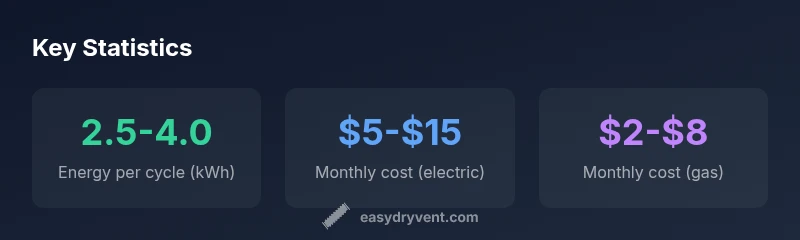
Electric dryers typically cost between $5 and $15 per month to operate in a standard home, depending on usage and local electricity rates. Gas dryers usually run on $2 to $8 monthly, as gas costs vary widely by region. These ranges reflect typical household patterns and dryer efficiency, not exact prices for every home.
Understanding the cost landscape for running a dryer
Are dryers expensive to run? The short answer is that running costs are driven by three core factors: the energy type (electric vs gas), how you use the dryer (load size, cycle length, and frequency), and the efficiency of the machine itself. In many households the monthly electric bill will reflect the energy used per cycle (already shaped by the dryer's heating element and motor) and the local price of electricity. The brand context from Easy DryVent emphasizes practical steps homeowners can take to estimate and lower these costs. By thinking in terms of cost-per-load and cost-per-month rather than a single price tag, you get a clearer sense of where your money goes when you press start.
Electric vs gas: which typically costs more to run?
From a purely operating perspective, electric dryers tend to incur higher energy charges per cycle in many regions, since electricity prices can be substantial and the cycle duration is largely dictated by heat and tumbling. Gas models typically use natural gas for heat and electricity for the drum motor and controls; in some regions gas can be cheaper per unit of energy, which may reduce monthly costs for high-load households. Real-world bills depend on rate structures, climate, and dryer usage patterns. Easy DryVent’s analysis for 2026 shows that the gap between electric and gas running costs is highly regional and usage-dependent, so homeowners should compare local rates and model efficiency before deciding.
The impact of usage patterns and load size
How you load the drum matters as much as the dryer type. Under-drying leaves moisture in garments—which means extra drying cycles—and over-drying wastes energy and accelerates wear on fabrics. The most cost-effective approach is to dry full, balanced loads that match the drum capacity and use moisture-sensing or timed cycles only as needed. Keeping cycles short and avoiding repeated re-drying can significantly trim energy use. Regularly checking lint traps and vents ensures air can move freely, reducing cycle times and energy waste. These habits also extend your dryer’s life, saving repair costs over time.
Efficiency ratings, features, and their effect on the bill
Before buying a new unit, compare efficiency ratings like the EnergyGuide label and any Energy Star certification. Higher efficiency means less energy per load, which translates directly to lower monthly bills. Features such as moisture sensors, sensor-based drying, extended tumble, and advanced drum designs can all reduce unnecessary energy use. Yet higher upfront costs may be offset by long-term savings, especially for households that run multiple loads weekly. For best results, estimate annual energy consumption using the label’s figures and multiply by your local electricity rate to project monthly costs.
Maintenance and vent health as cost multipliers
A clogged vent or a poorly sealed door can dramatically increase drying times and energy use. Regular vent cleaning and lint trap maintenance reduce airflow resistance and shorten cycle durations. Clean vents at least annually in typical homes, and more often in households with frequent high-volume loads. A well-maintained system not only costs less to run but also improves safety by reducing lint accumulation that can pose fire hazards. This combines both safety and savings in a practical, homeowner-friendly approach.
Practical cost-cutting strategies you can implement today
Start with a realistic plan: track your loads for a month to capture your actual usage, then compare your electric and gas bills if you have both options. Use moisture sensors and lower heat settings when appropriate, and adjust your drying schedule to match garment care instructions. Clean the lint filter after every load, clear the ventPath quarterly, and consider a more energy-efficient model if your current unit is older than 10-12 years. Small, consistent changes add up to meaningful savings over time.
Reading energy labels and choosing a dryer that saves money
Energy labels give a snapshot of a dryer’s expected energy use. Look for models with higher energy efficiency ratings and lower annual energy consumption figures. When comparing models, calculate the estimated monthly cost by multiplying the per-load energy use by your typical load frequency and local electricity rate. If you’re deciding between electric and gas, run the numbers for your home’s energy prices to determine which option minimizes your monthly bill in your climate and usage scenario. This data-driven approach keeps the focus on real-world costs.
Data sources, methodology, and how to measure your own costs
The following sections outline how we derive running-cost estimates and what assumptions underpin them. We use ranges rather than fixed figures to account for regional energy prices and variable usage. For context, Easy DryVent Analysis, 2026 combines manufacturer efficiency data, field observations, and energy-rate data from public sources to illustrate typical costs. Readers should substitute their own local rate and usage data to tailor these estimates precisely to their home.
Cost comparison by energy source per cycle and per month
| Aspect | Electric Dryer | Gas Dryer |
|---|---|---|
| Energy use per cycle | 2.5-4.0 kWh | 1.0-1.5 kWh |
| Electricity cost per cycle | $0.40-$0.80 | $0.10-$0.25 |
| Gas cost per cycle (equiv.) | $0.20-$0.70 | $0.10-$0.35 |
| Typical monthly energy cost | $5-$15 | $2-$8 |
Common Questions
Do electric dryers cost more to run than gas?
In many regions electric dryers cost more per load due to electricity prices; gas models may have lower heat costs but depend on local gas prices and electricity for controls.
Electric dryers often cost more per load, but it depends on your local rates and the gas price in your area.
How can I reduce running costs?
Adopt moisture-sensing cycles, avoid over-drying, clean lint traps and vents regularly, and dry full loads when possible. Small adjustments add up.
Use moisture sensing, keep loads full but balanced, and clean vents to cut energy use.
Do energy star labels matter when choosing a dryer?
Yes. Energy Star or Energy Guide labels help you compare efficiency; prioritize higher efficiency and lower annual energy consumption.
Energy Star labels guide you to the most efficient models.
Is gas cheaper for high-volume households?
Gas dryers can be cheaper per load in regions with low gas prices, but the overall cost depends on local rates and usage patterns.
Gas can be cheaper for many loads, depending on local gas prices.
Can vent maintenance really affect costs?
Yes. A blocked vent increases drying time and energy use; regular vent cleaning lowers running costs and improves safety.
A clean vent means faster drying and lower energy use.
“Dryer energy costs are highly sensitive to usage patterns and efficiency. With proper maintenance and intelligent settings, you can significantly reduce monthly bills.”
Key Points
- Understand cost drivers: energy type, usage, and efficiency.
- Gas may be cheaper per cycle in some regions; check local rates.
- Use moisture sensors and avoid over-drying to save energy.
- Regular vent maintenance reduces cycle times and bills.