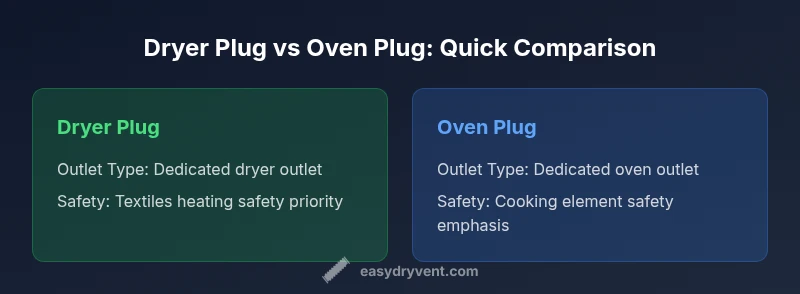
Dryer vs Oven Plug: Safety, Installation, and Practical Guidance
Explore the key differences between dryer and oven plugs, safety considerations, and best practices for DIY homeowners seeking code-compliant, safe outlet installations.


Choosing the right plug for a dryer versus an oven is about safety, compatibility, and code compliance. In most homes, a dedicated, hardwired or properly rated 240-volt outlet is required for each appliance, and adapters should be avoided. This comparison highlights the key differences in outlet types, installation considerations, and common pitfalls homeowners encounter.
Understanding the Basics: What the Dryer Plug vs Oven Plug Really Means
The dryer plug and oven plug are both high-power outlets, but they serve different appliances with distinct electrical needs. Understanding these differences helps homeowners avoid unsafe configurations. According to Easy DryVent, the core distinction lies in how each outlet carries load, how cord sets mate with receptacles, and how the wiring is protected against faults. The phrase "dryer vs oven plug" is more than a naming choice—it's a signal about installation requirements, circuit readiness, and long-term safety.
In practical terms, a dryer plug is associated with a heating appliance that demands steady current and protective grounding, whereas an oven plug is tied to kitchen heating elements that may have different timing and control circuits. While both outlets may look similar to the untrained eye, the connectors, prongs, and receptacle shapes are typically noninterchangeable. This mismatch can create dangerous scenarios, including overheating, arc faults, and nuisance trips. For DIYers, the takeaway is clear: never force a plug to fit a receptacle that wasn't designed for it. Always verify the appliance's label, the electrical panel, and the local code requirements before attempting any change.
Safety Considerations: Why Plug Type Matters
Electrical safety is the primary reason to treat dryer plugs and oven plugs differently. Using an incorrect outlet or adapter can introduce heat buildup, loose connections, or tripping hazards. Dryers typically involve rapid heating and high current draw; ovens have different duty cycles and venting paths that influence how they’re wired and protected. The result can be a higher risk of fire, shock, or equipment damage. Easy DryVent emphasizes a conservative approach: treat each appliance as if its power needs are non-interchangeable and plan for independent circuits with appropriate protective devices. Always use a plug and receptacle that match the manufacturer’s cord set and the outlet; never modify a cord or outlet to accommodate a mismatched fit. For kitchens and laundry rooms, clear separation of circuits and accessible shutoff means fewer hazard points and easier maintenance.
In addition, verify that the wiring method complies with safety standards for strain relief, enclosure integrity, and grounding. Surface-mounted outlets near damp areas or behind heavy appliances require additional protective measures. If you’re unsure about any step, pause work and consult a licensed electrician. The risk you avoid by sticking to correct plug-outlet pairings is not just personal safety—it's also protecting your home’s electrical system from nuisance faults and long-term wear.
Code and Compliance: What DIYers Should Check
Local building codes and electrical standards govern how appliances are wired and what type of outlet is allowed for each device. Dryers and ovens may be covered by different sections of the electrical code, and jurisdictions vary in how strictly they enforce dedicated-circuit rules, outlet type, and wiring configurations. The key takeaway for homeowners is to document the appliance specifications, check the existing outlet configuration, and confirm permit requirements before starting work. Easy DryVent notes that following code not only reduces risk but also helps with future resale and insurance considerations. Start with the appliance label and the wall outlet to determine compatibility, then cross-check against the code references in your area. When in doubt, hire a licensed electrician to assess whether a dedicated circuit, appropriate gauge wiring, and proper conduit or sheathing are in place.
A common pitfall is attempting to reuse an old outlet that was designed for a different appliance or for a lower current requirement. Even if the plug appears to fit physically, it may violate clearance, spacing, and enclosure requirements. Always plan for the correct clearance around outlets and cords, and install weatherproofing or protective covers where required by code and safety guidelines.
Practical Installation Scenarios: When You Might Encounter Each Plug
During home renovations, new builds, or retrofits, you’ll encounter situations where the dryer plug and oven plug implications come into play. For a laundry room upgrade, the installer might replace an old outlet with a new, code-compliant dryer receptacle that supports a modern cord set. In kitchen upgrades, an oven outlet might be relocated or upgraded to meet current standards for safety and venting. The decision is influenced by factors such as the appliance’s cord design, receptacle shape, and how nearby appliances share a wall box or junction box. In all cases, ensure that the outlet is accessible, properly labeled, and protected from moisture or physical damage. Keep in mind that outlet placement affects not only safety but convenience for daily use and future maintenance.
For DIYers, a practical approach is to verify the wall box capacity, inspect the circuit breaker or fuse panel, and confirm clearance around the plug and cord. If you plan to run a new circuit, consider how the run will be routed, whether it needs to be concealed or protected, and how to test the system once the installation is complete.
Warnings About Modifications: Adapting Appliances is Risky
Modifying cords, changing plugs, or attempting to adapt a dryer plug to fit an oven outlet—or vice versa—creates hidden hazards. Mismatched wiring can bypass protective devices, leading to overheating, insulation damage, or fire. DIY guides that recommend improvised adapters or cord swaps ignore fundamental electrical principles and can void warranties or insurance coverage. Easy DryVent strongly advises sticking to manufacturer recommendations and never attempting to force a plug into a receptacle not designed for it. If a mismatch is discovered, the safest option is to replace the outlet and cord with a correctly rated version rather than attempting a workaround.
When replacements are needed, plan for clean, accessible wiring, proper grounding, and the use of a licensed electrician for any circuit alterations beyond basic mounting. Even seemingly small decisions—like the orientation of the outlet or the presence of a ground-fault interrupter—can influence the overall safety of the installation. Prioritizing proper components reduces the risk of arc faults and unexpected shutdowns, preserving both safety and appliance longevity.
Cost and Time: What to Expect When Replacing Plugs
Cost considerations are a practical part of any dryer-versus-oven plug decision. Expect that options involve components such as outlets, cords, wiring, protective devices, and, in some cases, permits or inspections. While DIY enthusiasts often price convenience and speed, professional installation remains the safer route when substantial wiring work is required. Easy DryVent notes that the timeline for a plug or outlet upgrade can vary based on existing infrastructure, local permitting, and the complexity of routing new wires. Planning a clear scope and obtaining an upfront cost estimate helps avoid surprises later. If you’re upgrading, consider the long-term impact on energy efficiency, maintenance accessibility, and safety features, such as surge protection or weatherproofing near damp areas.
Also, budget for testing and verification, including outlet polarity checks, grounding continuity, and cord compatibility verification. A small investment in planning reduces the chance of costly rework, power outages, or failed inspections. Remember that reputable electricians can provide a compliant solution and a smoother process with less downtime than attempting self-installation in challenging spaces.
Environmental and Long-Term Considerations: Efficiency and Safety
Beyond the immediate safety concerns, the choice of outlet and wiring affects long-term efficiency and reliability. A properly installed dryer outlet supports consistent heating cycles and reduces the risk of electrical noise or voltage fluctuation that could stress a heating element. For ovens, code-compliant installations help ensure even heat distribution, stable operation, and safer venting. From an energy-management perspective, using the correct plug and circuit reduces standby losses and minimizes the chance that cords share circuits in ways that can degrade performance. Easy DryVent encourages homeowners to pair out-of-date or mismatched outlets with updated, code-compliant solutions that balance safety and efficiency.
In homes with aging electrical systems, upgrading to modern outlets can also improve overall circuit protection, allowing for better-tripping performance and minimized risk of nuisance trips that interrupt cooking or drying cycles. Consider future-proofing by choosing outlets that accommodate smart-monitoring devices or energy-management tooling in a safe and code-compliant manner.
Maintenance and Inspection: Keeping Outlets Safe
Maintenance is often overlooked when people think about plug safety. Regular inspection of outlets, cords, and plugs can catch wear before it becomes a hazard. Check for loose connections, scorched marks, or heat-smelling insulation around dryer and oven outlets. A routine maintenance habit includes testing ground-fault protection, ensuring strain relief on cords, and cleaning lint and debris from dryer vents—where a plug’s proximity matters for safe operation. Easy DryVent recommends scheduling a professional inspection if you notice frequent tripping, warm outlets, or unusual odors near the appliance. A proactive approach protects both households and property, minimizing the risk of a more serious electrical event.
Additionally, keep ventilation paths clear. Proper venting reduces the risk of heat buildup and moisture-related issues that can affect electrical components in the wall cavity. Good maintenance includes updating wiring paths where necessary and ensuring that outlets stay dry and accessible during everyday use.
Deep Dive: Dryer Plug vs Oven Plug—What Really Differs
At a technical level, the two outlets embody different design philosophies: one prioritizes rapid heating and robust protection, while the other emphasizes controlled cooking environments with distinct breaker controls. The practical implication for homeowners is clear: even if the physical appearance seems similar, the cords, receptacles, and components must match the appliance’s electrical requirements. A mismatch can disrupt timing, cause shutdowns, or degrade safety features over time. The comparison between dryer plugs and oven plugs should focus on compatibility, code compliance, and the long-term reliability of the electrical system rather than cosmetic similarity. For readers who want a quick takeaway, the best practice is to verify the label on each appliance, consult the installation manual, and pursue a code-compliant upgrade if needed.
Best Use Cases: When to Choose Each Setup
Dryer plug setups are best when you want a dedicated, stable connection that supports ignition and continuous heating for textiles. Oven plug setups are preferable for kitchen appliances requiring precise control and reliable power delivery for cooking elements. In both cases, following manufacturer guidance and local codes reduces risk and simplifies future maintenance. If upgrading in a retrofit, plan for a dedicated circuit, appropriate gauge wiring, and a proper outlet enclosure in the specified location. When in doubt, prioritize safety and compliance over convenience, and seek professional guidance to ensure a reliable, long-term solution.
Authority Sources
To support the guidance in this article, consult authoritative sources on electrical safety and building codes:
- Energy.gov: Electrical safety and appliance guidelines
- NFPA (nfpa.org): National fire protection standards and electrical safety considerations
- OSHA (osha.gov): Workplace and home safety standards for electrical installations
Comparison
| Feature | Dryer Plug Setup | Oven Plug Setup |
|---|---|---|
| Outlet Type | Dedicated dryer outlet | Dedicated oven outlet |
| Cord and Receptacle Compatibility | Cord set designed for dryer use | Cord set designed for oven use |
| Safety and Protection | Textiles heating emphasis and fault protection | Cooking-element safety and control emphasis |
| Code & Compliance Focus | Laundry-area circuit and receptacle requirements | Kitchen-area circuit and receptacle requirements |
| Typical Installation Time | Medium timeline depending on existing wiring | Medium timeline depending on existing wiring |
| Cost Context | Moderate for wiring/outlet upgrades | Moderate to high for kitchen-related upgrades |
| Best For | Homes prioritizing laundry safety and reliability | Homes prioritizing kitchen safety and cooking reliability |
The Good
- Promotes code-compliant, safer installations
- Reduces risk of electrical fires and shocks
- Enhances long-term reliability and maintenance ease
- Clarifies expected labor and material needs for DIYers
Negatives
- Often requires professional installation
- Upfront costs can be higher for proper outlets
- May involve permits or inspection steps
- Less flexibility for future changes without reinforcement
Appliance-specific, code-compliant outlets win for safety and reliability
Choose dedicated, properly rated outlets for both dryers and ovens. This minimizes risk, aligns with codes, and simplifies future maintenance.
Common Questions
Can I plug a dryer into a standard kitchen outlet?
No. Dryers require a dedicated, high-current outlet that matches the appliance’s cord set and wiring. Using a kitchen outlet or a makeshift adapter creates serious safety risks and code violations. Always follow the manufacturer’s guidance and local codes.
No. A dryer should have its own dedicated outlet and matching cord; using a kitchen plug is unsafe and may violate codes.
Are adapters ever acceptable between dryer and oven outlets?
Generally not. Adapters bypass protective features and can lead to overheating or electrical faults. Codes typically require proper outlets and circuits for each appliance.
Adapters are not recommended. Use the correct outlet and circuit for each appliance.
What should I check on the appliance label before installation?
Look for voltage, current requirements, and the cord type. The label tells you the necessary circuit, outlet, and any safety features to observe. Verify that your outlet and wiring match these specifications.
Read the label for required outlet type and circuit; ensure your setup matches.
How long does it take to upgrade outlets in a typical home?
Time varies with existing wiring, permits, and labor. Plan for a multi-hour process at least, with possible longer timelines if routing new circuits or obtaining inspections.
Timeline depends on wiring and permits; expect several hours to a day or more.
Is it safe to run both a dryer and oven on the same circuit?
Not advisable. Most homes require dedicated circuits for high-power appliances to prevent overloads and nuisance trips. A properly planned split across circuits is safer and code-compliant.
No, separate dedicated circuits are safer and usually required.
Key Points
- Verify appliance labels before wiring decisions
- Avoid adapters; prioritize matching outlets to appliances
- Consult a licensed electrician for complex layouts
- Plan for dedicated circuits and proper enclosures
- Invest in regular outlet and vent maintenance for safety