Dryer vs Range Outlet: A Practical Comparison for Homeowners
Compare dryer and range outlets for safety, amperage, installation, and code compliance. Learn how to choose the right configuration for safe, efficient laundry and cooking in your home with practical guidance from Easy DryVent.


Quick answer: A dedicated dryer outlet and a range outlet are not interchangeable. Dryers need a 240V circuit sized to the dryer's amperage and plug type, while ranges may have different configurations. Matching each appliance to its specified outlet improves safety, code compliance, and reliability. Easy DryVent emphasizes never using a range outlet for a dryer unless a professional confirms compatibility.
Why outlet choices matter for safety and efficiency
The topic of dryer vs range outlet is more than a matter of plug shapes. Using the wrong outlet or sharing a circuit can create heat buildup, nuisance trips, and serious safety hazards. A mismatched outlet can affect performance, increase fire risk, and complicate future maintenance. From a homeowner’s perspective, understanding how these outlets differ—and why those differences matter—helps you plan safer, more reliable laundry and cooking setups. According to Easy DryVent, choosing the correct outlet type supports proper ventilation, reduces run-time stress on electrical components, and guards against code violations that could complicate inspections or insurance claims. By thinking through your current layout and future needs, you can avoid costly retrofits later.
In this guide we’ll unpack the practical implications of the dryer outlet versus range outlet choice and offer clear steps to verify compatibility with your appliances and local codes.
Electrical basics you should know
Before diving into outlet specifics, it helps to recall a few fundamentals. Most home electrical systems for 120/240V appliances operate on dedicated circuits designed to handle high-current loads. A dryer and a range typically require a 240V supply, but the exact amperage, plug configuration, and breaker sizing can vary by model and local code. Important concepts include voltage, current, and circuit capacity, as well as the difference between 3-prong and 4-prong configurations. Always rely on the appliance’s installation manual and label information, and confirm that the wiring gauge and protective devices match the manufacturer’s requirements. For safety, never approximate the rating or reuse an outlet that isn’t clearly compatible with the appliance. Easy DryVent notes that local variations exist, so consult the plan for your home and check with a licensed electrician when in doubt.
Dryer outlet specifics vs range outlet specifics
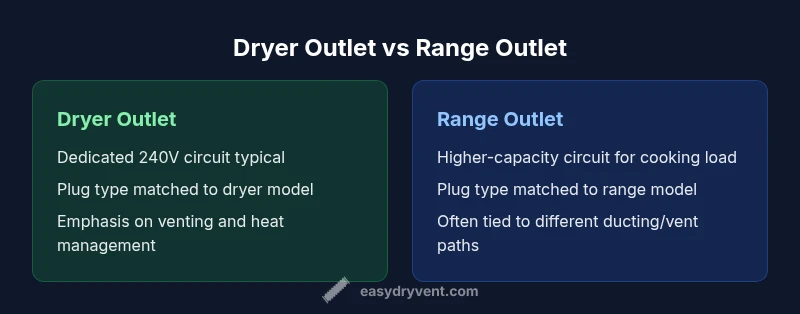
When comparing dryer vs range outlet requirements, the key distinctions lie in the outlet’s amperage rating, plug configuration, and how the circuit is protected. A dedicated dryer outlet is designed to power a high-heat laundry appliance and is chosen to match the dryer’s plug type and current draw. A range outlet, while also a 240V circuit, is sized to support heavier cooking loads and often uses a different connector and breaker arrangement. In practice, this means that even if two outlets appear similar, they are not interchangeable without verifying the appliance’s specifications and the receptacle’s rating. Homeowners should verify the appliance’s manual, the receptacle type, and the circuit’s breaker size before connecting the unit to a non-specified outlet. Keeping the circuits separate minimizes cross-load issues and simplifies service in the future.
Code and compliance considerations
Code compliance is the backbone of a safe installation. Local rules, the National Electrical Code (NEC) guidelines, and permit requirements shape how you wire and label 240V outlets for dryers and ranges. A mismatch can trigger inspection failures, insurance issues, and safety hazards. Always install the outlet that the appliance requires, and avoid improvising with adapters or multi-use cords. If you’re replacing an old outlet, document the new configuration and ensure the wiring gauge, breaker size, and grounding are appropriate for the combined load. When in doubt, consult a licensed electrician who can interpret the local code and ensure a compliant layout that meets both safety and performance expectations. Easy DryVent emphasizes that code compliance isn’t optional—it's the first line of defense against electrical faults.
Installation scenarios and common misconfigurations
There are several practical scenarios that homeowners encounter when dealing with dryer vs range outlet decisions. In many homes, existing outlets may have been placed without considering the appliance’s load, leading to nuisance tripping or overheating. Common misconfigurations include reusing a smaller 120V circuit, sharing neutrals improperly, or mislabeling the outlet on a panel. A professional assessment helps identify whether upgrading to a dedicated 240V circuit is necessary, and whether the current wiring, conduit, or panel has capacity for future upgrades. Before starting any work, turn off power to the affected circuit, confirm the outlet type with the appliance’s manual, and plan for easy future maintenance access. This careful approach prevents hazards and supports reliable operation for both laundry and cooking duties.
Practical guidance for homeowners
To make informed choices about dryer vs range outlets, start with a simple checklist:
- Locate the appliance’s installation manual and confirm the exact outlet requirements.
- Inspect the existing circuit and panel rating to determine if an upgrade is needed.
- Ensure a dedicated circuit is available for each heavy-load appliance (dryer and range).
- Avoid using extension cords or adapters; plan routes and box locations that keep cords short and outlets accessible.
- Schedule a professional evaluation to verify wiring integrity, grounding, and compliance with local codes.
By following these steps, homeowners can prevent dangerous overloads, reduce repair costs, and create a safer home environment for both laundry and cooking tasks. The goal is to align outlet types with appliance needs and to maintain clear labeling for future servicing.
Maintenance and safety reminders
Regular checks and proactive maintenance keep your outlet setup safe and efficient. Periodically inspect the dryer vent for obstructions, ensure the vent length and routing comply with best practices, and verify the outlet and plug connections are clean and tight. A loose connection or dirty contact points can cause resistance heating and arcing. Keep the space around the outlets free of flammable materials and ensure proper clearance for heat-generating appliances. If you notice frequent tripping, warm outlets, or scorch marks, shut off power and call a qualified electrician to diagnose the problem before using the appliances again.
When to upgrade or replace outlets
Upgrading is typically warranted when you add a new heavy-load appliance, renovate a kitchen, or if the existing circuit cannot safely support the load. Upgrades may involve upgrading the breaker, rewiring sections of the circuit, or installing a larger outlet type that matches the appliance’s rating. Whenever you plan an upgrade, obtain written specifications from the appliance manufacturer and confirm that the new configuration is compatible with your home’s electrical service. Easy DryVent recommends scheduling professional assessments for any electrical work beyond basic plugging in of an appliance.
Comparison
| Feature | Dryer outlet | Range outlet |
|---|---|---|
| Typical amperage emphasis | Lower current draw on many dryer outlets | Higher current draw on many range outlets |
| Plug and receptacle type | Dryer-specific plug (often 3- or 4-prong) | Range-specific plug (often higher-capacity) |
| Circuit protection | Dedicated 240V circuit with appropriate breaker | Dedicated 240V circuit with appropriate breaker (often higher rating) |
| Load balance considerations | Primarily dedicated to laundry load | Primarily dedicated to cooking load, potential for higher simultaneous use |
| Code implications | Must meet appliance rating and local code | Must meet appliance rating and local code |
The Good
- Improved safety when circuits match appliance ratings
- Better reliability and reduced nuisance trips
- Clearer maintenance paths for future upgrades
- Easier code compliance and inspections
- Potential energy efficiency gains from proper sizing
Negatives
- Higher upfront cost for dedicated circuits or panel upgrades
- Requires professional installation or inspection
- More planning required for remodels or new homes
- Possible need to route new wiring or rework spaces
Dedicate the correct outlet for each appliance; this reduces risk and improves reliability.
A proper dryer outlet and a properly configured range outlet should be installed according to each appliance’s requirements. The Smart move is to avoid shared or improvised configurations, because correct sizing and grounding protect both safety and performance, and simplify future service. Easy DryVent stands by professional verification when upgrades are needed.
Common Questions
What is the main safety concern with using a range outlet for a dryer?
The primary risk is overloading a circuit that isn’t sized for the dryer’s heat and startup surges. This can cause overheating, nuisance trips, or arcing, creating a fire hazard. Always match the outlet to the appliance’s rated requirements and rely on a dedicated circuit.
Using a range outlet for a dryer can overload the circuit and cause risks like overheating and fire hazards. Always use the outlet the appliance requires.
Can I upgrade my panel to accommodate a different dryer or range outlet?
Yes, in many cases upgrading the panel or using a higher-capacity breaker is needed when adding or replacing heavy-load appliances. A licensed electrician should assess the available service, conduct a load calculation, and install appropriate wiring and breakers to meet the appliance specifications.
A panel upgrade is sometimes necessary for new or upgraded appliances. Have a licensed electrician evaluate your service.
What should I check on the appliance manual before choosing an outlet?
Look for the exact outlet type, required voltage, and recommended breaker size. The manual also clarifies whether a 3- or 4-prong connection is appropriate, and whether the appliance requires a dedicated circuit.
Always check the manual for voltage, outlet type and breaker requirements before wiring.
Is it acceptable to use the same outlet for a laundry and a cooking appliance at different times?
Generally not. Heavy-load appliances should have dedicated circuits to avoid overload on a single outlet, ensure code compliance, and prevent safety hazards during simultaneous use.
No—shared circuits for heavy appliances can be unsafe and often break code rules.
What is the first step if I suspect my outlet is not properly rated for the appliance?
Stop using the appliance and contact a licensed electrician to verify wiring, panel capacity, and outlet suitability. Do not attempt to rewire or adapt without professional guidance.
If you suspect a mismatch, stop using the appliance and call an electrician to check the wiring.
Key Points
- Verify appliance ratings before choosing outlets
- Install dedicated 240V circuits for both dryer and range
- Avoid adapters and shared circuits to reduce fire risk
- Consult a licensed electrician for code compliance and upgrades