Are Dryer and Stove Outlets the Same? A Practical Analysis for Homeowners
Explore whether dryer and stove outlets are the same, including safety, wiring, and code considerations. A practical, evidence-based guide from Easy DryVent for homeowners and DIY enthusiasts.


No. Dryer outlets and stove outlets are not the same. They differ in voltage, amperage, plug configuration, and typical circuit protection. Using the wrong outlet or an adapter creates safety hazards and may violate code. For most homes, dedicated circuits and properly rated receptacles are required for each appliance.
Are Dryer and Stove Outlets the Same? Debunking the Question
Are you wondering whether are dryer and stove outlets the same? The short answer is no, they are not interchangeable. According to Easy DryVent, most homes rely on distinct circuits for each appliance because they impose different loads, safety requirements, and code implications. Both dryers and stoves often operate on 240V service, but the receptacle design, breaker sizing, and wiring method are not universal. This section sets the stage for a deeper, evidence-based comparison and explains why a mispairing can create hazards. Understanding the distinction helps homeowners plan safe upgrades, reduce fire risk, and stay compliant with local codes. Throughout this article, you will see practical guidance on when to upgrade, how to inspect, and what a professional electrician will consider when evaluating your home’s outlets. The central question to keep in mind is are dryer and stove outlets the same? The answer is nuanced, and the nuances matter for safety and performance in everyday use.
bold
- Bullet point approach below will help you navigate the differences with clarity.
- Include checklists for quick decisions.
- Reference authoritative sources for safety standards.
Comparison
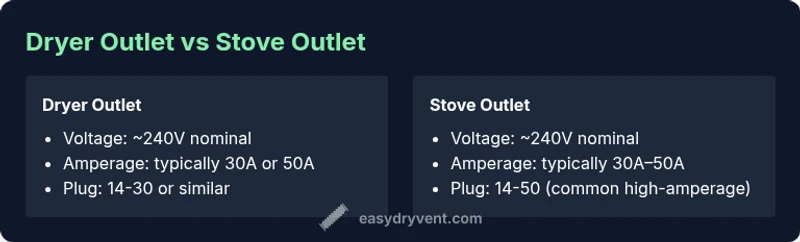
| Feature | Dryer Outlet (Electric Clothes Dryer) | Stove Outlet (Residential Range) |
|---|---|---|
| Voltage | 240V nominal (common configurations vary by model) | 240V nominal (configurations vary by range) |
| Amperage | Typically 30A or 50A depending on exact model and wiring | |
| Plug Type / NEMA | Common modern dryer outlets use NEMA 14-30 (4-wire) in many regions | Ranges may use NEMA 14-50 or similar high-amperage configurations |
| Dedicated Circuit Requirements | Usually requires a dedicated 30A or 50A circuit per appliance | Usually requires a dedicated 30A–50A circuit per appliance |
| Safety/Code Considerations | GFCI/AFCI requirements vary by location; many regions require proper grounding and separation | Code typically requires dedicated, properly rated outlets with correct receptacles and circuit protection |
The Good
- Improved safety from properly matched outlets and circuits
- Better reliability and performance when using correct receptacles
- Easier future upgrades with standardized wiring practices
- Stricter adherence to electrical codes reduces risk of fines or hazards
Negatives
- Higher upfront costs due to new wiring and receptacles
- Potentially invasive upgrades requiring permits and downtime
- Requires professional installation for most homeowners
- Planning and coordinating with other renovations can extend timelines
Not the same: use dedicated, correctly rated outlets for each appliance.
The two outlets serve different appliances and loads. Misusing one for the other creates safety risks and code issues. For best results, hire a licensed electrician to verify circuit ratings and install the appropriate receptacles.
Common Questions
Are dryer outlets the same as stove outlets?
No. Dryer outlets and stove outlets are designed for different loads and wiring. They require separate circuits and properly rated receptacles. Mixing them can pose safety risks and may violate local electrical codes.
No. Dryer and stove outlets aren’t interchangeable; they’re designed for different loads and need separate circuits.
Can I use a universal outlet adapter for both appliances?
Adapters can create unsafe configurations and are generally not permitted for high-load appliances like dryers or stoves. Use dedicated outlets with correctly rated breakers instead.
Adapters aren’t recommended for these high-load appliances; dedicated outlets are the safer choice.
What codes govern dryer and stove outlets?
Electrical codes typically require dedicated circuits and correctly rated receptacles for large appliances. Local amendments can add AFCI/GFCI requirements, so check your jurisdiction and consult a licensed electrician for compliance.
Electrical codes demand dedicated circuits for large appliances; local rules may add AFCI/GFCI protections.
Do all dryers require 30A circuits?
Many dryers use a 30A circuit, but some models and configurations may require 50A. Always verify the appliance’s manual and the existing wiring before installation.
Most dryers use 30A, but some require 50A—check the manual and wiring first.
How can I upgrade safely if my home has old outlets?
Plan with a licensed electrician to assess panel capacity, wiring condition, and permit requirements. Upgrades should reflect the current code and appliance needs, including grounding and proper receptacles.
If you have old outlets, bring in a licensed electrician to assess and plan upgrades safely.
Is it safe to operate a dryer and stove on the same circuit?
No. Sharing a circuit between a dryer and stove can overload the breaker and increase fire risk. Separate circuits with appropriate ratings are essential for safety.
No—don’t share circuits between a dryer and stove.
Key Points
- Verify that each appliance has a dedicated 240V circuit
- Use correctly rated receptacles (e.g., 14-30, 14-50) as required
- Avoid adapters or cross-using outlets between appliances
- Check local code requirements for AFCI/GFCI protections
- Plan upgrades with a licensed electrician for safety and compliance