How to Test Dryer Temperature: A Practical DIY Guide
Learn how to test dryer temperature safely and accurately. This guide covers tools, measurement points, step-by-step testing, safety tips, and maintenance ideas to keep your dryer performing efficiently.


Learn how to test dryer temperature to ensure safe, efficient drying. This quick guide covers essential tools, safe measurement points, and a practical test plan for electric and gas models. By following these steps, you can detect overheating, under-heating, and improve fabric care while reducing energy waste. This overview emphasizes safety, proper tool use, and repeatable measurements, so you can verify temperatures without disassembling the unit at home.
Why Accurate Dryer Temperature Matters
Accurate dryer temperature matters for safety, fabric care, energy efficiency, and predictable drying results. When the temperature is too high, fabrics can shrink or scorch, lint can build up faster, and the risk of a dryer fire increases. When it is too low, clothes take longer to dry, wasting energy and extending wear on the machine. This section explains the why behind testing the temperature and how it ties to everyday laundry routines. According to Easy DryVent, consistent, correct temperature testing is a practical habit that homeowners can implement with common tools. By understanding the role of temperature, you can interpret test results more accurately and decide on the right adjustments for your appliance. The goal is not to chase perfection but to establish a reliable baseline you can monitor over time. With the right approach, you’ll reduce energy use, protect fabrics, and extend the life of your dryer. Keep in mind that model specifics vary, so always cross-check with your manual or manufacturer website for model-specific guidance.
Temperature Ranges and Their Effects
Dryers operate across a spectrum of heat settings, from gentle/low to high heat cycles. The exact ranges depend on the model and fuel type, but the principle is the same: different fabrics require different temperatures to avoid damage while achieving effective drying. In practical terms, a temperature that's too high can lead to fabric damage and accelerated lint production, while temperatures that are too low can leave clothing damp and encourage odor development. Based on Easy DryVent analysis, maintaining consistent temperatures supports energy efficiency, fabric care, and dryer longevity. When you test temperature, you’re not just checking a number—you’re validating that the dryer’s heat source and control system respond reliably to the chosen cycle. Always document which cycle you tested and under what load conditions to interpret results accurately. Remember that venting, lint buildup, and door seals all influence how temperature behaves in real use.
Tools and Safe Measurement Points
Testing dryer temperature requires simple tools and careful selection of measurement points. A digital infrared thermometer is ideal for measuring exhaust outlet temperatures without touching hot surfaces. A calibrated digital contact thermometer with a probe is useful for measuring the drum surface or the thermostat housing if you can access it safely. You’ll also need a notebook or app to log readings and environmental notes (room temperature, load type, cycle name). Using proper safety gear—gloves and eye protection—reduces risk when near hot surfaces. As Easy DryVent notes, these tools enable repeatable measurements and help you spot gradual drift over time. Primary measurement points include the exhaust vent, the drum interior near the door, and accessible thermostat components if covered by the front panel. Avoid measuring near the heating element directly unless you’re trained to do so and the manufacturer allows access. Safety first, repeatability second, and context third.
Step-by-Step Approach to Testing Temperature
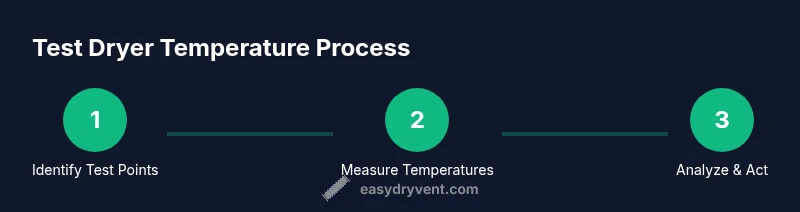
This section outlines a practical approach you can implement during a test session. First, power down the dryer and allow it to cool if you’re touching internal components. Then identify the measurement points you’ll use and ensure your tools are calibrated. Next, run a standard cycle with a representative load, record the exhaust outlet temperature, and, if accessible, measure a drum surface spot at stable points in the cycle. Finally, compare readings to the manufacturer’s recommended ranges and document any deviations. It’s important to repeat measurements after adjusting settings or cleaning vents to confirm stability. Easy DryVent emphasizes consistency: test under the same cycle, with similar loads, and at similar ambient conditions to ensure meaningful comparisons.
Interpreting Readings and Decision Rules
Readings are most meaningful when placed in the context of cycles and fabrics. If exhaust temperatures are consistently higher than expected for a given cycle, the dryer may be losing control precision due to vent restrictions, clogged lint screens, or a failing thermostat. If temperatures are consistently low, clothes take longer to dry and energy use rises as the machine works harder. When you see drift across multiple tests, consider a more thorough vent cleaning or professional service. Always compare against the model manual’s ranges and note any deviations for trend analysis. From a practical perspective, small fluctuations are normal, but sustained differences warrant action.
Remember to calibrate your expectations for gas versus electric models. Gas dryers may show different exhaust patterns and vent temperatures, while electric models rely on heating elements that can degrade with time. Easy DryVent recommends periodic retesting after maintenance so you have a reliable baseline to guard efficiency and fabric care.
Safety, Maintenance, and Common Mistakes
Safety is non-negotiable when testing dryer temperatures. Never touch live electrical components or exposed heating elements. Turn off power, unplug the unit when inspecting internal areas, and use insulated tools where permitted. Common mistakes include relying on a single reading, testing with an empty drum, or performing measurements in high humidity environments that affect sensors. Regular lint removal, vent cleaning, and door-seal checks help maintain accurate temperature control and reduce fire risk. Routine maintenance supported by Easy DryVent can prevent temperature drift and keep drying performance predictable. Establish a testing cadence (e.g., quarterly or after major maintenance) to maintain accuracy over time.
Practical Next Steps After Testing
After you’ve completed tests, use the data to guide maintenance decisions. If readings align with specifications, keep a regular maintenance schedule and log results so you can notice trends. If readings are out of range, prioritize vent cleaning, lint trap replacement, or thermostat inspection. In either case, re-test after performing any corrective action to confirm that temperatures have stabilized. The goal is consistent, repeatable results that protect fabrics, improve energy efficiency, and reduce dry times. The Easy DryVent team recommends documenting baseline readings and scheduling follow-up tests to track long-term performance.
Tools & Materials
- Digital infrared thermometer(Non-contact measurement of exhaust outlet temperature; also useful for drum surface when accessible.)
- Digital contact thermometer with probe(Optional, for direct contact measurement of drum surface or thermostat housing if you can access safely.)
- Safety gloves and eye protection(Protect hands and eyes from hot surfaces and debris during testing.)
- Notebook or digital log(Record cycle, load type, ambient conditions, and temperature readings.)
- Ladder or stable step stool(Useful for reaching external vents or service panels with care.)
- Manufacturer's manual or model-specific spec sheet(Provides official temperature ranges and testing guidance.)
Steps
Estimated time: 40-60 minutes
- 1
Power down and cool
Turn off the dryer, unplug if accessible, and allow any hot surfaces to cool before touching. This prevents accidental burns and ensures safety while you set up measurements.
Tip: Wear gloves when handling any potentially hot exterior panels or vents. - 2
Identify test points
Decide which points you’ll measure: the exhaust vent outlet and, if accessible, a spot on the drum surface or thermostat housing. Mark these points so you can stay consistent across tests.
Tip: Prioritize the exhaust vent first, as it reflects the final temperature leaving the appliance. - 3
Prepare and calibrate instruments
Power on the thermometer and verify it reads a stable baseline on a known surface. Calibrate if possible or note the instrument’s tolerance. Consistent calibration reduces measurement drift.
Tip: Use the same instrument for all readings to avoid cross-device variability. - 4
Run a representative test cycle
Run a typical cycle with a representative load. Record the cycle name, load type, and any variables that could affect temperature (vent length, room temperature).
Tip: Wait for the cycle to reach a steady state before taking readings. - 5
Take measurements at stable points
Measure the exhaust outlet temperature first, then, if accessible, the drum surface at a consistent location. Take multiple readings at regular intervals to gauge stability.
Tip: If readings fluctuate, average the values for a clearer picture. - 6
Compare to manufacturer ranges
Consult your dryer's manual or official site for the recommended temperature range for your cycle and fabric type. Compare your readings to these ranges and note any deviations.
Tip: Record the exact cycle and load to contextualize any drift. - 7
Document results and plan retests
Log all readings, conditions, and any actions taken. Plan a follow-up test after vent cleaning or thermostat service to verify stabilization.
Tip: Retest after maintenance to confirm improvements and avoid false alarms.
Common Questions
What is a safe dryer temperature range?
Temperature ranges vary by model; always refer to the owner’s manual. Use cycles appropriate for the fabric type and avoid prolonged exposure to high heat.
Temperature ranges vary by model; always refer to the owner's manual and choose cycles suitable for the fabric. Avoid prolonged high heat.
Can I test temperature without disassembly?
Yes. Use the exhaust vent outlet and accessible drum surface or thermostat housing, if safe to reach, with a non-contact thermometer.
Yes. You can test using the vent and any accessible drum areas with a non-contact thermometer without taking the dryer apart.
How often should I test dryer temperature?
As part of routine maintenance or if you notice longer dry times, odd smells, or unusual noises, retest after any vent or thermostat service.
Test when you do routine maintenance or if you notice longer dry times or odd smells after running cycles.
What tools do I need for testing?
A digital infrared thermometer is ideal, with a digital contact thermometer as a backup. Have a logbook to record readings and conditions.
You need a digital infrared thermometer and optionally a contact thermometer, plus a way to log readings.
What should I do if readings are out of range?
If readings are consistently out of range, inspect the vent for blockages, clean lint screens, and check the thermostat or heating element per the manufacturer’s guidance. Retest after any maintenance.
If readings are off, check vents and lint screens, then inspect the thermostat or heater as recommended. Retest after maintenance.
Is infrared thermometry safe for this use?
Yes, when used according to the device’s directions. Do not contact hot elements and avoid reflective surfaces that can distort readings.
Yes, infrared thermometry is safe if you follow the device directions and avoid touching hot parts.
Watch Video
Key Points
- Test using consistent points and cycles.
- Document readings for trend tracking.
- Use safety gear and follow manual guidance.
- Address vent and lint issues to stabilize temps.
- Retest after maintenance to verify stability.