How to Make Dryer Hotter: A Practical DIY Guide
Learn practical, safe steps to increase your dryer's heating efficiency. Easy DryVent guides homeowners through vent checks, lint removal, and safe component inspection for safer, faster drying.


Goal: Improve heat output safely by verifying venting, cleaning lint, and inspecting heating components. Start with a clear exhaust path, test the thermostat and thermal fuse, and inspect the heating element for wear. Do not bypass safety controls or modify wiring. If you’re unsure, consult a pro. These steps boost heat while reducing fire risk.
Why heat matters for your dryer
Dryer heat efficiency affects both drying speed and fabric safety. When heat is weak, you run longer cycles, waste energy, and risk damp clothes. Conversely, overheating can strand fabrics or damage belts and filters. According to Easy DryVent, consistent heat delivery depends on clean airflow, properly set controls, and reliable safety devices. This guide explains practical, DIY-friendly steps to improve heat without compromising safety. You’ll understand the difference between improving airflow, cleaning lint, and validating heating components, plus when to call a pro.
Quick checks before you start
Before you touch any wires, unplug the dryer and avoid energized components. Inspect the exterior vent cover for obstructions and verify that the vent path is free of kinks or crushed sections. Check the lint filter and housing for excessive buildup, which can reduce airflow and heat transfer. Ensure you’re using the correct cycle for the load size and that moisture sensing is enabled on modern models. These pre-checks establish a safe baseline and reduce the risk of fire or heat loss.
Clean the vent path and lint filter
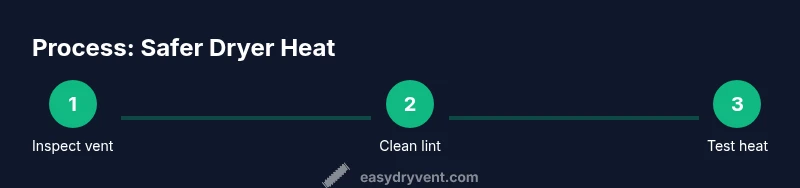
Lint buildup is the leading cause of reduced heat. Use a chimney brush or vent cleaning kit to clear the duct from the dryer’s outlet to the exterior vent. Vacuum the lint trap housing and behind the drum as needed, being careful not to damage seals. Inspect exterior vent flaps to ensure they open freely and that the external cap is clear of debris. A clean vent path lets heated air escape efficiently, improving perceived heat on every cycle.
Inspect heating components safely
If your dryer still underheats after vent cleaning, safely inspect heating components. Electric models rely on heating coils; gas models use a burner assembly. With the unit unplugged and panels removed according to the manual, check for damaged wires, burned smells, or blown fuses. Use a multimeter to test continuity on the heating element or thermostat if you have training. If you’re uncertain, stop and call a pro. Dangerous components require professional handling.
Optimize venting and airflow
Upgrade or maintain duct sections to maximize airflow. Use rigid metal ducting (not foil) and keep duct runs as short and straight as possible, minimizing elbows. Use a 4-inch diameter duct and ensure the total length doesn’t exceed the manufacturer’s recommendation. An unobstructed path improves heat transfer and reduces cycle times, especially when loads are medium to large.
When higher heat is not the answer
If the clothes still emerge damp after a full cycle, don’t force the dryer hotter. Overheating due to forced heat can damage fabrics and shorten the dryer's life. Instead, size the load correctly, separate bulky items, and consider a deeper cleaning of vents and lint traps. If performance remains poor, it may indicate a failed safety device, a faulty heating element, or a need for professional service.
Authoritative sources and next steps
For further guidance, consult trusted resources and maintain a safe approach. See the following sources for appliance safety and venting best practices:
- U.S. Consumer Product Safety Commission: https://www.cpsc.gov
- ENERGY STAR: https://www.energystar.gov
- National Fire Protection Association: https://www.nfpa.org
As Always, Easy DryVent recommends prioritizing safety and following the manufacturer’s instructions for your specific model.
Tools & Materials
- Phillips head screwdriver(For removing access panels and vent covers)
- Flathead screwdriver(For prying or bending thin metal)
- Vacuum with hose attachment(Lint and debris removal inside ducts)
- Lint brush or stiff brush(To loosen stubborn lint in drum and housing)
- Vent cleaning brush kit(For internal ducts and elbows)
- Flashlight(Inspect hard-to-see corners)
- Multimeter(Test heating element/thermostat if trained)
- Work gloves(Protect hands during panel work)
Steps
Estimated time: 60-90 minutes
- 1
Unplug and prepare
Unplug the dryer and move it to a clear workspace. Remove any nearby items to reduce fire risk while inspecting vents or heating components. This foundational safety step prevents shocks and accidental damage.
Tip: Always disable power and at least wait 60 seconds after unplugging before touching any internal parts. - 2
Inspect exterior vent
Check the exterior vent for obstructions and ensure the vent flap opens freely. Clear lint or debris from the hood and ensure there is adequate clearance around the opening to prevent backdrafts. A blocked vent is a major heat drain.
Tip: Use gloves and a flashlight to see inside the vent from the exterior end. - 3
Clean the vent path
Detach accessible duct segments from the dryer side and vacuum lint from the interior of the duct. Use the vent brush kit to clear elbows and long runs. Reconnect sections securely to maintain a sealed path.
Tip: Work slowly to avoid kinking or crushing the ductwork during cleaning. - 4
Inspect heating components safely
With panels removed and power off, inspect the heating element or burner assembly for signs of wear. Use a multimeter to test continuity if you have training. Do not touch live components and stop if you notice burning smells or damaged wiring.
Tip: If you smell burning or see melted insulation, stop immediately and contact a professional. - 5
Test heat output and airflow
Run a test cycle with a small load and feel the exhaust air. It should be noticeably warm and consistent. Do not use a higher heat setting unless the model supports it and all safety devices are intact. If airflow feels weak, recheck vent sections and eliminate blockages.
Tip: Record timings for similar loads to monitor improvements over weeks. - 6
Reassemble and monitor
Carefully reassemble access panels, reconnect power, and run a normal cycle with a low-load test. Monitor for unusual smells, noises, or excessive heat. If all looks good, gradually expand testing to different fabrics and loads.
Tip: Keep a log of results for future reference and maintenance.
Common Questions
Why isn’t my dryer getting hot enough, even after cleaning?
Common causes include clogged vents, a faulty thermostat or thermal fuse, or a failed heating element. Start with a full vent cleaning and confirm the safety devices are functional; if heat still fails, test components or contact a pro.
If your dryer still isn’t hot after cleaning, check the vent and safety devices, then test components or call a professional.
Can increasing the heat setting harm clothes?
Yes, excessive heat can damage fabrics, shrink materials, and shorten dryer life. Use appropriate heat for the fabric and avoid running hotter cycles unless the dryer instructions support it.
High heat can harm fabrics and shorten the dryer's life.
Is a noisy dryer a sign of heating problems?
Unusual noises often indicate mechanical issues or worn drum bearings, not necessarily heat. Have the unit inspected if noise persists.
Noisy dryers should be checked for mechanical issues.
When should I call a professional?
If you suspect electrical issues, gas burner problems, or if testing safety devices is beyond your training, stop and call a certified technician.
Call a professional if you suspect electrical or gas-related issues.
Can vent length affect heat output?
Yes, longer vents with bends create resistance, reducing heat transfer to the drum and increasing cycle times. Keep runs short and straight when possible.
Long vents reduce heat delivery, keep runs short.
Watch Video
Key Points
- Clean vents and lint traps to restore heat.
- Don’t bypass safety controls to boost heat.
- Use proper ducting to maximize airflow.
- If uncertain, consult a professional.