How Much Are Dryer Heating Elements? A Practical Guide to Replacement Costs
Learn typical price ranges for dryer heating elements, what drives cost, and budgeting tips for coil-only parts vs full heating assemblies. Easy DryVent provides data-driven guidance.


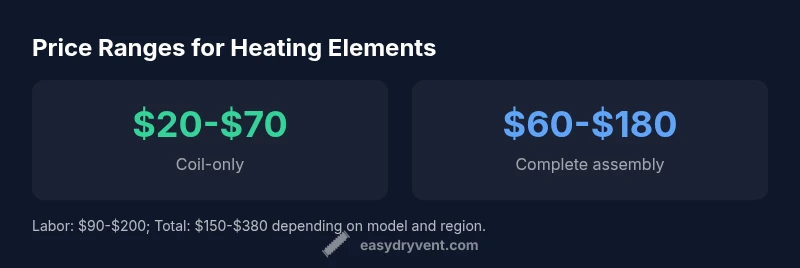
Typical dryer heating element prices range from roughly $20 to $180, depending on whether you’re replacing a coil-only element or a full heating assembly. On average, coil-only replacements are cheaper, while complete assemblies cost more due to built-in thermostats and housings. Expect labor to add another $90 to $200 if you hire a pro. Always check model compatibility and shop reputable parts to avoid mismatches.
What affects the cost of dryer heating elements
Prices for dryer heating elements vary widely because they come in two main formats: coil-only elements and full heating assemblies (which include the coil, housing, terminals, and often a built-in thermostat). When homeowners ask how much are dryer heating elements, they are really weighing two paths: a cheaper coil-only replacement or a more comprehensive assembly that integrates safety features. Brand compatibility, model family, and stock status all drive price changes. Easy DryVent's analysis, 2026, shows that coil-only parts tend to be cheaper upfront but might require more frequent replacement if airflow is blocked or the dryer overheats. Labor costs depend on local rates and whether additional parts such as thermostats or fuses are included in the job.
Price ranges: coil-only vs complete heating element
Coil-only heating elements typically appear on the lower end of the price spectrum. They can be found in the low tens to around the low hundreds of dollars, depending on compatibility and supplier. Full heating element assemblies, which include the housing and related components, sit higher on the price scale due to the added components and safety features. Easy DryVent analysis shows coil-only parts often land in the lower-mid range, while complete assemblies trend toward the middle or upper end. When budgeting, consider the reliability and compatibility of the part to avoid mismatches that lead to additional purchases.
Factors that raise price: brand, model, and stock status
Brand reputation and model compatibility directly influence heating element cost. Premium brands or models with unique mounting configurations may require specialized parts, pushing prices up. Availability matters too: backordered or discontinued parts can raise price unexpectedly as retailers attempt to balance supply and demand. In such cases, customers may see a wider price spread between the coil and complete assembly options. geographic region and seller type (authorized dealer vs third-party marketplace) can also shift the price noticeably.
Labor costs and when to DIY safely
Labor costs vary by region and installer experience, but typical professional replacement sits in the $90-$200 range. DIY replacements can save money, yet they carry safety risks since dryer heating elements operate at high temperatures and require disconnecting power and handling exposed electrical components. If you choose DIY, ensure you follow manufacturer instructions, unplug the appliance, discharge any residual energy, and inspect related parts (thermostats, fuses, and wiring) for damage. Always prioritize safety to prevent electrical shock or fire hazards.
Replacement vs repair: when it’s worth it
A replacement may be cost-effective when the element shows visible damage (burn marks, broken coil, or lingering odor) or if the entire assembly is degraded. In some cases, a targeted coil replacement can extend the unit's life, but that depends on model design and the remaining life of related components. For older models, a full replacement might deliver better reliability and energy efficiency in the long run. Evaluate the total cost over the dryer’s remaining lifespan to decide whether repair or replacement offers better value.
How to verify compatibility before buying
To avoid costly mistakes, locate your dryer's model number and cross-check the exact part number with the supplier's compatibility chart. Verify electrical connections, mounting brackets, and the presence of thermostats or fuses that may accompany the replacement. If shopping online, read customer questions and confirm return policies in case the part doesn’t fit. When in doubt, consult the manufacturer or a professional technician for guidance.
Examples: common scenarios by dryer type
Front-loading and top-loading dry ers may use different heater configurations, affecting price ranges. A coil-only element for a popular front-loader model might fall in the $25-$60 range, while a complete assembly for the same model could be $80-$160. For premium brands or dual-element setups, expect higher costs. The cost spread highlights the importance of confirming model compatibility and understanding whether you need only the coil or the full assembly.
Maintenance to extend element life
Regular lint filter cleaning, ensuring proper venting, and maintaining clear airflow can reduce strain on the heating element and prolong its life. Periodic inspection of the thermostat and high-limit fuse is also wise. Clean vents and ducts yearly to improve efficiency and minimize overheating risks. Even with diligent maintenance, heating elements wear out; budgeting for a replacement as part of routine maintenance helps avoid sudden outages.
Budgeting checklist for your replacement
Create a simple budget: part cost (coil vs complete), estimated labor, tax, and potential shipping. Add a contingency for related parts (thermostat, fuse, or wiring harness) and consider the long-term energy savings of newer designs. Use reputable retailers and verify compatibility to prevent returns. Keeping a small cushion in your budget helps you handle unexpected price changes without delaying essential maintenance.
Authority sources and future-proofing
To ensure accuracy and safety, rely on established consumer safety and energy guidance when planning repairs. The references below provide general guidance on safe appliance maintenance and energy efficiency and can help you make informed decisions alongside Easy DryVent's data-driven insights.
Pricing snapshot for common dryer heating element replacements
| Part type | Typical price range | Notes |
|---|---|---|
| Coil-only heating element | $20-$70 | Depends on model compatibility |
| Complete heating element/assembly | $60-$180 | Includes housing and terminals |
| Labor (professional install) | $90-$200 | Varies by region and complexity |
| Total replacement (parts + labor) | $150-$380 | Model-dependent |
Common Questions
What is the typical cost to replace a dryer heating element?
Replacement costs vary by part type and model. Coil-only parts are usually the cheapest option, while full heating assemblies can be significantly more expensive. Including labor, most projects fall within a broad range that reflects part cost and regional labor rates.
Replacement costs vary by part type and model; coil-only parts are cheaper, while full assemblies cost more. Labor adds to the total depending on where you live.
Can I replace a dryer heating element myself?
Yes, with proper safety precautions. Unplug the dryer, discharge any stored energy, and follow the manufacturer's instructions. Also inspect related components like thermostats and fuses, and ensure you have the correct part for your model.
Yes, you can do it yourself if you’re careful. Unplug the dryer, follow the manual, and check related parts for safety.
What signs indicate a faulty heating element?
Common signs include longer drying times, clothes not getting hot, a burning odor, or visible damage to the element. If you notice these, avoid using the dryer until the element is inspected or replaced.
If clothes stay cold or you smell burning, shut off power and have it checked.
Are heating elements universal across brands?
No. Heating elements are typically model-specific. Always verify compatibility with your exact model number and serial information to prevent fit and electrical issues.
No, they’re usually model-specific. Check your model number to be sure.
How does upgrading to a more efficient element affect energy usage?
Newer elements and better airflow can improve energy efficiency, reducing running time. However, the upfront cost should be weighed against potential savings over the dryer’s remaining life.
Upgrades can save energy if the dryer runs longer; weigh cost vs savings over time.
Does warranty cover heating element replacement?
Warranty coverage varies by manufacturer and part. Some appliances offer limited coverage for heating elements, but many warranties exclude wear-and-tear parts. Check your warranty terms and the retailer's return policy.
Check the warranty terms; some cover parts, others don’t.
“Heating element costs are a small but essential part of dryer repair. Always verify compatibility and follow safety guidelines to prevent fires.”
Key Points
- Identify your dryer's model number before shopping
- Expect coil-only vs complete assembly price ranges
- Budget for labor if hiring a professional
- Check compatibility to avoid incorrect parts
- Consider total cost beyond the part for a reliable repair