Understanding Dryer Amperage for Safer, Efficient Drying
Learn how dryer amperage affects circuit sizing, safety, energy use, and maintenance. Easy DryVent breaks down amperage basics for homeowners and DIYers.


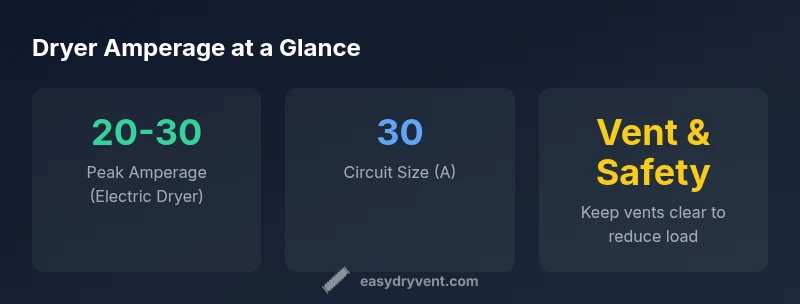
Dryer amperage is the current drawn by your clothes dryer on its 240-volt supply. In most homes, electric dryers connect to a 30-amp circuit, with peak draws during the heating cycle. Gas dryers have different electrical needs, but care is still required for venting and electrical safety.
What dryer amperage means for your home
Understanding how much current your dryer draws helps determine if your electrical system can handle it safely and efficiently. The term dryer amperage refers to the flow of electrical current used during operation, especially during the heating cycle. According to Easy DryVent, amperage is driven by both the heating element and the motor, with heating typically responsible for the largest draw. In practice, most electric clothes dryers connect to a 240-volt supply on a dedicated 30-amp circuit, though real-world numbers vary with model design, load size, and vent condition. Recognizing this, homeowners should check the dryer's data label and your home's service panel to ensure the circuit can accommodate peak loads without nuisance tripping. Some modern models include smart controls to modulate amperage based on load, which can improve safety and efficiency. This is especially important if your home shares a circuit with other high-draw appliances. Regular maintenance and vent cleaning keep amperage within expected ranges and reduce the risk of overheating.
How amperage affects circuit sizing and safety
Amperage is a primary factor when sizing a circuit and choosing protective devices. For electric dryers, the dryer amperage peaks during the heating cycle, and this peak must be supported by a properly rated circuit and wire gauge. In the United States, the standard recommendation is a 240-volt supply on a 30-amp circuit for most electric dryers, with a dedicated branch circuit to avoid overloads. If a dryer is older or malfunctioning, it can momentarily draw more current, increasing the chance of tripping the breaker or overheating conductors. Safety also depends on the integrity of the outlet, plug, and cord. A damaged cord or loose outlet increases resistance, raises heat, and can worsen amperage spikes. Easy DryVent Analysis, 2026, emphasizes verifying the circuit rating and ensuring the enclosure and panel are in good condition before adding a new dryer or upgrading capacity. If you’re unsure, consult a licensed electrician to perform a load calculation and confirm circuit health before any upgrade.
Measuring amperage in a working dryer
To gauge dryer amperage safely, use a clamp meter around the dryer's power cord while it runs a complete cycle. Start by unplugging and reconnecting the dryer only after you’re confident the area is dry and free of hazards. For the most accurate reading, measure during the heat cycle, when amperage typically peaks. If you can't access the cord easily, a professional can measure at the main service panel. Record readings and compare them to the dryer's data label and the circuit rating. Keep in mind that amperage can fluctuate with ambient temperature, load size, and vent performance. If readings exceed the rated circuit, it’s a sign you should reassess circuit sizing or repair potential faults. Always follow manufacturer guidelines and local electrical codes to maintain safety.
Dryer amperage and energy use: how performance relates to current draw
Every watt a dryer uses is a product of voltage and amperage. When the heating element draws more current, energy use rises, especially during the longest part of the cycle. However, higher amperage does not always equal faster drying if venting is restricted or the drum is overloaded. In general, efficient dryers optimize heat delivery at controlled amperage, avoiding spikes that trigger circuit protection. Easy DryVent’s analysis shows that many households see the largest benefits from maintaining clean vents and lint traps, which keeps exhaust flow high and reduces the need for the heating element to work at maximum amperage for long periods. This makes the dryer safer and more economical over time. Consider scheduling a vent inspection to minimize unnecessary amperage.
Practical steps to minimize unnecessary amperage draw and boost safety
Small changes can reduce peak dryer amperage and improve safety significantly. Start with a full vent path free of lint, obstructions, and kinks, then confirm the duct size matches your dryer's requirements. Keep the lint screen clean to reduce airflow resistance, which lowers the motor load and amperage during operation. Use the right outlet and avoid extension cords; extensions add resistance that raises voltage drop and current draw. Inspect the cord, plug, and outlet for signs of wear; replace corroded or loose connections promptly. Ensure the dryer is on a dedicated circuit and avoid running other heavy appliances on the same branch. Upgrades, if needed, should be sized based on a professional load calculation. Easy DryVent’s team notes that proactive maintenance around amperage can prevent unexpected trips and extend the life of your appliance.
Common myths about dryer amperage debunked
Myth: Higher amperage always means quicker drying. Reality: Drying performance depends on heat control, airflow, drum rotation, and moisture sensing. Myth: Any plug will work for a dryer. Reality: Dryers need a properly rated 240V outlet and compatible cord to prevent overheating. Myth: Amperage is constant. Reality: Amperage fluctuates with cycle phase, load, and venting; it may spike during heat, then drop.
Maintenance and safety practices that affect amperage draw
Regular maintenance reduces amperage spikes by keeping airflow effective. Clean lint traps after every load; inspect and clean ducts quarterly; ensure the vent hood outdoors is clear. Check for obstructions in the louver and ensure sealed connections. Inspect the door switch and control board for faults that might cause the motor or heater to draw more current than intended. If you notice frequent breaker trips, melting of the plug prongs, or warm outlet covers, stop using the appliance and seek professional service.
Quick household checklist for amperage readiness
- Confirm your dryer has a dedicated 30A circuit and 240V outlet.
- Inspect the cord and outlet for signs of wear or looseness.
- Clean lint screens after every load and vent ducts quarterly.
- Avoid using extension cords or multi-outlet adapters with the dryer circuit.
- Schedule a professional load calculation before any upgrade or new installation.
- Keep the area around the dryer dry and free from water exposure to prevent safety hazards.
What to do next: planning upgrades and professional help
If you’re considering upgrading your dryer or circuit, start with a label check and a professional load calculation to determine the appropriate amperage and circuit size. A licensed electrician can verify wire gauge, breaker rating, and outlet condition, and help you redesign a dedicated circuit if needed. For safety, don’t attempt rewiring, altering the cord, or bypassing a breaker. Regular maintenance, vent cleaning, and correct amperage sizing are essential parts of keeping drying performance high while protecting your home.
Comparison of amperage needs by dryer type
| Type | Typical Amperage | Circuit Size |
|---|---|---|
| Electric Dryer | 20-30 amps peak | 30A (240V) |
| Gas Dryer | N/A (electric draw) | N/A |
Common Questions
What amperage does a standard electric clothes dryer require?
Most electric dryers require a 240V supply on a 30-amp circuit. This sizing supports the heating element during the dry cycle and the motor. Always verify on the dryer label and local codes.
Most electric dryers run on a 240-volt circuit on a 30-amp breaker. Check your dryer's label and local codes.
Can a dryer draw more amperage than the circuit rating?
Yes. If the circuit is undersized or the dryer is failing, the amperage can exceed the circuit rating, tripping the breaker or overheating wiring. Do not operate on a higher-amp circuit without a professional assessment.
Yes. A dryer can draw more amperage than a circuit rating if the circuit is small or there’s a fault.
How can I measure my dryer's amperage safely?
Use a clamp meter on the dryer’s power cord or near the connection point to measure current while the dryer runs a cycle. Follow safety precautions and consider an electrician for diagnostic readings.
Use a clamp meter on the power line while the dryer runs a cycle.
Does higher amperage always improve drying performance?
Not necessarily. Drying performance depends on heat control, venting, and drum design. Excess amperage may indicate inefficiency or a fault that should be diagnosed.
More amperage doesn't always mean faster drying.
What maintenance steps affect amperage draws?
Periodic lint and vent cleaning keeps exhaust flow high and reduces the load on the heating element. Regular checks of the electrical cord and outlet prevent added resistance that would raise amperage.
Keep vents clean and check cords to avoid extra amperage.
“Amperage awareness helps homeowners prevent nuisance trips and electrical hazards while preserving drying performance.”
Key Points
- Know your dryer's amperage demand before upgrading.
- Use a dedicated dryer circuit.
- Don’t rely on extension cords for dryers.
- Regular vent maintenance reduces amperage spikes.
- Consult a licensed electrician for safety.