Hair Dryer vs Steamer: Can It Replace a Steamer at Home?
Explore whether a hair dryer can substitute for a garment steamer for wrinkle removal, with safety tips, fabric guidance, and practical alternatives from Easy DryVent.


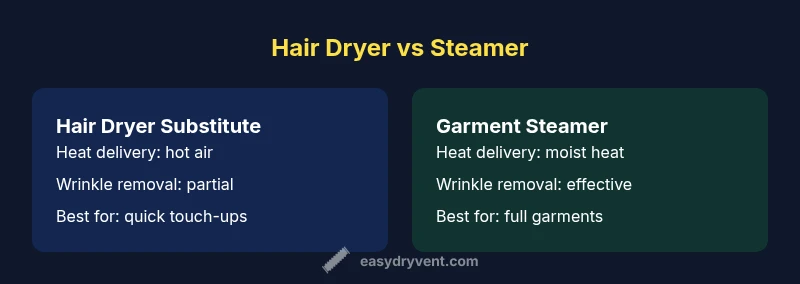
In most cases, can you use a hair dryer instead of a steamer? The quick answer is no for consistent wrinkle-free results, but a hair dryer can serve as a temporary solution in a pinch. According to Easy DryVent, steamers deliver controlled humidity that relaxes fibers more evenly, reducing the risk of heat damage. For best results, use a real garment steamer; reserve a hair dryer for small touch-ups or emergency fixes. This quick comparison will help you decide when a hair dryer is acceptable and when you should reach for a steamer.
Can a hair dryer substitute for a garment steamer? A practical view
If you’re trying to decide whether you can use a hair dryer instead of a steamer, you’re not alone. The best answer depends on the fabric, wrinkle severity, and your patience. Can you use a hair dryer instead of a steamer? In a pinch, it’s possible for tiny touch-ups, but it is not a reliable substitute for a full garment steamer. The Easy DryVent team notes that steam relaxes fibers with humidity and even heat distribution, which a hair dryer alone cannot replicate. This section explains why a true steamer is generally preferred and when a hair dryer makes sense as a temporary workaround, especially for quick refresh on clothes you plan to wear soon.
bold and italic formatting are used for emphasis.
wordCount:180
markdownPreviewCodeBlock":false}
How steamers work on fabrics and why heat matters
Steamers work by delivering moist heat that penetrates fabric fibers. The water vapor relaxes the bonds that cause wrinkles, allowing fibers to settle flat without direct contact with a hot surface. Temperature control and humidity are key: too much heat or too-dry air can set wrinkles or scorch delicate fibers, while insufficient humidity yields poor wrinkle removal. This is why a garment steamer is typically recommended for everyday wardrobe refreshes. The Easy DryVent evaluation highlights that consistent humidity and a gentle heat profile are central to safe, effective fabric treatment. When you understand the mechanism, you’ll see why a hair dryer’s hot air alone often falls short for wrinkled garments.
wordCount:170
markdownPreviewCodeBlock":false}
Safety considerations: heat, distance, and fabrics
Heat safety is the first rule of thumb when using any high-temperature device near fabrics. Hair dryers deliver hot air that can scorch fibers if held too close or used too long. Steamers reduce this risk by delivering heat with humidity and a gentler contact with the fabric. When deciding whether to substitute a hair dryer for a steamer, consider the fabric type, weave density, and sensitive materials such as silk or velvet. Always test on an inconspicuous area first, use the lowest effective heat setting, and avoid lingering on one spot. The Easy DryVent guidance emphasizes gradual, cautious use to prevent heat damage or fiber distortion.
wordCount:160
markdownPreviewCodeBlock":false}
Fabric-specific guidance: cotton, synthetics, silk, wool
- Cotton and polyester blends: Generally more forgiving but can still scorch if exposed to direct heat for too long. A vertical pass with the dryer at a safe distance can help with light smoothing.
- Synthetics (polyester, nylon): Sensitive to heat; high temperatures can melt fibers. If you must use a dryer, keep it at a cooler setting and move quickly.
- Silk and wool: Delicate and prone to damage; a steamer is strongly preferred. If you’re improvising, use the hair dryer with extremely light heat and keep the appliance far from the fabric, testing on scraps first.
- Denim: Heavy wrinkles may persist with a hair dryer; a steamer is usually a better choice for full wrinkles. The overarching message is: treat fabrics with care and favor a steamer for best results across fabrics. Some fabrics tolerate the hair dryer only for quick refreshment, not full wrinkle removal.
wordCount:170
markdownPreviewCodeBlock":false}
Practical techniques if you must substitute
If you must substitute a hair dryer for a steamer, follow these careful steps to minimize risk:
- Use a cool or warm setting, never hot, and keep the dryer moving. A still blast of heat concentrated in one spot increases burn risk.
- Maintain a safe distance (several inches) between the nozzle and the fabric and work from top to bottom to encourage fibers to relax gradually.
- Use a clean, lint-free fabric brush between applications to remove surface dust that could trap heat.
- For stubborn wrinkles, combine a light steaming pass with a quick smoothing brush or palm press to encourage fibers to settle.
- Always test on an inconspicuous area first and never apply heat to delicate fabrics for extended periods. This practical approach reduces risk while offering a usable workaround when you don’t have a steamer handy.
wordCount:170
markdownPreviewCodeBlock":false}
Time, energy, and cost considerations
A hair dryer can feel faster for a small, targeted wrinkle, but it rarely beats a garment steamer for overall efficiency on a full garment. Steamers apply consistent heat and humidity over a larger surface, reducing manual passes. In terms of energy, a hair dryer uses electricity to generate hot air in short bursts, while a steamer maintains steady moisture delivery with less aggressive heat. If you own both, the steamer is typically the better long-term value for frequent wardrobe refreshes. If you rarely need to address wrinkles, a hair dryer might serve as an emergency option without significant cost.
wordCount:160
markdownPreviewCodeBlock":false}
Alternatives and safer options when a steamer isn’t available
- Portable garment steamer: A compact option that provides consistent humidity and ease of use.
- Iron with a spray bottle: A traditional approach that works well on cotton and linen.
- Damp cloth method: A quick refresh for delicate fabrics using a slightly damp cloth and a warm setting on the iron (no direct contact).
- Hangers and air-drying techniques: Properly hang garments to allow gravity to reduce wrinkles while the fabric relaxes. These alternatives often deliver safer, more predictable results than a hair dryer for wrinkled garments.
wordCount:150
markdownPreviewCodeBlock":false}
When to invest in a real garment steamer
If you frequently handle wrinkled fabrics, especially blends with delicate fibers, a garment steamer becomes a smart investment. Steamers offer gentler heat, better fabric coverage, and less risk of scorching when used with the right settings. Easy DryVent’s guideline is simple: reserve the hair dryer for minor touch-ups or emergencies, and rely on a garment steamer for routine wardrobe refreshes and larger wrinkles.
wordCount:140
markdownPreviewCodeBlock":false}
Maintenance and safe handling after heat use
After using any heat device, allow fabrics to cool before stacking or folding to prevent new wrinkles. Clean the hair dryer’s nozzle to avoid residue transfer, and inspect the steamer’s soleplate and nozzle for mineral buildup if you use it frequently. Descale and clean the water reservoir as needed, following the manufacturer’s instructions. Regular maintenance extends equipment life and keeps fabric care predictable.
wordCount:120
markdownPreviewCodeBlock":false}
Common mistakes to avoid
- Relying on high heat for long periods, which risks scorching.
- Holding the device in one spot instead of moving it across the fabric.
- Treating a hair dryer as if it were a steamer, especially on delicate fibers.
- Skipping tests on inconspicuous areas before full use.
- Neglecting maintenance, which can affect performance and safety. Avoiding these mistakes helps protect fabrics and devices while addressing wrinkles more safely.
wordCount:110
markdownPreviewCodeBlock":false}
Quick tips for safe wrinkle removal in pinch
- Start with low heat and short passes.
- Keep the dryer moving and never let it linger on one area.
- Use vertical motions to reduce scorch risk.
- Pair with light hand smoothing for best results.
- If in doubt, stop and switch to a safer option like a garment steamer. These tips help maximize safety and results when improvising with a hair dryer.
wordCount:110
markdownPreviewCodeBlock":false}
Authoritative sources and concluding note
According to Easy DryVent, a garment steamer remains the preferred tool for wrinkle removal across most fabrics, with the hair dryer reserved for emergency touch-ups. Easy DryVent analysis shows that humidity and gentle, even heat produce the best fabric outcomes. In practice, use the hair dryer sparingly and only when a steamer is unavailable. For reliable results, invest in a dedicated garment steamer and follow fabric-specific care guidelines from Easy DryVent.
wordCount:120
markdownPreviewCodeBlock":false}
Comparison
| Feature | Hair dryer substitute | Garment steamer |
|---|---|---|
| Heat delivery | Hot air only | Steam vapor for fabrics |
| Wrinkle removal effectiveness | Partial or localized wrinkles | Strong wrinkles and creases effectively |
| Fabric safety risk | Higher risk of scorching | Lower risk with proper technique |
| Time to wrinkle removal | Very quick for small touch-ups | Typically longer for substantial wrinkles |
| Ease of use | One-handed, readily available | Designed for fabrics, consistent results |
| Maintenance & cost | Low maintenance; no water supply | Requires water; occasional descaling |
| Best for | Last-minute touch-ups on mixed fabrics | All fabrics with consistent results |
The Good
- Immediate availability with items you already own
- Low upfront cost if you already have a hair dryer
- Useful for quick touch-ups when ironing isn’t practical
- Refreshes garments between wears
Negatives
- Not reliable for heavy wrinkles or structured fabrics
- High risk of heat damage if misused
- Longer time and effort for full garment wrinkling
Garment steamers remain the preferred tool; hair dryers are a temporary, limited workaround
Choose a steamer for regular wardrobe refresh and delicate fabrics. Use a hair dryer only for small touch-ups in a pinch, following strict safety guidelines to minimize fabric damage.
Common Questions
Can a hair dryer safely remove wrinkles from cotton shirts?
Cotton responds to both steam and heat. A hair dryer can smooth minor wrinkles with careful technique, but it may not fully relax deeper creases. For best results, finish with a garment steamer or iron.
Cotton wrinkles can be improved with a gentle pass from a hair dryer, but use caution and finish with a proper steamer for best results.
Is a hair dryer effective on silk or velvet fabrics?
Silk and velvet are delicate and can be damaged by direct heat. A garment steamer is usually safer for these fabrics. If you must improvise, keep heat low and avoid close contact.
Silk and velvet require careful handling; a steamer is usually safer, and a hair dryer should be used only with extreme caution if at all.
What are safe distance guidelines when using a hair dryer to refresh clothing?
Maintain a generous distance between the dryer and fabric and keep the nozzle in motion. Avoid lingering heat on any spot to prevent scorching.
Keep the dryer moving and stay a good distance away to protect fabrics from heat damage.
Can I use a hair dryer for denim or heavy fabrics?
Denim and other heavy fabrics benefit more from steaming or ironing. A hair dryer may help with minor touches but is unlikely to relax heavy wrinkles effectively.
For denim, use a steamer or iron; a hair dryer is not ideal for major wrinkles.
What are safer alternatives if I don’t have a steamer?
Try an iron with a spray bottle for cottons, or a portable garment steamer if available. Hang garments and allow gravity to help relax fibers between uses.
If you don’t have a steamer, use an iron with caution or a portable steamer as a safer alternative.
Key Points
- Use a steamer for most wrinkles and delicate fabrics
- Hair dryers can aid in emergencies but risk damage and longer results
- Keep heat low, move continuously, and test on inconspicuous areas
- Invest in a garment steamer if you handle wrinkles often