Can You Put Polyester in the Dryer: Safe Drying Tips
Learn whether polyester can be dried in a conventional dryer, the risks of heat exposure, and practical drying steps. Get expert guidance from Easy DryVent on heat settings, care labels, and safer air-drying alternatives.


Yes, you can dry polyester in the dryer, but only on the lowest heat setting and for a short cycle. Polyester fabrics are prone to heat damage, melting, or shrinking if exposed to high heat, so always check the care label. If possible, air-dry to preserve fit and color. If you must tumble dry, use delicate with low heat and remove promptly to minimize wrinkles.
What polyester is and why heat matters
Polyester is a durable, synthetic fiber found in everything from performance wear to dressy blouses. Its heat tolerance is different from natural fibers like cotton or wool, so the question can you put polyester in the dryer depends on heat exposure. When polyester fibers are heated, they can deform, melt, or shrink if the setting is too hot or the cycle runs too long. Understanding how heat interacts with this fiber helps you protect color, shape, and texture. Easy DryVent emphasizes that safe drying starts with the care label and ends with mindful heat control. By matching the fabric’s heat tolerance to your dryer’s settings, you can save time without compromising appearance or fit. In short, can you put polyester in the dryer? Yes—with careful heat management and the right cycle.
What polyester is and why heat matters
Polyester is a common synthetic fabric used in a wide range of garments and household textiles. It resists wrinkles and dries faster than many natural fibers, but heat remains the critical factor. High heat can cause polyester to melt or warp, especially on blends with spandex or elastane. The Easy DryVent team notes that even low temperatures can cause subtle changes if the garment is left too long. Treat each item according to its care label. If the label allows tumble drying, opt for the lowest heat, short tumble, and remove promptly to reduce heat exposure. When in doubt, air-dry to maintain size and color. The bottom line is to respect the label and use a conservative heat approach for polyester fabrics.
What polyester is and why heat matters
(In this block, the content continues to elaborate on heat interaction with polyester, reinforcing how to approach drying in a measured way. The goal is to set expectations: polyester can handle dryer use, but only with caution, and always guided by care labels and safe practices.)
Tools & Materials
- Low-heat dryer setting (delicate or permanent press)(Choose the lowest heat and a gentle cycle to minimize fabric stress.)
- Dryer balls or clean tennis balls(Helps keep items from clumping and reduces wrinkles.)
- Care labels(Always start by reading manufacturer instructions.)
- Air-drying rack or clothesline(Use if air-drying is preferred or for blends that dislike tumbling.)
- Lint-free cloth or garment bag(Useful for delicate items or to protect embellishments.)
Steps
Estimated time: 30-60 minutes
- 1
Read the care label
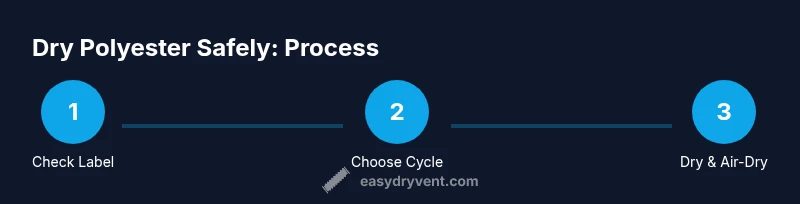
Always start by inspecting the care label for specific drying instructions. Polyester often tolerates tumble drying on low heat, but blends or coated finishes may require air-drying. If the label says dry flat or line dry, follow that guidance.
Tip: If the label is faded, treat the item as delicate and choose air-drying to be safe. - 2
Sort by heat tolerance
Separate polyester items by their heat tolerance. Place items with similar care instructions together to prevent accidental heat exposure on sensitive fabrics.
Tip: When in doubt, err on the side of lower heat and shorter cycles. - 3
Pre-treat and load evenly
Pre-treat any stains and load items loosely so they can tumble freely. Overloading blocks airflow and can cause uneven drying, which increases the chance of heat damage.
Tip: Use dryer balls to maintain space between garments. - 4
Select the right cycle
Set the dryer to a delicate or permanent press cycle with the lowest heat setting. 12–20 minutes can often be enough for small items; larger pieces may require additional short cycles.
Tip: If you’re unsure, start with a shorter cycle and check dryness before resuming. - 5
Monitor and remove promptly
Check items as soon as the cycle ends. Polyester can feel dry on the surface but still be damp inside; removing promptly reduces heat exposure and wrinkles.
Tip: Shake garments gently to redistribute folds before laying flat or hanging. - 6
Air-dry remaining items
For blends or items labeled to avoid heat, lay them flat on a towel or hang them to air-dry. This minimizes heat exposure while preserving fit and color.
Tip: Use a drying rack in a well-ventilated area for faster air-drying. - 7
Remove and store properly
Once dry, remove items promptly from the dryer to reduce wrinkling. Fold or hang garments immediately to maintain smoothness.
Tip: A quick ironing or steaming session can remove any remaining wrinkles. - 8
Document exceptions
Note any items that required air-drying or special care. This helps you adjust future loads and avoid repeat mistakes.
Tip: Keep a small care log near your laundry area for quick reference.
Common Questions
Is it safe to dry polyester on high heat?
No. High heat can cause melting, shrinking, or fabric distortion. Always opt for the lowest heat and shortest cycle allowed by the care label.
No, polyester should not be dried on high heat. Use the lowest heat and shortest cycle as allowed by the care label.
Can polyester blends be tumble dried?
Most polyester blends can be tumble dried on low heat, but always check the label. Some blends may require air-drying due to delicate finishes or added fibers.
Most polyester blends can be tumble dried on low heat, but always check the label first.
How can I dry polyester quickly without shrinking?
Use the delicate setting on low heat and remove items promptly. If possible, air-dry the garment to minimize heat exposure and reduce shrinking risk.
Use the delicate cycle on low heat and remove promptly; air-drying is best to prevent shrinkage.
What if the care label says 'dry clean only'?
Follow the label. If it truly requires dry cleaning, avoid the dryer; air-drying or professional cleaning is recommended to protect fabric integrity.
If it says dry clean only, don't machine dry—air-dry or seek professional cleaning.
Does polyester shrink after drying?
Polyester can shrink if exposed to high heat for extended periods. Use low heat and short cycles, and remove promptly to maintain size.
Polyester can shrink with high heat; stick to low heat and short cycles.
Are there signs of heat damage I should watch for?
Look for glazing, melting edges, or changes in color and texture. If you notice any, discontinue use of heat and air-dry remaining items.
Watch for melting, gloss, or color changes as signs of heat damage.
Watch Video
Key Points
- Always start with the care label.
- Dry on the lowest heat and short cycles.
- Air-dry when possible to protect shape and color.
- Remove promptly to minimize wrinkles.
- Use dryer balls to improve tumbling and efficiency.