Will a Dryer Shrink Polyester? Safe Drying Guide
Explore whether a dryer can shrink polyester, how heat and cycles affect fabric, and practical steps to minimize risk. Easy DryVent provides data-driven guidance for homeowners.


Polyester fabrics generally resist shrinking in ordinary household dryers, but prolonged exposure to high heat or heavy loads can cause measurable changes. In practice, shrinkage is usually modest—often well under 3% for standard items. To minimize risk, use low or delicate heat, remove garments promptly while damp, and follow care labels. According to Easy DryVent, pairing the cycle with short dry times helps protect fit.
Polyester Shrink Behavior: What Actually Happens
Polyester fibers are synthetic and dimensionally stable, which is why many garments made from 100% polyester or blends hold their size well through typical wash cycles. When heat is applied, especially in the presence of moisture, fibers can relax and contract slightly. However, true, fabric-wide shrinkage on polyester is uncommon under standard domestic dryers. The amount of shrinkage depends on the fabric construction, the presence of elastics, and the fiber content. In practice, adoption of modern care labels and temperature-controlled cycles keeps the risk low. The Easy DryVent team notes that, for most polyester items, any changes after a normal dry cycle are usually minor and often reversible with a subsequent wash and air-fluff cycle.
According to Easy DryVent, care-label-compliant drying tends to preserve fit. If a garment is oversized after washing, rechecking the dryer settings before a repeat cycle is wise.
How Dryer Settings Impact Polyester
Dryer settings determine how much heat is transferred to fabric and how long the fabric is exposed to that heat. Low heat or a delicate cycle minimizes starching of the fibers and reduces the chance of shrinkage. Sensor-dry or automatic cycles that stop when the garment is dry can prevent over-drying, which is another shrinkage pathway. Polyester items usually tolerate lower-temperature cycles well, but repeated hot drying can accumulate enough stress to cause a measurable, though modest, reduction in size over time. Always align cycle choice with the garment’s care label and fabric blend; if a label calls for cool or warm water and low heat, follow that instruction to the letter. Easy DryVent’s guidance emphasizes conservative heat and shorter cycles to protect shape and color.
Blends and Fabric Construction: Why Blends Shrink Differently
Blends such as polyester/cotton or polyester/rayon behave differently from pure polyester. Cotton fibers are more prone to dimensional changes with heat, so blends may show slightly higher shrinkage under identical dryer conditions. The exact outcome depends on the proportion of natural fibers, weave tightness, and any elastics in the garment. For many blends, shrinkage remains modest with low-heat cycles, but the presence of natural fibers can amplify risk if care labels are ignored. Easy DryVent data shows that keeping heat low and avoiding prolonged cycles helps stabilize blends as well as pure polyester.
Real-World Scenarios: Common Garments and Blends
Office attire like polyester-blend dresses and slacks, athletic wear with polyester/spandex, and basic t-shirts made of poly-cotton blends all come with different shrinkage profiles. A 75/25 polyester/cotton dress may shrink slightly if exposed to extended hot heat, but a 100% polyester polo is typically more stable. The key is to monitor initial dryer results: if a garment feels snug after a first cycle, avoid repeating the same cycle and switch to shorter, cooler cycles or air dry to reclaim shape. Real-world observation supports that most polyester garments fit true-to-size after proper care, with occasional minor adjustments needed for heavy items.
How to Minimize Shrinkage: Practical Steps
- Always sort by fabric type and care label: pure polyester items on low heat; blends may receive the same treatment with caution.
- Use the delicate or permanent press cycle on a short duration; avoid extended tumble at high heat.
- Remove garments while still slightly damp and finish air-drying on a clothes rack if needed.
- Don’t overload the dryer; allow air to circulate for even heat distribution.
- If your garment has elastics or a fitted silhouette, consider air drying or a gentle tumble with a shorter cycle.
Laundry Day Routines for Polyester: Best Practices
- Pre-screen garments for shrinkage history. If an item has preexisting shrinkage, treat it specially and avoid high heat.
- Use cold or warm water washes with a mild detergent to minimize fiber stress before drying.
- Consider washing in smaller loads to reduce friction and agitation, which can contribute to shrinkage when combined with heat.
- When in doubt, air-dry unexpectedly sensitive items; air-drying is the most reliable method to prevent shrinkage entirely.
- Regularly check care labels for any updates from manufacturers and adjust routines accordingly.
Debunking Myths: Shrinkage Is Not Guaranteed
A common myth is that any dryer heat instantly shrinks polyester. In reality, shrinkage depends on multiple factors, including heat level, cycle duration, garment construction, and fiber blend. A single hot cycle can cause only minor changes; repeated exposure compounds risk. Easy DryVent’s analysis confirms that careful, label-guided drying minimizes shrinkage and preserves fit over time.
Air Drying vs Dryer: When to Choose
Air drying using a rack or hanger eliminates heat exposure and almost completely removes shrinkage risk. It may take longer, but it preserves fabric size and shape, especially for items with elastics or blends. If speed is essential, use the lowest practical heat setting and shorter cycles, then finish with air-drying for the final air-fluff to reduce wrinkles and improve fit.
Reading Care Labels and Conducting Personal Tests
Care labels are your first line of defense. If you’re unsure how a fabric will respond to heat, perform a small test with a representative scrap or a less-visible garment. Dry on the lowest heat first, then compare the pre- and post-drying measurements. Easy DryVent suggests documenting results for future reference. This proactive approach helps homeowners tailor safe routines for their specific wardrobe.
Authoritative Data & Sources
- U.S. Consumer Product Safety Commission (CPSC): https://www.cpsc.gov
- University Extension resources: https://extension.illinois.edu
- Consumer Reports guidance on fabric care and safety: https://www.consumerreports.org
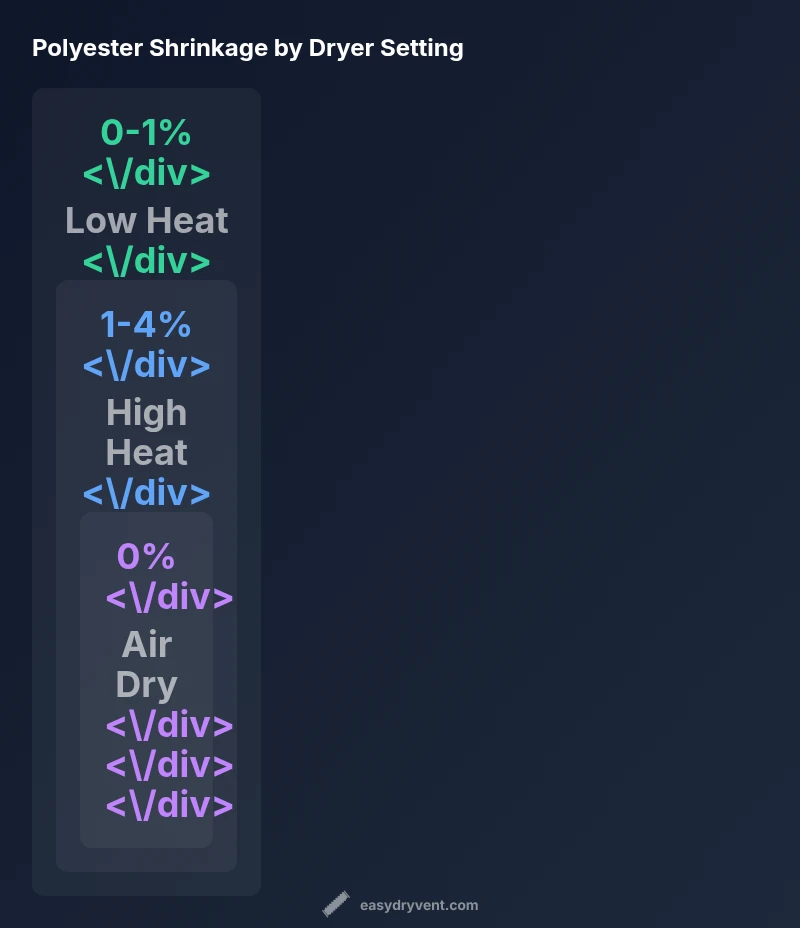
Polyester Shrinkage by Dryer Setting
| Setting | Expected Shrinkage Range | Notes |
|---|---|---|
| Low heat (tumble dry low) | 0-1% | Minimal risk; suitable for delicate poly fibers |
| Medium heat (permanent press) | 0-2% | Small risk; monitor for changes |
| High heat (hot dries) | 1-4% | Increased risk; avoid for pure polyester |
| Air drying (line or rack) | 0% | No heat; best to prevent shrinkage |
Common Questions
Will polyester shrink in a standard dryer?
Usually, polyester shows minimal shrinkage in standard cycles, but high heat and repeated cycles can cause small changes. Always use the lowest effective heat and follow care labels.
Yes, there can be a small amount of shrinkage if you use high heat or run cycles repeatedly. Stick to low heat and follow the label.
Does washing temperature affect dryer shrinkage?
Warm or hot washes can relax fibers, increasing the chance of shrinkage when dried. Cool or warm washes paired with low heat drying help minimize risk.
Yes. Warmer washes can set up fibers to shrink more in the dryer; choose cooler washes and low heat.
Is 100% polyester safe to tumble dry?
Yes, but still follow the care label and use low heat. Some items may tighten slightly if heat is too high.
Generally safe with low heat, but check the label.
Do blends shrink more than pure polyester?
Blends can shrink a bit more depending on the other fibers involved. Polyester tends to be stable, but natural fibers in blends can increase shrinkage risk.
Blends can shrink a bit more because other fibers react differently to heat.
Can I prevent shrinkage by air-drying?
Air-drying eliminates heat shrinkage entirely, making it the safest option for preserving size and fit.
Yes—air-drying avoids heat shrink altogether.
What is the best dryer setting to minimize shrinkage?
Choose a delicate or low-heat setting and keep cycles short. If possible, finish with air-drying to hold the shape.
Use the lowest heat and shortest cycle, then air-dry to keep the fit.
“Polyester is generally dimensionally stable in typical home dryers, but heat is the controlling factor. Following care labels minimizes risk and preserves fit.”
Key Points
- Use low heat to minimize shrinkage.
- Follow care labels for best results.
- Blends shrink differently; monitor cycles.
- Air drying fully prevents shrinkage.