Can You Put Jeans in the Dryer? A Denim Care Guide
Explore whether you can put jeans in the dryer, how heat affects denim, and practical tips from Easy DryVent for safe, efficient denim care and shrinking-free results.


Yes, you can dry jeans in a dryer, but use low heat or the air-dry setting to protect fabric. High heat causes shrinkage and color fading. For best results, wash, then tumble on low heat or air-dry until slightly damp, finishing with a cool cycle or air-drying flat. This keeps denim fit and color intact while saving energy.
Can You Put Jeans in the Dryer? Practical Guidance
The short answer is yes, but with caveats. Jeans are durable, yet they are made from cotton and blends that respond to heat. High heat can relax or tighten fibers unpredictably, leading to shrinkage and color changes. If you’re asking can you put jeans in the dryer, opt for the gentlest, coolest heat setting available, or better yet, air-dry when possible. According to Easy DryVent, denim care begins with understanding how heat affects fibers, then choosing a method that minimizes stress on the fabric while delivering acceptable dryness. This approach extends the life of your jeans and keeps their fit consistent wash after wash.
It’s worth noting that many jeans today are pre-washed or pre-shrunk, but repeated high-heat cycles can still alter fit over time. The goal is to balance convenience with long-term appearance. If you’re in a rush, a quick tumble on a low heat cycle can work, but avoid cranking the heat to the highest setting. The decision to use the dryer ultimately comes down to fabric weight, dye fastness, and how you want your denim to age.
How Heat Affects Denim: Shrinkage, Fading, and Fiber Fatigue
Denim fibers respond to heat by contracting and loosening slightly, which is how shrinkage occurs. The darker the dye, the more noticeable fading can be after repeated heat exposure. Heat can also weaken fiber bonds, leading to pilling or rough texture over time. However, denim can tolerate gentle heat if you limit dryer time and use a cool-down cycle. Easy DryVent’s guidance emphasizes starting with the lowest heat possible and exposing denim to heat for the shortest effective period. If you’re drying a mix of items, the moisture content of each fabric type matters—denim takes longer to dry, which can cause over-drying on compartments that hold lighter fabrics.
When to Dry Jeans in the Dryer vs. Air-Drying: Quick Decision Guide
Air-drying reduces shrinkage and color loss and is the safest option for most jeans. It’s cost-effective and energy-efficient, especially if you have the space to lay jeans flat or hang them. If you need them dry fast, use a dryer on a low-heat setting and remove promptly to avoid over-drying. A common strategy is to start with air-drying for the first 80-90% of moisture, then finish with a brief cool tumble to soften fibers and reduce stiffness. This approach aligns with Easy DryVent’s practical tips for denim care and helps you manage different denim weights and finishes without sacrificing fit.
Step-By-Step Drying Strategy for Jeans (No-Slip Guide)
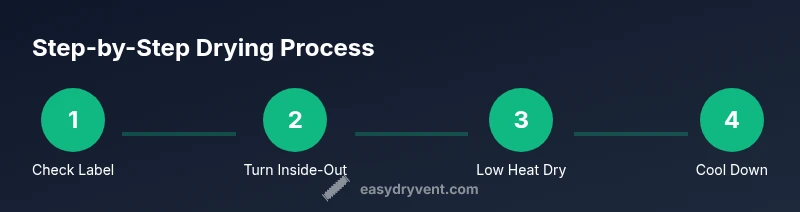
- Check the care label and choose a setting. Look for a low-heat or air-dry option. If there’s any doubt, air-dry first. 2) Prep the jeans. Turn them inside out and zip or button to minimize wear. 3) Load strategically. Don’t cram; give space for air to circulate. 4) Dry with monitoring. Start with 15-20 minutes and check progress; add time in small increments. 5) Finish with cool-down. When moisture is reduced, switch to a cool cycle or air-dry to prevent heat exposure from lingering.
Pro tip: adding a couple of clean towels can help balance the load and accelerate even drying. Warning: never leave jeans in a hot dryer longer than needed.
Practical Scenarios: Dark vs Light Denim and Colorfastness
Dye fastness varies by fabric and dye chemistry. Dark denim tends to show more noticeable fading after heat exposure, while light denim can look slightly faded but remains softer with mild heat drying. If you’re concerned about color transfer, wash jeans separately the first few times and use cold water on the cycle to prevent dye bleed. Easy DryVent recommends testing a small inconspicuous patch if you’re drying a new pair to gauge how the dye reacts to heat over time.
Energy, Time, and Denim Care: What Works Best
While air-drying is the most energy-efficient option, there are times when you need denim dry quickly. In those cases, a brief, low-heat tumble-dry cycle followed by a final air-dry phase can deliver the best balance of speed, comfort, and fabric integrity. Over-drying should be avoided; stop the dryer while jeans are still slightly damp and finish air-drying to retain fit and color. This pragmatic approach aligns with denim-care best practices promoted by Easy DryVent and helps you manage energy use without sacrificing garment quality.
Tools & Materials
- Dryer with adjustable heat (low heat or air-dry option)(Ensure it has a cool-down or delicate cycle.)
- Drying rack or sturdy hanger(For air-drying indoors or outdoors.)
- Mild detergent suitable for denim(Gentle cleaners help preserve color and fiber integrity.)
- Clean, dry towels or dryer balls(Balancing the load improves air movement and speeds drying.)
- Color-safe fabric conditioner (optional)(Use sparingly to avoid buildup on fibers.)
Steps
Estimated time: 30-60 minutes depending on dryer model, load size, and fabric weight
- 1
Check care labels and prep jeans
Review the garment tag for drying instructions. If tumble drying is allowed, be sure to select a low-heat option. Pre-sort by color to prevent dye transfer and turn pockets inside out to reduce wear on exterior surfaces.
Tip: If the label warns against tumble drying, skip the dryer entirely and air-dry. - 2
Turn jeans inside out and fasten closures
Inside-out surfaces reduce abrasion and fading on the outer fabric. Zippers and buttons should be closed to prevent snagging and uneven drying.
Tip: Inside-out reduces lint pickup on darker indigo areas. - 3
Load with space and select low heat
Place jeans in the dryer with room to tumble; avoid overloading. Set to low heat or an air-dry option to minimize shrinkage and color loss.
Tip: Add a couple of towels to balance moisture and speed drying. - 4
Pause, check progress, and redistribute
Pause the cycle if your dryer allows, then rearrange the load to promote even drying and prevent over-drying pockets and hems.
Tip: Shaking the jeans mid-cycle helps release wrinkles and soften fibers. - 5
Finish with a cool-down or air-dry
If the jeans are still damp after the cycle, switch to a cool-down setting or finish on a rack. Remove promptly to minimize heat exposure and elasticity loss.
Tip: Cool-down reduces stress on fibers, preserving fit over time.
Common Questions
Can denim shrink in the dryer?
Yes, heat can cause denim to shrink, especially after washing. Using low heat or air-drying minimizes shrinkage over time.
Yes, heat can shrink denim, so use low heat or air-dry to minimize it.
Is it okay to dry jeans after washing?
Yes, but prefer low heat or air-dry. High heat speeds drying but increases shrinkage and fading risk.
You can dry jeans on low heat or air-dry after washing.
What settings are best for jeans?
Low-heat or air-dry settings are ideal. If unavailable, air-dry with a rack or hanger.
Low heat or air-dry is best for jeans.
Should I wash jeans before drying?
Yes. Follow care labels; washing first helps set dyes and prepares fibers for gentler drying.
Yes, wash according to the label, then dry with gentle settings.
Will air-drying save energy?
Yes. Air-drying uses no dryer energy and reduces wear on fabrics.
Air-drying saves energy and reduces fabric wear.
Can I mix jeans with other clothes in the same dryer?
If you mix fabrics, ensure the load is balanced and avoid high heat to minimize damage to lighter items.
You can, but keep heat low and balance the load.
Watch Video
Key Points
- Choose low heat or air-dry for jeans.
- Avoid high heat to prevent shrinkage and fading.
- Finish with a cool-down phase to protect fibers.
- Always check care labels before drying.
- Air-drying reduces energy use and fabric wear.