What dryer cycle for jeans: Best settings for denim longevity
Learn the best dryer cycle for jeans to protect denim, prevent shrinkage, and extend wear. Easy DryVent shares practical, step-by-step guidance on choosing cycles, temps, and care for denim-friendly drying.


To answer what dryer cycle for jeans, choose a gentle dryer cycle on low heat, or an air-dry option if possible. Start with jeans after a cold or warm wash and check for dryness to avoid over-drying. The aim is minimizing shrinking and color fading while preserving fiber integrity. Easy DryVent recommends short cycles and cool-to-warm heat.
Denim care baseline: why jeans deserve a gentle drying approach
Denim fibers are sturdy but not indestructible. High heat and aggressive tumbling can cause cotton fibers to shrink unevenly, fade color, and wear thin at the seams. Understanding the basic physics of drying helps explain why the question what dryer cycle for jeans matters. According to Easy DryVent, denim dries more evenly when heat is controlled and agitation is kept moderate. This is especially important for darker indigo fabrics, where uneven exposure can exaggerate color loss. For most jeans, the goal is to stop the dryer as soon as the fabric feels dry to the touch, then move to a cooler phase or air-dry if possible. By treating denim with care in the dryer, you extend wear life and reduce the need for repairs later. The balance between comfort, appearance, and longevity hinges on simple decisions about cycle selection, heat, and duration. Keeping these factors in mind will help you establish a routine you can repeat weekly without fear of shrinking or pilling. The Easy DryVent team emphasizes consistency as a practical habit for denim care.
The ideal dryer cycle for jeans: practical choices and their effects on denim
When you ask what dryer cycle for jeans, you are really choosing how aggressively the drum agitates and how hot the airflow is. Most modern dryers offer several options such as delicate, normal, permanent press, and air-dry. For denim, a delicate or permanent press cycle on low heat is typically safer than a standard high-heat setting. If your machine supports it, an “air dry” or “air fluff” option is ideal for minimizing heat exposure. The goal is to remove moisture with minimal stress on the fibers. The cycle choice also affects shrinkage: heat plus agitation can cause lengthwise shrink and waistline tightening over repeated dries. A shorter cycle with gentle tumbling reduces these risks while still delivering usable dryness. In practice, many denim wearers report fewer color fades and less stiffness when cycles stay cool and gentle. Keep in mind that some jeans, particularly rigid raw denim, may require even gentler handling or air-drying to preserve wrapped selvedge edges. The key is to adapt to the fabric weight, color, and care label instructions without compromising fit. Easy DryVent’s guidance remains consistent: start cool, monitor progress, and favor shorter, gentler cycles for jeans.
Temperature, drum speed, and moisture cues for denim drying
The temperature setting is a primary driver of how jeans respond to the dryer. Low heat reduces fiber stress and minimizes shrinkage, while medium heat can be acceptable for heavier denim if you watch the clock closely. Drum speed matters as well; slower tumbling means gentler handling and less abrasion on fibers, which helps reduce pilling and wear. Moisture cues are your best friend: if jeans feel damp to the touch after a cycle, a brief additional low-heat burst can finish the job without exposing fabric to heat for too long. A practical rule of thumb is to set the cycle to low heat and short duration, then check every 5–10 minutes until the desired dryness is reached. The result is denim that looks newer longer with less color loss and minimized shrinkage. If you consistently air-dry even partially, you preserve texture and color depth, keeping your jeans wearable for years. The synergy between cycle selection, temperature, and monitoring is what makes the right dryer approach for jeans reliable and repeatable. This approach aligns with Easy DryVent’s denim care philosophy and helps you plan ahead for laundry day.
Pre-dry preparation: how to set jeans up for best results
Before loading jeans into the dryer, take a few quick prep steps to ensure even drying and better outcomes. Turn jeans inside out to protect surface color, zip up or button any closures to prevent snagging, and close pockets to avoid fabric snagging on the drum. If possible, wash jeans with like colors to minimize dye transfer and keep whites bright. Do not overload the dryer; a full drum reduces airflow and can lead to longer drying times or hotspots. If your jeans are very thick, consider removing excess moisture with a quick spin in the washing machine or running them through a shorter cycle with a lower heat setting first. Removing moisture adequately avoids extended heat exposure in the dryer, which is a major contributor to shrinking. Finally, make sure the lint trap is clean—blocked airflow can cause longer cycles and heat build-up that may degrade denim fibers over time. These prep steps create a predictable baseline for what dryer cycle for jeans will perform most consistently.
When to air-dry: long-term strategies for denim longevity
Air-drying jeans is the most denim-friendly option, especially for fashion denim or heavy-duty workwear. Air-drying avoids heat altogether, protecting color and shape while reducing energy use. If you choose to air-dry, hang jeans by the waistband on a sturdy rack or clothesline in a shaded area with good air circulation. Flip and reposition every few hours to promote even drying and prevent damp spots that can lead to mildew. For those who still prefer to use a dryer, pair air-drying with a short, low-heat cycle to finish the last few percent of moisture. This hybrid approach reduces heat exposure compared to a full tumble-dry while providing a convenient daily routine. Easy DryVent notes that mixing methods—gentle cycles paired with mindful drying practices—produces the best overall outcomes for denim longevity and appearance.
Maintenance tips to extend denim life and keep your dryer efficient
Regular dryer maintenance pays off in longer appliance life and better results. Clean the lint trap after every load to maintain airflow and reduce heat buildup. Periodically inspect the dryer vent for obstructions and disconnect if you notice reduced airflow or overheating signs. A dirty vent not only wastes energy but can cause heat pockets that damage fabrics. Use dryer sheets sparingly, as they can leave residue and affect lint collection; instead, opt for natural moisturizing care like fabric softeners used sparingly on denim only when recommended by the manufacturer. If you notice persistent color fading or shrinkage in jeans after multiple cycles, review care labels and consider washing inside out in cold water and switching to more breathable denim varieties. The Easy DryVent team emphasizes ongoing maintenance as part of a holistic denim care routine.
Tools & Materials
- Dryer with adjustable heat settings(Low heat or gentle cycle; avoid high heat unless fabric allows)
- Mesh garment bag (optional)(Protects delicate seams in some denim items)
- Lint-free microfiber cloth(For quick lint removal before drying to prevent transfer)
- Drying rack or hanger (for air-drying)(Use for even airflow during air-drying)
- Detergent suitable for denim(Use according to label; avoid harsh whiteners on dark denim)
Steps
Estimated time: 30-45 minutes
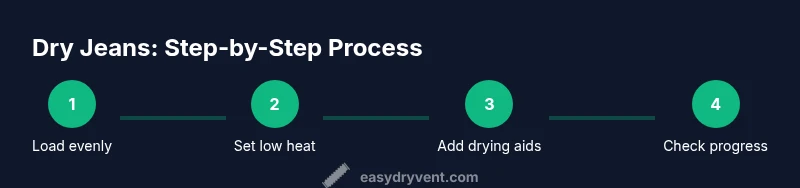
- 1
Load jeans evenly
Place jeans in the drum without overloading. A balanced load ensures even air distribution and consistent drying, reducing the risk of damp spots that can cause longer cycles and more heat exposure. If you have multiple pairs, rotate them to avoid crowding.
Tip: Keep one pair per machine cycle when possible to maximize airflow. - 2
Set the cycle to low heat
Choose a delicate or low-heat setting. Higher heat accelerates drying but increases shrinkage and color fading risk. If your dryer has a moisture sensor, enable it to stop when jeans are dry instead of relying on a fixed timer.
Tip: If in doubt, start with 15 minutes and check progress every 5 minutes thereafter. - 3
Add drying aids (optional)
Dryer balls or clean tennis balls can help keep the drum agitated and prevent clumping, promoting more even drying and reducing wrinkles. They also help maintain loft in thicker denim.
Tip: Avoid overloading with too many balls, which can alter airflow. - 4
Run a short initial cycle
Start with a short cycle to remove most moisture. Briefly pause to check progression, then decide whether to extend with another short burst or switch to air-dry for the remainder.
Tip: If moisture remains, switch to a longer but still low-heat cycle rather than cranking up heat. - 5
Pause and reshuffle if needed
Mid-cycle, pause the dryer, rotate the jeans, and fluff them to promote even drying. This reduces over-drying in one area and minimizes shrinkage.
Tip: Shuffling every 5–8 minutes during longer cycles yields better consistency. - 6
Check dryness level
After the cycle completes, test a small section of fabric. If it’s damp, run a brief 5–10 minute cooldown on low heat. Avoid leaving damp jeans in the dryer after the cycle ends.
Tip: Don’t rely solely on the timer; use touch and visual cues to judge dryness. - 7
Avoid prolonged heat exposure
Do not run long high-heat cycles to force dryness. Repeated exposure to heat increases shrinkage and weakens fibers. This is especially important for raw or selvedge denim.
Tip: Aim for the shortest effective time on the gentlest setting. - 8
Finish with air-drying when possible
If you have the option, finish the last phase by air-drying to preserve shape and color. This reduces energy use and extends denim life while still giving you usable results.
Tip: Hang by the waistband to minimize creasing and encourage even drying. - 9
Clean lint trap after every load
Lint buildup reduces airflow and makes the dryer work harder, increasing heat exposure. A clean lint trap helps maintain efficiency and dryer performance.
Tip: Wipe the drum interior with a cloth to remove any remaining lint. - 10
Inspect color and fit after drying
Check jeans for color fading and shrinkage. If color loss is noticeable, wash less often or adjust the cycle to cooler temperatures in future loads. If shrinkage is a problem, try using larger size or washing in cold water next time.
Tip: Document the results for future laundry planning. - 11
Record the cycle settings
Note the cycle type, heat, duration, and whether air-drying was used. This creates a repeatable routine that protects denim and saves energy over time.
Tip: Keep a simple note in your laundry app or a notebook. - 12
Store jeans properly once dry
Fold or hang jeans to maintain shape. Store away from direct sunlight to prevent color fading. Keep denim clean and dry to avoid odor.
Tip: Use breathable storage to prevent moisture buildup.
Common Questions
Can I dry jeans on high heat?
No. High heat can cause excessive shrinkage and color fading. Stick to low heat or air-dry as a safer option for denim.
No, high heat is not recommended for jeans. Use low heat or air-dry to protect color and shape.
Should I air-dry jeans after washing?
Air-drying is the gentlest method for denim and helps preserve color and fit. If you need faster results, use a short, low-heat dryer cycle to finish.
Air-drying is best for denim longevity; if you’re in a hurry, finish with a short, low-heat cycle.
How long should jeans stay in the dryer?
There is no one-size-fits-all time. Start with 15–20 minutes on low heat, then check. Repeat in short increments until fully dry to avoid over-drying.
Start with 15 minutes on low heat and check every 5 minutes until dry.
Does flipping jeans help reduce wrinkles?
Flipping or rotating during drying helps promote even drying and reduces creases. This simple habit improves finish and fit.
Yes, flip and rotate the jeans during drying to minimize wrinkles.
Is it safe to use a dryer sheet with jeans?
Dryer sheets can leave residue and reduce airflow. If you choose to use them, use sparingly and only if the manufacturer allows on your fabrics.
Dryer sheets can leave residue; use them sparingly if your denim allows.
Will dryer cycles affect color fade in jeans?
Yes. Heat and agitation can accelerate color fading. Opt for low heat and shorter cycles, and consider air-drying to preserve color depth.
Yes, cycles affect color fade; use low heat and shorter times, or air-dry to keep color.
Watch Video
Key Points
- Choose low heat for denim drying.
- Prefer short cycles or air-dry when possible.
- Prep jeans to protect color and fit.
- Monitor progress and avoid over-drying.