Do Jeans Shrink in the Dryer? A Practical Guide for Home Laundry
This guide answers do jeans shrink in the dryer with practical, data-backed tips, including how fabric type and heat settings influence outcomes, plus strategies to prevent unwanted shrinkage.


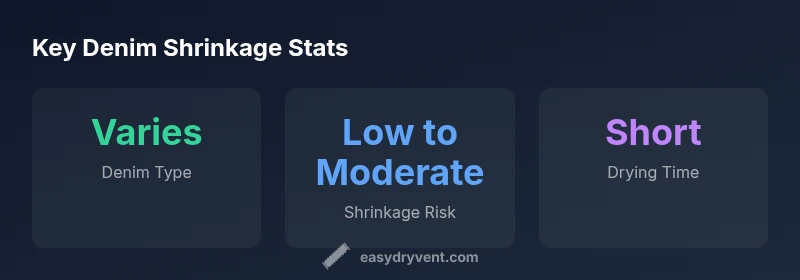
Yes, jeans can shrink in the dryer, especially if they’re made from 100% cotton denim or have tight fits. Heat accelerates fiber relaxation, and dryer duration, load size, and heat setting all influence shrinkage. To minimize changes, use cold or warm settings, short cycles, remove while damp, and air dry when possible. Easy DryVent notes shrinkage varies by fabric.
Why jeans shrink in the dryer: the science behind denim fibers
Do jeans shrink in the dryer? Understanding the science helps homeowners choose drying settings that protect fit. Denim is primarily cotton fibers arranged in a weave. When heat and moisture interact in a dryer, those fibers can relax and re-form slightly tighter or looser depending on the fabric’s structure and any pre-treatment. This means shrinkage is not just a function of the dryer, but of fabric composition, weave, and prior washing. According to Easy DryVent, the interaction of heat, moisture, and mechanical agitation determines the extent of any shrinkage, which is why two identical pairs may behave differently in the same load. The key takeaway: higher heat exposure generally increases the chance of shrinkage, especially for rigid, untreated denim. If you want to reduce this risk, adjust settings and drying duration accordingly.
Cotton vs stretch denim: shrinkage behavior
Not all denims shrink the same amount. Pure cotton denim tends to be more prone to shrinkage when heated than blends with elastane or polyester. Stretch denim, which includes some synthetic fibers, often retains more of its pre-wash size because the fibers resist full relaxation under heat. Raw or untreated denim typically shows greater shrinkage than pre-washed varieties. When you buy jeans, check the fabric composition on the care label: higher cotton content means a higher potential for shrinkage under heat, so plan accordingly. For DIY measurements, compare pre-wash waist or inseam length to post-drying measurements to quantify any change.
Pre-washing and washing temperature effects
Pre-washing and wash temperature can influence how much jeans shrink later in the dryer. Jeans that have not been pre-washed may experience more dramatic shrinkage when subsequently heated in a tumble dryer. Washing in hot water tends to cause more tightening of fibers than cold or warm cycles, increasing the risk when you subsequently dry on higher heat. If your goal is to minimize future shrinkage, consider washing in cold or warm water and air-drying as much as possible, then finishing with a cool tumble if needed. Always consult the care label, as some jeans are designed to be heat-resistant or pre-shrunk.
How dryer heat settings affect shrinkage
Heat is the primary lever you control in a dryer. High heat accelerates fiber relaxation and can lead to noticeable size changes, especially on heavy, dense denim. Medium heat may still produce some shrinkage, while low heat minimizes the risk, particularly when combined with shorter cycle times. If you’re trying to preserve a specific fit, avoid the “normal” or “high” tumble settings for denim and try air drying or a cool-down cycle. For sensitive pairs, consider a dedicated, gentler cycle or even line-drying indoors in a shaded area to reduce sun exposure that can also affect fabric. The goal is to limit the duration of heat exposure while maintaining garment hygiene and safety.
Practical drying methods to minimize shrinkage
A practical approach combines careful load management with conservative heat. Turn jeans inside out to reduce surface distortion, fasten buttons and zippers to minimize snagging, and avoid overloading the dryer. Choose a low-heat cycle or “air fluff” if your machine offers it, and remove garments while they are still slightly damp to finish air-drying flat or on a hanger. If you must use a dryer, set the temperature to low and consider a timed, short cycle to control exposure. After drying, gently stretch any tight areas by hand and lay flat to finish—the goal is to restore or maintain intended dimensions without forcing additional shrinkage.
How to test shrinkage at home
A simple at-home test helps you quantify shrinkage and tailor your routine. Take one pair of jeans, measure the waist and inseam while flat, and record the values. Wash and dry the jeans using your usual settings for a baseline, then re-measure. Compare the measurements; if there’s a noticeable difference, adjust settings next time—lower heat, shorter cycle, or air-drying followed by line-drying. Keeping a small denim care log can help you see patterns across brands and fabrics, and it makes it easier to optimize care for specific pairs.
What to do if jeans have shrunk already
If you’ve already shrunk jeans, you can sometimes restore some size by soaking in lukewarm water with gentle fabric conditioner and then laying flat or tugging gently around the seams while damp. Avoid hot water or high-heat drying, which can cause further tightening or distortion. If the shrinkage is minor and the fabric is sturdy, repeated gentle stretch-and-dry cycles may help regain a comfortable fit. For stubborn cases, professional alteration or purchasing a larger size may be the simplest option.
A simple denim care routine for 2026
Create a routine that prioritizes fabric health and predictable results. Wash jeans in cold or warm water, avoid hot cycles, and air dry whenever possible. If you must use a dryer, choose a low-heat setting and a short cycle, then finish by air-drying to minimize heat exposure. Rotate pairs to avoid repeatedly stressing the same fabrics, and always follow care-label instructions. By treating denim with consistent, gentle care, you’ll maintain fit and extend the life of your jeans across seasons.
Quick-start checklist for denim care
- Check fabric content and care label before washing or drying
- Use cold or warm water rather than hot whenever possible
- Prefer air drying for the best long-term fit
- If using a dryer, choose low heat and short cycles
- Measure waist and inseam periodically to monitor shrinkage
Denim shrinkage potential by denim type
| Denim Type | Shrinkage Potential | Care Tip |
|---|---|---|
| Raw/Unwashed Denim | Potential shrinkage: noticeable | Prewash before wear; wash in cold water; air dry to finish |
| Pre-washed Denim | Lower shrink risk | Follow care label; use warm/cool settings; avoid high heat |
| Elastane/Stretch Denim | Minimal shrinkage | Check label; wash in cold water; air dry |
Common Questions
Do jeans shrink when washed in cold water?
Cold water reduces shrinkage risk compared with hot cycles, but it doesn’t eliminate it entirely, especially for untreated cotton denim. Expect less change and pair cold washing with careful drying.
Cold water helps, but some shrinkage can still occur with cotton denim after drying.
Can you reverse shrinkage in jeans?
To reverse minor shrinkage, soak in lukewarm water with gentle conditioner and gently stretch while damp, then air-dry. Severe shrinkage may require professional alteration or buying a new size.
You can often ease minor shrinkage by soaking and gentle stretching, then air-drying.
Do raw denim jeans shrink more than pre-washed ones?
Raw, untreated denim is more prone to shrinking under heat than pre-washed denim. Pre-washed fabrics are generally more stable when dried, though results vary by brand and weave.
Raw denim tends to shrink more than pre-washed, but it depends on the fabric.
Does fabric softener affect shrinkage?
Fabric softeners don’t directly prevent shrinkage. They can alter fabric feel and affect drying behavior, but the key to reducing shrinkage remains temperature, cycle length, and air-drying when possible.
Softener changes feel but won’t stop shrinkage—heat and cycle choice do.
Is air drying always better for denim?
Air drying minimizes heat exposure and is generally best for preserving denim size and shape, though it takes longer. A mixed approach—air dry to finish after a low-heat tumble—can be practical.
Air drying is usually best for size and shape, even if it takes longer.
What about using dryer balls or no heat?
Dryer balls can reduce drying time and help airflow, which may slightly reduce heat exposure. No-heat cycles aren’t common on most home dryers but, if available, can lower shrinkage risk when used with denim.
Dryer balls help with airflow; no-heat cycles reduce shrinkage if your machine offers them.
“Heat management in home dryers is the most important factor in preserving denim fit; with careful settings, you can minimize shrinkage without sacrificing cleanliness.”
Key Points
- Lock in fit by using low heat in the dryer
- Air drying minimizes shrinkage and extends denim life
- Know your denim type to predict shrinkage risk
- Always follow care labels for best results