Can You Dryer Jeans? A Practical Denim Drying Guide
Explore whether you can dryer jeans safely at home, with practical methods to minimize shrinkage and wear. Easy DryVent offers actionable, step-by-step guidance for air drying and low-heat tumble options to protect denim.


You can dryer jeans with care, but only under controlled conditions. This guide explains safe methods, compares air drying vs. tumble drying, and provides a step by step process to minimize shrinkage and wear. Start with prep, choose a safe method, and monitor moisture to protect your jeans and dryer.
Can You Dryer Jeans? Understanding the Question
Denim fibers are sturdy but react to moisture and heat in predictable ways. When readers ask can you dryer jeans, they are really wondering if denim can survive heat exposure in a home dryer without excessive shrinking or color loss. The short answer is yes, but only if you pick the right method and monitor the process. The Easy DryVent team has helped countless homeowners dial in practical denim care that protects fit and texture while keeping the dryer in good condition. In this section we frame the key ideas: heat control, moisture management, and fabric age all determine the outcome of can you dryer jeans. You will learn which scenarios are worth trying, and which to avoid, with clear guidelines you can apply today.
Denim Fabric: What Happens When Heat is Applied
Denim is a sturdy cotton twill, but its fibers respond to heat by shrinking and fading if heated aggressively. The tension created during weaving makes some areas more prone to warp when the warp and weft are unevenly heated. When you ask can you dryer jeans, you must consider fiber content, weave, and finishing treatments such as stone washing or enzyme finishes. The risk is not uniform; lighter-weight denim tends to respond faster to heat than heavy weight. Understanding these dynamics helps you choose air drying over tumble drying or select the lowest heat cycles to preserve color and fit.
Pre-Drying Prep: What to Do Before You Dry Jeans
Begin by emptying all pockets, turning jeans inside out, and fastening zippers to reduce snagging. A quick check for loose threads prevents further wear during drying. If possible, wash jeans a day before drying so they are not damp. Pre-drying prep reduces surprises when you later ask can you dryer jeans and increases the chance of even drying. Keep denim away from direct sunlight to prevent fading if you air dry.
Air Drying Jeans: Pros, Cons, and Setup
Air drying minimizes heat exposure and keeps texture intact, but it takes longer and depends on ambient humidity. A flat drying surface helps maintain leg shape and reduces stretching at the knees. Use a clean rack or a wide hanger to spread jeans evenly; avoid bunched fabric that traps moisture. If you are wondering can you dryer jeans, air drying is often the safest and most beginner friendly method for most denim types.
Using a Dryer: Low Heat and Short Cycles
If you must use a dryer, opt for the lowest heat setting and the shortest cycles available. Remove jeans while they are slightly damp to finish air drying, which reduces the risk of over drying and shrinkage. Place jeans loosely on a dryer rack or a large, clean lint screen and avoid cramming multiple pairs into the drum. Monitoring moisture throughout the cycle helps you answer can you dryer jeans with confidence.
Common Drying Mistakes and How to Avoid Them
Common mistakes include high heat, over drying, and leaving denim in a hot dryer for too long. These habits increase shrinkage, color loss, and fabric wear. Another pitfall is drying jeans while still damp if the dryer runs long, which can finish on a stiff or deformed shape. By avoiding these mistakes you preserve fit and fabric quality while making sure your dryer remains efficient.
Dryer Maintenance for Denim: Lint Filter and Vent Care
Regular maintenance matters when you are drying jeans. Clean the lint trap before every load to improve airflow and reduce fire risk. Check the dryer vent for buildup and ensure it runs with minimal resistance. A well maintained dryer is safer, and it helps denim dry more evenly, reducing the chance of hot spots that cause shrinkage and color fade.
Tips for Different Denim Finishes and Ages
Different finishes such as stone washed, raw denim, or aged jeans react differently to heat. Raw denim tends to shrink more in first cycles, so air drying or gentle low heat is wise during initial wear. For vintage or delicate finishes, favor air drying and avoid high heat altogether. By tailoring your approach to denim type you can maintain fit and appearance over many washes.
Safety Considerations, Energy Use, and Time Management
Protecting your family and your clothes involves balancing safety and efficiency. Can you dryer jeans safely flourishes when you choose safe methods and monitor heat and moisture. When possible, air drying consumes less energy and reduces wear on the dryer, extending its life. For urgent loads, a brief low heat cycle followed by air drying is a practical compromise.
Easy DryVent Recommendations and Final Thoughts
In practice, most homeowners will find air drying to be the simplest, safest path for jeans, with the option of a low heat finish on certain blends. The Easy DryVent team emphasizes selecting a method based on denim type, finishing, and timeline. Following these guidelines helps you protect your denim and keep your dryer running efficiently, making denim care less guesswork.
Tools & Materials
- Drying rack (adjustable, flat surface)(Choose a rack with stable feet and ample surface area to spread jeans evenly)
- Dryer with adjustable heat or air-dry setting(Use the lowest heat or air-dry option to minimize shrinkage)
- Lint trap brush or vacuum for cleaning(Clean before each load to maximize airflow and efficiency)
- Absorbent towels or mat (optional)(Place under the rack or outside the cabinet to catch moisture)
- Heat resistant gloves (optional)(Useful when handling warm items after drying)
Steps
Estimated time: 60-90 minutes
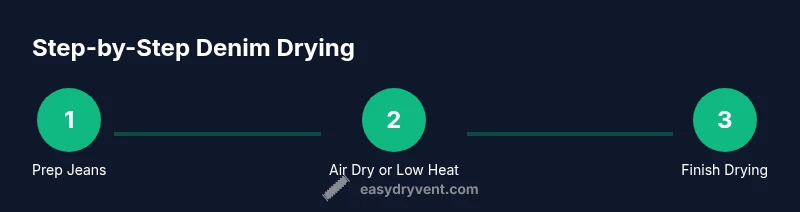
- 1
Inspect and Prep Jeans
Check pockets and zippers, turn jeans inside out, and fasten any closures. This minimizes snagging and protects color during drying. Proper prep also helps you gauge how much moisture remains after washing, which influences whether you choose air drying or a low heat dry.
Tip: Prepping once saves multiple reruns and reduces wear on fabric. - 2
Choose Drying Method
Decide between air drying and tumble drying based on denim type and time available. Air drying is safest for most jeans, while a low heat dryer can be used for faster results on sturdy denim.
Tip: If in doubt, start with air drying and monitor progress. - 3
Set Up Air Dry Rack
Spread jeans evenly on the rack, avoiding folds that trap moisture. Maintain good airflow around the fabric and keep the rack in a shaded area to prevent sun bleaching.
Tip: A flat position maintains leg shape and reduces stretching at seams. - 4
If Using Dryer, Set Low Heat
Place jeans loosely in the drum or on a drying rack inside the dryer and select the lowest heat and shortest cycle. Remove while slightly damp to finish air drying.
Tip: Overdrying is a common cause of shrinkage, so stop early. - 5
Monitor Moisture and Adjust
Check jeans mid-cycle if possible to gauge dryness. If still damp, resume on low heat for brief intervals rather than pushing to full dryness.
Tip: Check moisture buttons or drum indicators if your model provides them. - 6
Finish and Reshape
Whether air dried or finished in the dryer, lay jeans flat or hang by the waistband to finish drying. Reshape the legs while damp to prevent warping.
Tip: A final reshape helps maintain original fit after drying.
Common Questions
Can you dryer jeans without shrinking them?
Denim can shrink when exposed to heat, especially during initial cycles. Using air drying or a low heat dryer setting minimizes shrinkage and preserves fit over time.
Denim can shrink if heated strongly, so use air drying or low heat to protect the fit.
Is it safe to leave jeans in the dryer overnight?
Leaving jeans in a hot dryer overnight is not recommended. Prolonged heat can cause excess shrinkage and wear. Remove the jeans when they feel dry to the touch and finish with air drying if needed.
Do not leave jeans in a dryer overnight; remove them when dry and finish with air drying if needed.
What is the best method to dry jeans quickly without damage?
For speed without damage, use a low heat dryer cycle for a short duration and finish on a drying rack. If possible, prioritize air drying to avoid heat exposure.
Low heat for a short time, then air dry to finish.
Do all denim fabrics shrink the same?
No. Denim weight, fiber content, and finishing processes affect shrinkage. Raw or unwashed denim may shrink more than pre-washed or blended fabrics.
Different denims shrink differently depending on weight and finish.
How often should I clean the lint filter when drying jeans?
Clean the lint filter before every load. Denim shedding can clog airflow, reducing efficiency and increasing drying time.
Always clean the lint filter before each load.
Watch Video
Key Points
- Air dry when possible to protect denim.
- Use low heat or air-dry settings on your dryer to minimize shrinkage.
- Prepare jeans properly before drying to prevent damage.
- Monitor moisture and avoid over drying for best results.
- Regular dryer maintenance improves safety and efficiency.