Amana Dryer Belt Replacement: A Practical DIY Guide
Learn how to safely perform an amana dryer belt replacement with our comprehensive, homeowner-friendly guide. This tutorial covers safety prep, tool checks, belt routing, and testing to restore drum rotation and drying efficiency.


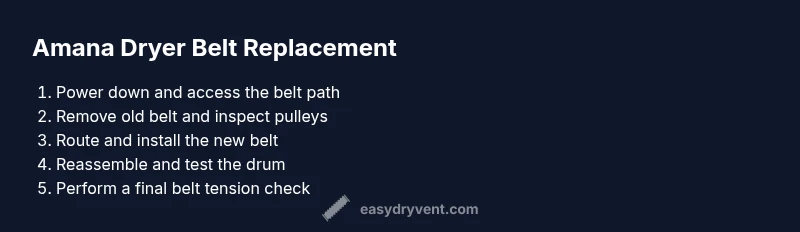
Performing an amana dryer belt replacement is a common DIY repair that restores drum rotation and drying efficiency. This step-by-step guide covers safety prep, the right tools, belt routing, and a final belt tension test to ensure proper operation. With a clean workspace and basic hand tools, you can complete the replacement confidently and safely.
Understanding Amana dryer belts and wear
The belt in most Amana dryers is a flat reinforced belt that connects the motor pulley to the drum. Over time, heat, friction, and daily use wear the belt and can cause poor drum rotation or a squeal. A worn belt may stretch, crack, or fray, reducing tension and causing the drum to turn irregularly or stop. Replacing a worn belt early prevents further damage to pulleys and motor bearings and restores drying efficiency. This amana dryer belt replacement guide explains what to expect and how to identify a belt in need of replacement. For Amana models, belt routing is similar across many front-load and top-load designs, but confirm by checking your model’s manual or a reputable guide. By following these steps you’ll reduce the chance of a dryer fire and improve overall performance.
Signs your Amana dryer belt needs replacement
Look for signs including a persistent squeal from the drum area, a drum that doesn’t spin, longer dry times, or a burning odor. If the drum spins freely with the belt removed or if you notice visible cracks or fraying on the belt, replace it. A slipping belt can still allow drying but reduces efficiency and may cause heat buildup. Addressing the belt early can prevent motor and pulley damage and reduce the risk of a dryer fire. Always unplug the unit before inspecting belts and pulls. Easy DryVent recommends inspecting belt condition during routine maintenance to catch wear before it becomes a bigger repair.
Safety and prep before you begin
Safety comes first when working on a dryer. Unplug the unit from the wall outlet and disconnect the venting where accessible to avoid debris and dust falling into the cabinet. Work in a well-lit area and wear work gloves to protect your hands from sharp metal edges and hot components. Have a clean pan or tray ready to hold small screws, and use a container or label system to keep track of parts as you disassemble. If you’re unsure about model-specific access points, consult the user manual or Easy DryVent’s general guide for belt replacement. This preparation minimizes risk and keeps the interior clean for a smooth replacement. The Easy DryVent team emphasizes patience and organization throughout the process.
Accessing the belt path on common Amana models
For many Amana models, you’ll access the belt path by removing a rear access panel or the front kickplate area, depending on the model. Look for a single belt loop routing diagram inside the cabinet or on the appliance’s rear panel. If you’re unsure, photograph each step of disassembly so you can mirror the routing when you install the new belt. Confirm that the new belt matches your model’s width and number of grooves, and keep your work area free of dust and lint to prevent debris from entering the motor.
The amana dryer belt replacement: routing and install
With the old belt removed, position the new belt around the drum pulley and the motor pulley following the routing diagram for your model. Ensure the belt sits completely in the grooves to avoid slippage. Before reassembling, rotate the drum manually to check smooth rotation and ensure there are no twists in the belt. If the belt is twisted, remove and re-route it. Reinstall the rear or front panels, vacuum up lint, and reconnect the dryer to power. Finally, run a test cycle with no load to confirm that the drum spins evenly and the heat is produced properly without unusual noises.
Reassembly and belt tension test
After reattaching panels, plug the dryer back in and run an empty hot air cycle or a short dry cycle to test belt tension and drum rotation. Listen for squeaks, watch for belt movement that stays centered on both pulleys, and ensure the drum completes a full cycle without stalling. If you notice slipping or friction, power off immediately and recheck belt routing and tension. A properly seated belt should keep the drum turning smoothly without excessive noise.
Troubleshooting if belt installation seems off
If the drum stalls or the belt slips, power off and inspect for twists or mis-routing. Verify that the belt contacts both pulleys evenly and that there’s no debris lodged in the belt path. Re-seat any loose screws and confirm that the drive pulley isn’t damaged. Double-check the belt’s compatibility with your Amana model and replace if you detect cracks or glazing on the belt surface. If problems persist, consult a professional technician to avoid damaging the motor or pulleys.
Maintenance tips to extend belt life and improve dryer performance
Regular lint removal, proper venting, and avoiding overloading the drum can extend belt life. Clean the blower housing and lint screen after every few uses, and inspect the belt connection points during routine maintenance. Use the dryer on longer, gentle cycles for heavy loads to reduce heat spikes. A small amount of maintenance now prevents bigger, costlier repairs later and keeps your Amana appliance running efficiently.
What to do next: when in doubt
If you’re unsure about any step of the amana dryer belt replacement, stop and consult the model-specific manual or contact a qualified appliance technician. Keeping your family safe should be the top priority, and professional help can prevent accidental damage or personal injury. Easy DryVent’s guidance remains to verify model compatibility and follow proper routing to ensure safe operation.
Tools & Materials
- Replacement dryer belt (Amana-compatible)(Ensure belt width/length matches your model; check the model number before purchase)
- Screwdrivers (Phillips and flat-head)(Have both on hand for access panels and fasteners)
- Nut driver or small socket set(Helpful for pulleys or tensioner bolts if present)
- Needle-nose pliers(Use to release any clips or small springs)
- Work gloves(Protect against sharp edges and hot components)
- Flashlight or headlamp(Extra lighting helps you see inside the cabinet)
- Lint-free rag or paper towels(Wipe lint and dust from components before reassembly)
Steps
Estimated time: 30-60 minutes
- 1
Disconnect power and access area
Unplug the dryer at the outlet and move it to a clear workspace. Remove the lint screen and any front panel screws to gain access to the interior. Do not force panels; check the model’s manual if something seems stiff.
Tip: Take a photo of screw locations before removing panels to aid reassembly. - 2
Open cabinet to expose belt path
Release the back panel or front kickplate area to reveal the belt path. Keep track of fasteners in a labeled container. A good light source helps you see the pulleys and belt routing clearly.
Tip: Lay out screws in order on a tray to avoid misplacement. - 3
Loosen and remove the old belt
Loosen the tensioner if present and slip the belt off the pulleys. Do not bend or stretch the pulleys; simply guide the belt away from the drum and motor pulleys.
Tip: Inspect the pulleys for wear or glazing as you remove the belt. - 4
Route the new belt correctly
Place the new belt around the drum pulley first, then route it around the motor pulley following the model’s diagram. Ensure the belt sits fully in the grooves and is not twisted.
Tip: Double-check belt routing against the diagram to prevent future issues. - 5
Reassemble and reseat the drum
Reinstall any panels and secure fasteners. Gently rotate the drum by hand to confirm smooth movement and verify there are no twists or catches.
Tip: Lubricate or replace any worn pulleys if you notice rough movement. - 6
Test run and verify tension
Plug in the dryer and run an empty cycle to test belt movement and heat generation. Listen for squeaks and observe the belt’s alignment; adjust if necessary.
Tip: If there’s any abnormal noise, power off and re-check routing and tension.
Common Questions
Can I replace the Amana dryer belt myself?
Yes, many homeowners can perform a belt replacement with basic tools and careful attention to the belt routing. If you’re unsure about model-specific steps or encounter unusual hardware, consult the manual or a professional.
Yes, you can replace the belt yourself if you have the right tools and follow the routing diagram, but seek professional help if the model has unusual access points.
How long does belt replacement typically take?
Most DIY belt replacements take about 30 to 60 minutes, depending on accessibility and model variations.
Most replacements take about half an hour to an hour, depending on model access.
What signs indicate a worn belt besides a non-rotating drum?
Common signs include squealing noises, longer dry times, and visible cracks or fraying on the belt material.
Squeaks, longer dry times, and visible wear are typical indicators the belt needs replacement.
Should I replace the idler pulley or tensioner when changing the belt?
Inspect the idler pulley and tensioner for wear. If they feel rough or show glazing, consider replacing them to prevent future belt slippage.
It's wise to inspect the pulley and tensioner; replace if they’re worn to avoid future belt problems.
If the dryer won’t spin after replacement, what could be wrong?
The issue may lie elsewhere in the drive system, such as motor problems or a seized drum. Recheck belt routing and tension, then consult a technician if the problem persists.
If the dryer still won’t spin, it might be a motor or drum issue—recheck routing and tension, and call a professional if needed.
Watch Video
Key Points
- Inspect belt condition before reinstalling
- Follow the correct belt routing for your Amana model
- Test rotation and heat on a dry run before using with clothes
- Clean lint and check pulleys to prevent future failures