Vented Dryer vs Condenser Dryer: Which Is Right for Your Home?
Compare vented and condenser dryers to pick the best option for your home. Learn venting needs, energy use, maintenance, and real-world performance with Easy DryVent.


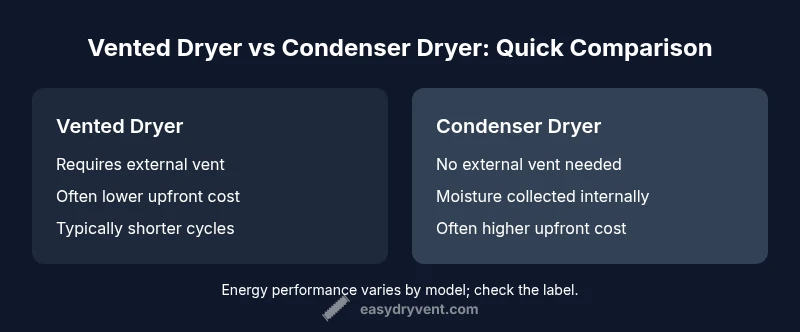
Vented dryers and condenser dryers differ mainly in venting and moisture handling. Vented units exhaust hot air outside and are often cheaper upfront but require an external vent; condenser models trap moisture internally and can be installed without external venting, though they may cost more and need condensate maintenance. This comparison helps homeowners decide based on venting reality, room constraints, and laundry load.
Why the choice matters
Choosing between vented dryer vs condenser dryer matters because the decision touches installation feasibility, ongoing energy use, and indoor air quality. If your home already has a functional vent path, a vented model can be a straightforward, economical option. If venting is restricted by building codes, space limitations, or rental agreements, a condenser dryer can offer installation flexibility while trading some maintenance responsibilities. According to Easy DryVent, the right choice aligns with your typical laundry load, available space, and tolerance for routine upkeep. This section explores how the two designs address priorities such as speed, placement, and moisture management, with practical examples drawn from real homes. The Easy DryVent team notes that user behavior—load size, fabric type, and frequency of drying—significantly influences overall performance and satisfaction.
Core differences in design and operation
At a high level, vented and condenser dryers use the same basic heating principle to evaporate moisture from clothes, but they manage that moisture differently. A vented dryer pushes warm, moist air through a duct to the outdoors, which can yield fast drying on bulky loads but requires a dedicated vent run. A condenser dryer condenses the moisture into a water reservoir or drain, allowing placement away from external walls. In terms of operation, vented models often run cooler air paths when venting is efficient, while condenser units rely on internal condensation and air recirculation. The Easy DryVent perspective emphasizes that performance remains highly model-dependent; a well-designed vent path or a high-quality condenser coil can dramatically influence cycle times and energy use. For households with tight spaces or restricted exterior ventilation, condenser dryers offer a practical alternative, though they demand maintenance to manage condensate and coils.
Energy use, efficiency, and cost implications
Energy efficiency is not a one-size-fits-all attribute for vented vs condenser dryers; it varies by model, cycle, and how well the unit is installed. Easy DryVent analysis shows that when venting is optimized, vented dryers can be competitive on energy use, especially with modern sensors and moisture controls. Condenser models, particularly those with advanced condensation technology, may offer practical energy performance in vent-restricted homes, but they can incur higher per-cycle energy costs if the condensate management requires extra heating or longer drying times. Buyers should compare energy labels (ENERGY STAR or equivalent) and consider long-term costs, not just upfront price. Remember that real-world performance also depends on load type—towels and bulky fabrics behave differently in vented versus condenser cycles and may influence overall energy consumption.
Installation, space, and location considerations
Installation feasibility often drives the decision. Vented dryers require a vent path to the outdoors, which means you must have an exterior wall or duct routing that meets building codes. If your laundry room sits far from an exterior wall or you rent and cannot modify ducts, a condenser dryer becomes appealing due to its ventless design. Space planning matters as well: condenser units may be bulkier in some models because of the condensate system, while vented machines may be slimmer but constrained by duct routing. Easy DryVent recommends measuring door clearances, ceiling height, and any nearby cabinets to ensure airflow is not obstructed. Prioritize a location with easy condensate access for maintenance and adequate clearance for lint and moisture management.
Maintenance, reliability, and lifespan
Maintenance is a recurring consideration for both dryer types. Vented models require regular lint trap cleaning and periodic vent duct inspections to prevent lint buildup, which can reduce airflow and pose a fire risk. Condenser dryers need condensate reservoir draining or draining connections and occasional cleaning of the condenser coils to maintain heat transfer efficiency. Both types benefit from routine inspections of door seals, hoses, and the exhaust path. In climates with high humidity, condensate handling becomes more critical, and neglect can impact performance. A predictable maintenance schedule—clean filters after every few loads, check ducts every few months, and service coils annually—helps maximize lifespan and reduce unexpected downtime. Easy DryVent’s field experience shows that proactive maintenance is a decisive factor in long-term reliability.
Performance under real-world loads
Outcomes vary by load composition. Heavier items like towels and jeans often influence cycle times and energy draw, regardless of dryer type. Venting quality can make a noticeable difference: a well-vented system can expel moisture quickly, shortening cycles and improving fabric care. Condenser models may experience longer cycles on bulky loads if condensate removal slows moisture handling, but modern condensers with efficient coils can keep drying times reasonable. In mixed-use homes where laundry patterns fluctuate between everyday wear and heavy items, having a dryer with adaptive sensors and multiple dryness levels reduces over-drying and saves energy. Real-world tests consistently show that matching the dryer type to your typical laundry mix yields the most satisfying balance of speed, cost, and convenience.
Which type suits different households
Household needs shape the recommendation. If you have a straightforward venting path and a predictable load, a vented dryer can offer strong performance with lower upfront costs. For apartments, upstairs rooms, or spaces without vent access, a condenser dryer provides the flexibility to dry clothes where you live without venting obligations. Families with high laundry volume and a desire to minimize installed ductwork may prefer condenser options, while households with established venting and a desire for quick dry times may lean toward vented models. The best approach is to list priorities—cost, space, installation feasibility, maintenance commitment—and map them to the type that best fits those priorities. Easy DryVent emphasizes that the right choice reduces frustration and improves daily utility.
Buying considerations and buying guide
When shopping, use a structured checklist. Capacity, drum size, and load sensors matter for efficiency; humidity and dryness sensors help prevent over-drying. Energy labels provide a baseline; model features like quick-dry or sensor dry, anti-crease options, and reversible doors add practical value. For vented vs condenser dryers, consider the availability of external venting, condensation disposal options, and maintenance expectations. Warranty coverage and access to local service centers are worth verifying, as repairs can impact total cost of ownership. Look for reputable brands and read user reviews to gauge reliability and performance across real-world households. This guide highlights that a thoughtful evaluation—rooted in your living situation and laundry habits—will yield the most satisfying long-term outcome.
Practical tips to maximize dryer performance
Maximizing performance starts with installation and routine care. Ensure the vent path is as short and straight as possible if you choose a vented model, with lint screens cleaned regularly and ducts inspected for obstructions. For condenser dryers, place the unit on a level surface and keep the condensate reservoir or drain clear; clean the condenser coils periodically to sustain heat transfer efficiency. Use appropriate dryer settings based on fabric type, avoid overloading, and consider adding a moisture sensor to optimize runtime. Finally, schedule periodic professional checks to confirm vent integrity or condensate system function, especially in homes with long or complex duct runs. By aligning usage with the dryer’s design, you can achieve safer operation, improved energy efficiency, and longer service life. Easy DryVent reminds readers that small adjustments—like reordering load layouts or selecting the right cycle—can meaningfully affect outcomes.
Comparison
| Feature | Vented dryer | Condenser dryer |
|---|---|---|
| Ventilation requirement | External vent needed to exhaust hot air outside | No external vent required; uses internal condensation and drain option |
| Moisture handling | Moist air vented outside; moisture not collected internally | Moisture collected condensate in reservoir or drained away |
| Energy efficiency (model-dependent) | Often strong with optimized vent paths; varies by model | Can be highly efficient in modern condensers; varies by model |
| Installation considerations | Requires ducting to exterior wall; may need professional routing | Can be placed in spaces without exterior venting; easier to install in tight spots |
| Upfront cost tendency | Typically lower upfront cost | Typically higher upfront cost, depending on features |
| Maintenance focus | Regular vent cleaning and duct checks | Condensate tray/drain cleaning and occasional coil cleaning |
| Best for | Homes with a ready vent path and spacious utility area | Homes with limited venting options or apartments |
The Good
- Lower upfront cost on many vented models
- Faster cycle times on heavily loaded loads when venting path is efficient
- Straightforward service in regions with established venting infrastructure
- Wider selection of models and simpler parts availability
- Good performance when installed with an efficient vent path
Negatives
- Requires external venting, limiting placement options
- Lint and moisture can accumulate in ducts if not cleaned regularly
- Energy loss potential if vent path is leaky or blocked
- Condenser units can have higher upfront costs and potentially longer cycles in some models
Vented or condenser dryer: pick the one that matches your venting reality and maintenance comfort.
If you have a good exterior vent and want cost-efficient operation, a vented dryer is often best. If venting is impractical, a condenser dryer offers flexible placement at the cost of condensate maintenance and possibly higher energy use in some scenarios. The Easy DryVent team recommends a careful, environment-aware choice and confirms that the right fit depends on your laundry pattern and space constraints.
Common Questions
What is the main difference between vented and condenser dryers?
Vented dryers expel hot, moist air outside through a vent, while condenser dryers remove moisture internally and collect it in a tank or drain. The choice affects installation flexibility, maintenance needs, and where you can place the unit.
Vented dryers vent moisture outside; condenser dryers collect it inside. Both use heat to dry clothes, but the moisture handling changes where the water goes.
Are condenser dryers more energy efficient than vented ones?
Energy efficiency depends on the specific model and technology. Some condenser models can be highly efficient, especially newer designs with advanced condensation coils. Always compare energy labels and sensor features rather than assuming one type is universally more efficient.
Energy use varies by model; check the energy label and features for the most efficient choice.
Do condenser dryers require venting?
No external venting is required for most condenser dryers. They condense moisture inside and either drain it away or collect it in a tank, making them suitable for spaces without vent access.
Condenser dryers are ventless and can be placed more flexibly.
Which is better for small apartments?
Condenser (ventless) dryers are generally better for apartments or rooms without exterior vent options. Ensure you have a place to dispose of condensate or a drainage connection.
Ventless dryers are usually easier to fit in tight spaces.
What maintenance do vented vs condenser dryers require?
Vented dryers need regular vent and lint-cleaning to prevent buildup. Condenser dryers require occasional emptying of the condensate and cleaning of the condenser coils. Both benefit from routine filter checks and seals inspections.
Keep vents clean or condensers clean to maintain performance.
Key Points
- Assess venting openness before buying
- Choose vented if you have a ready outdoor vent path
- Choose condenser if venting is difficult or restricted
- Prioritize energy labels and maintenance requirements
- Balance upfront cost with long-term operating expenses