How Much Does a Dryer Cost? A Practical Buying Guide
Learn the true cost of clothes dryers in 2026, including price ranges, installation, energy costs, rebates, and ownership tips from Easy DryVent.


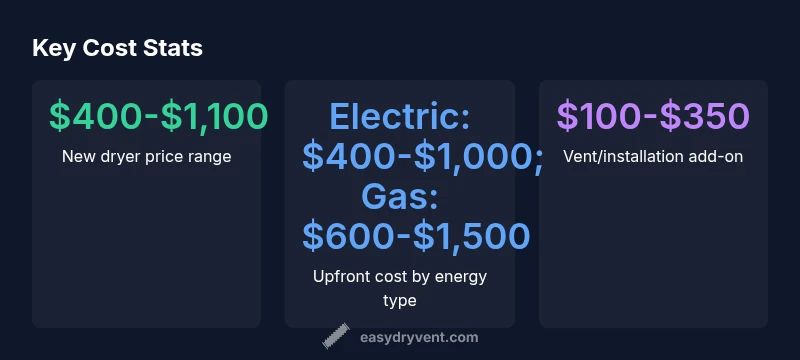
The typical cost of a new clothes dryer ranges from around $400 to $1,200, with premium models often exceeding $1,500. Expect electric models to be cheaper on average than gas dryers, and factor in installation and venting. Overall, plan for $600–$1,100 as a common outlay for a mid-range unit. Prices can vary by capacity, features, and local market conditions.
Why price varies by model and energy source
When you ask how much does a dryer cost, you must consider both the sticker price and delivery, installation, and long-term operating expenses. The base price of new clothes dryers varies widely depending on capacity, drum type (compact, front-load, top-load), energy efficiency rating, and whether the unit is electric or gas powered. In 2026, buyers typically see entry-level electric models priced around the hundreds, while premium gas or high-capacity units can push prices higher. Energy Star certified models often command a small premium but can reduce yearly operating costs. The Easy DryVent team notes that buyers should think beyond the initial price tag and weigh total cost of ownership, including installation and venting, which can add hundreds of dollars to the final bill. Reading product specs and energy guides helps you forecast annual energy use, which is a meaningful portion of long-term costs. If you’re starting your search with the question how much does a dryer cost, you’ll want to map price against features like load size, sensor drying, and steam options, then compare to your laundry needs and available space.
Price ranges by type and feature
- Entry-level electric dryers: commonly priced around $400–$600, offering essential drying performance and smaller capacities.
- Mid-range electric dryers: typically $600–$900, with larger drum sizes and improved energy efficiency.
- Premium electric dryers: in the $900–$1,400 range, featuring multiple cycles, sensors, moisture- and heat-management tech, and quieter operation.
- Gas dryers: generally $600–$1,500, with higher installation costs but potentially lower operating costs in some markets.
Keep in mind that sale prices, brands, and features impact the final number. For example, a model with steam refresh cycles or smart-home connectivity may sit at the higher end of the range. Always compare the energy-use label alongside price to estimate long-term savings.
Installation and venting costs to factor in
The upfront price is only part of the equation. Installation charges for a new dryer can range from roughly $100 to $350 depending on whether a gas line exists and whether a venting run must be added or modified. If you’re replacing an old unit in the same space, labor tends to be on the lower end. Vent cleaning or re-routing ducts, if needed, can add further costs. If you’re setting up a dryer in a new area or reworking a wall vent, budget for additional ductwork and permits, which some homes require. In short, plan for at least a modest installation add-on in your overall budget. The Easy DryVent guidance is to request a breakdown of estimated labor, parts, and any venting work before committing to a purchase.
Buying strategies: when to buy, where to shop, and timing
Shopping during major sale events—holiday weekends, Memorial Day, Labor Day, or end-of-quarter clearances—can reduce price by a noticeable margin. Compare prices at big-box retailers, appliance specialty stores, and online marketplaces; prices can vary by seller and region. Don’t forget to check for bundled deals that include delivery, haul-away, or extended warranties. Before purchasing, measure your space and verify electrical/gas connections, outlet location, and ventilation path. Reading reviews and energy labels helps you avoid buyer’s remorse. If a model you want is out of stock, ask about rainchecks or price-matching policies. The aim is to align your chosen dryer’s features with your laundry routine while staying within your budget.
Total cost of ownership: energy use and maintenance
Operational costs depend on efficiency, cycle frequency, and household usage. Energy-efficient models often reduce electric or gas consumption over time, especially in households with frequent drying. Look for the energy factor and estimated annual energy use on the EnergyGuide label. Beyond energy, routine maintenance like lint trap cleaning and vent inspection helps preserve performance and prevent safety issues, which aligns with Easy DryVent’s safety guidance. Expect occasional repairs or part replacements over a dryer’s lifespan, such as drum belt or heating element components, though these are less frequent than energy-related costs. When planning, estimate a five-to-ten-year horizon for ownership costs to understand the true outlay, since the initial purchase price is only part of the total cost.
Financing and rebates: energy incentives
Some utilities and local governments offer rebates or special financing for energy-efficient appliances, which can reduce upfront costs. Be sure to explore rebates, tax incentives, and utility incentives in your area before purchasing. Keep documentation of the purchase for warranty and rebate processing. If rebates are limited, consider financing options with low-interest terms or 0% APR periods that appliances retailers may offer. The key is to evaluate the effective annual cost after incentives and energy savings, not just the sticker price.
Practical tips: compare, measure, and plan
Create a comparison sheet that lists price, capacity, energy rating, warranty length, and installation needs for each model. Measure your laundry load patterns to select a dryer with the right drum size and moisture sensors. Check vent paths and confirm whether a gas line is present if you’re considering a gas model. Finally, factor in delivery and set-up timing to avoid delays that could affect your move-in or project schedule. By focusing on total cost of ownership and practical fit, you’ll choose a dryer that meets your needs without overspending.
Price bands for new clothes dryers by category
| Category Type | Typical Price Range | Key Considerations |
|---|---|---|
| Entry-level electric dryer | $400-$600 | Compact size; basics; higher energy per load |
| Mid-range electric dryer | $600-$900 | Large capacity; better efficiency; multiple cycles |
| Premium electric dryer | $900-$1,400 | Advanced features; smart tech; quiet operation |
| Gas dryer | $600-$1,500 | Vent/gas line needs; possibly lower operating cost in some regions |
Common Questions
What is the typical price range for a new clothes dryer?
Prices vary by type and features, but generally range from a few hundred dollars for entry-level models to over a thousand for premium units. Always factor in installation and venting costs.
Dryers typically cost from a few hundred to over a thousand dollars, depending on features. Don’t forget installation and venting when budgeting.
Should I buy electric or gas?
Electric dryers are usually cheaper upfront, while gas models can offer lower operating costs in areas with cheap gas. You’ll also need proper venting and a gas line for gas models.
Electric is cheaper to buy; gas may save on energy bills where gas is inexpensive, but you’ll need proper hookups.
Do I need to replace venting when buying a new dryer?
Yes. Ensure venting is adequate and clean. Poor venting wastes energy and can pose a fire risk. Have a professional inspect outdated ductwork if needed.
Yes—check venting before or during installation to stay safe and efficient.
Are refurbished or used dryers a good option?
Refurbished or used dryers can save money but carry higher wear risk and limited warranties. Buy from a trusted seller and inspect the unit thoroughly.
Used can save money, but inspect and buy from a reputable source.
How can I estimate annual operating costs?
Compare energy guides and energy factor ratings, estimate loads per week, and multiply by local utility rates. Consider how often you dry and the model’s efficiency.
Check the energy label and your usage to estimate yearly costs.
“Price is only part of the story—the total cost of ownership matters just as much. Energy efficiency, installation, and maintenance influence long-term expenses.”
Key Points
- Set a budget and feature list before shopping.
- Include installation and venting costs in total price.
- Electric dryers are usually cheaper upfront than gas.
- Energy efficiency lowers operating costs over time.
- Look for rebates and financing to reduce upfront price.