Difference Between Dryer and Tumble Dryer: A Practical Guide
Explore the difference between dryer and tumble dryer with a detailed, analytical comparison of operation, energy use, fabric care, and buying tips for safer, more efficient laundry at home.


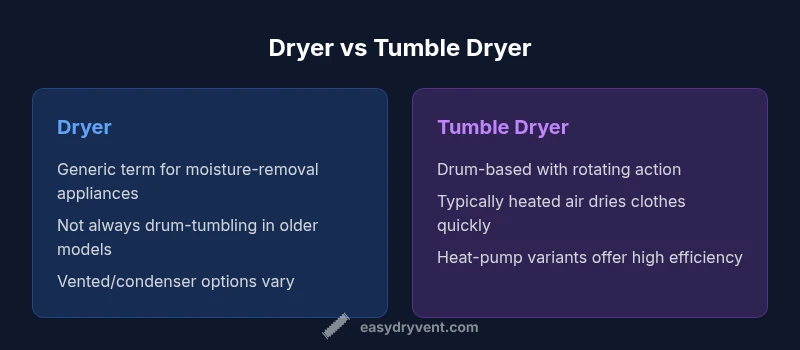
The difference between dryer and tumble dryer hinges on terminology and design: a dryer is any appliance that removes moisture from clothes with heat and airflow, while a tumble dryer is a drum-based model that rotates clothes as heated air dries them. In practice, most modern homes use tumble dryers, and this guide clarifies how they compare in operation, energy use, and care.
Understanding the difference between dryer and tumble dryer
The difference between dryer and tumble dryer is a topic that many homeowners encounter when shopping for laundry equipment. In common usage, a dryer is any appliance that removes moisture from textiles using heat and airflow. A tumble dryer, however, is a specific design where the drum rotates to tumble wet clothes while heated air passes through. This combination of drum action and heated air yields faster, more consistent drying and better fabric care when compared with non-drum methods that have largely fallen out of favor. According to Easy DryVent, understanding this terminology helps you select the right model for your space, energy goals, and laundry habits. This section clarifies the core definitions and sets the stage for the practical decisions that follow, including energy considerations, load size, and venting needs that influence long-term costs and satisfaction.
How tumble drying works and why it matters
Tumble dryers operate by rotating a drum while hot air is circulated through the tumbling clothes. The tumbling action lifts and lowers fabric, exposing more surface area to the warm airflow, which accelerates moisture evaporation. Sensors monitor moisture and temperature to prevent overdrying, protect fabrics, and reduce energy waste. Modern tumble dryers come in vented, condenser, and heat-pump configurations. Heat-pump models recycle heat, which can dramatically lower operating costs over time. The explained mechanism matters because it determines cycle times, fabric care, and noise levels. Easy DryVent notes that drum design is a key factor for load distribution and achieving uniform dryness across all items in a given cycle.
Energy efficiency: heat pump vs vented dryers
Energy efficiency is not a fixed trait of all tumble dryers; it varies by technology and usage. Vented models discharge warm air to the outside, typically delivering quick drying but potentially higher energy costs. Condenser and heat-pump variants reclaim and reuse heat, reducing overall energy consumption, especially on frequent or large loads. When comparing options, look for energy-saving features such as moisture sensors, load-sensing technology, and adjustable heat settings. Easy DryVent emphasizes evaluating real-world usage patterns—load size, fabric types, and cycle frequency—alongside official energy ratings to determine true operating costs over the appliance’s life.
Fabric care and performance implications
The design differences between dryer technologies influence fabric care. Drum tumbling promotes even drying, reduces wrinkles, and minimizes over-drying, which can extend garment life. Sensor-based cycles help prevent overdrying for delicate fabrics. However, high heat or aggressive tumbling on heavy items can cause pilling or shrinkage if not managed properly. When choosing between dryer types, prioritize features that accommodate your wardrobe—delicates, synthetics, cottons—and consider preset cycles for specific fabrics. The right choice balances speed, gentleness, and energy use, delivering consistent results across common laundry loads.
Types and configurations you’ll encounter
Most households today encounter three main tumble-dryer configurations: vented, condenser, and heat-pump. Vented models expel moist air outside through a vent and can be cheaper upfront but typically use more energy. Condenser dryers collect moisture as water and require a drain or container; they can be more flexible for spaces without external venting. Heat-pump dryers recycle heat to achieve excellent energy efficiency, though the upfront cost is higher. In addition to configuration, pay attention to drum size, cycle options, and control interfaces. These choices shape daily practicality and long-term costs.
Practical buying guidance: what to look for
When shopping, identify your primary constraints: space, budget, and laundry volume. Key features to compare include drum capacity, energy rating, sensor-dry accuracy, cycle variety (including wool, cotton, synthetics), and noise levels. If space is tight, compact or ventless heat-pump models can be ideal, but verify venting requirements for your installation. Look for models with robust lint filtration and accessible filter cleaning. Finally, consider warranty terms and service networks—these factors influence maintenance ease and total ownership cost over 5–10 years.
Maintenance, safety, and common mistakes
Maintenance is essential for safe and efficient operation. Regularly clean lint filters after each load, inspect the venting path for obstructions, and ensure proper drainage for condenser units. Avoid stuffing the drum to maximum capacity, as overloading reduces efficiency and fabric care quality. Keep exterior vents clear and check hoses or drainage lines for leaks. Safety reminders include proper electrical connections, fire-safety precautions, and periodic professional inspections if you notice unusual heat, burning smells, or excessive moisture around the unit. Following best practices helps prevent dryer fires and prolongs the appliance’s life.
Comparison
| Feature | Standard dryer | Tumble dryer |
|---|---|---|
| Primary drying method | Varies by model; non-drum options are rare today | Drum-based tumbling with heated air (the defining feature of a tumble dryer) |
| Drum action | Not all older or niche designs rely on continuous tumbling | Continuous tumbling during operation to lift fabrics |
| Energy efficiency options | Range includes vented, condenser, and some heat-pump variants | Heat-pump and condenser models emphasize energy efficiency; efficiency depends on class and usage |
| Installation/venting | Vented models require exterior venting; condensers and heat-pump variants can be more flexible | Typically vented in many homes, with ventless heat-pump options gaining popularity |
| Best for | General laundry needs; may be cheaper upfront on basic models | Frequent, large, or time-sensitive loads; advanced features and efficiency options |
| Fabric care outcomes | Adequate for many fabrics; care depends on model and cycle | Optimized for fabric care with sensors and controlled heat |
The Good
- Clear terminology helps decision-making
- Tumble dryers offer predictable performance and cycle options
- Energy-efficient tumble dryer options (e.g., heat-pump) exist
- Wide service networks and parts availability
Negatives
- Terminology can still cause confusion between generic dryers and tumble dryers
- Some older non-drum designs are uncommon and may complicate comparisons
- Heavier upfront costs for high-efficiency tumble dryer models
Drum-based tumble dryers are the practical default for most homes
For most households, a drum-based tumble dryer offers reliable performance, a wide range of efficiency options, and better fabric care. If space, budget, or venting constraints are severe, explore compact or ventless options and compare long-term energy costs.
Common Questions
What is the difference between a dryer and a tumble dryer?
In most homes today, 'dryer' is a general term for a machine that dries clothes with heat and airflow. A 'tumble dryer' is a specific drum-based model that tumbles clothes while hot air dries them. The distinction matters for energy options, fabric care, and installation considerations.
A dryer is any clothes-drying appliance, while a tumble dryer specifically uses a rotating drum with heated air to dry clothes. This difference affects energy use and maintenance.
Are tumble dryers more energy-efficient than traditional dryers?
Not automatically. Energy efficiency depends on the model and technology. Heat-pump tumble dryers tend to be more energy-efficient, but vented and condenser models vary in performance.
Energy efficiency depends on the model; heat-pump tumble dryers are typically more efficient, but check the energy label for specifics.
What should I look for when buying a dryer?
Look for capacity that matches your typical load, energy rating, sensor-dry features, noise levels, and the type of drying technology (vented, condenser, or heat-pump). Also consider space, venting requirements, and warranty.
Check capacity, energy efficiency, sensors, and installation needs to choose a model that fits your laundry habits.
Do all tumble dryers require exterior venting?
Many traditional vented tumble dryers require exterior venting. Condenser and heat-pump tumble dryers can be ventless or require condensate drainage, depending on the design and local code.
Some models can be ventless, but always verify with the manufacturer and your installation space.
What’s best for small spaces?
Look for compact or stacked models, and consider ventless heat-pump options if venting is a constraint. Measure door clearances and check install height.
For small spaces, choose compact or stacked heat-pump models and verify venting needs.
Can I convert a non-tumble dryer to tumble?
Converting a non-tumble dryer into a tumble dryer is not practical or recommended. It’s typically better to purchase a tumble dryer aligned with current safety and warranty standards.
Conversion isn’t practical; choose a purpose-built tumble dryer to meet safety and performance standards.
Key Points
- Define your space, budget, and load patterns before buying
- Prioritize drum-based tumble dryer models for versatility and control
- Evaluate energy options: vented, condenser, heat-pump
- Check sensor-dry features and fabric-care presets
- Plan for venting and maintenance to reduce fire risk