Difference Between Dryer and Washing Machine: A Guide
Explore the difference between dryer and washing machine, including how they work, energy use, maintenance, and practical buying tips for homeowners seeking efficient laundry setups.


Understanding the difference between dryer and washing machine is essential for any homeowner. The two appliances perform distinct roles: a dryer removes moisture from clothes using heat and airflow, while a washing machine cleans items with water and agitation. This article compares how they work, energy use, maintenance, and practical considerations for planning a laundry setup.
Understanding the difference between dryer and washing machine
In practical terms, the difference between dryer and washing machine is about function, cycle design, and the energy footprint. A washing machine is designed to clean textiles by repeating agitation and rinsing with water, using detergents and chemical residues to break down soils. A dryer, by contrast, removes moisture after washing by circulating heated air and tumbling the load until clothes reach an acceptable dryness level. Knowing this distinction matters because it informs space planning, electrical and venting requirements, and how you sequence laundry tasks. According to Easy DryVent, most households operate both appliances as a paired workflow, but understanding their separate roles helps prevent damage from improper usage, like attempting to dry heavily soiled items directly in a washing machine. The Easy DryVent team found that misusing one machine for the other is a common source of wear and energy waste, especially in smaller apartments.
How washers operate: the core mechanism and cycles
Washers use a drum that tumbles with water mixed with detergent to lift soils from fabrics. The agitation cycle, water temperature options, and spin speeds influence soil removal, fabric care, and residual moisture. Modern machines may include built-in heaters, multiple wash actions (pulsed, gentle, heavy-duty), and sensors that tailor cycles to load size. The water inlet and drain hoses require correct hookups, and the electrical outlet must match the unit’s power requirements. From a maintenance perspective, keeping inlet filters clean and using the right detergent helps extend life. The washing action is the essential first step in any laundry routine, setting the stage for effective drying later in the process.
How dryers work: heat, airflow, and moisture sensing
Dryers operate by tumbling clothes in a drum while heated air is circulated to evaporate moisture. They rely on energy sources such as electricity or gas to generate heat, with venting to the outside to expel humid air. Moisture sensors and dryness settings help prevent over-drying, which can damage fabrics and waste energy. Lint filters should be cleaned after every cycle to maintain airflow and prevent fire hazards. Gas and electric dryers have different safety considerations, including proper vent installation and dedicated outlets. Understanding these mechanics helps homeowners plan a safe, efficient laundry workflow and avoid common missteps, like trying to wash in a dryer or overloading the drum.
Energy and water considerations: what to expect
Washing machines typically consume water and detergent, with energy use depending on load size, cycle selection, and whether the home provides heated water. Dryers, on the other hand, consume electricity or gas and use heat to evaporate moisture, with energy intensity rising during longer or high-heat cycles. High-efficiency washers and modern dryers often include moisture or fabric-sensing technology that optimizes run time and energy use. For households in regions with energy or water costs, selecting higher-efficiency models and using appropriate cycles can lead to meaningful savings over the appliance lifecycle.
Space, layout, and installation basics: planning matters
A washer-dryer pairing requires careful space planning. In many homes, these appliances are installed side by side or stacked, depending on available floor area and ceiling height. Venting is essential for traditional dryers to maintain safe airflow; vent location and duct size influence performance and energy efficiency. Electric dryers need a suitable outlet, while gas dryers require a gas line plus appropriate ventilation. Placing the units near plumbing and a solid surface helps simplify maintenance and reduces the length of hoses and ducts. If you’re renovating, consult local codes and a professional installer to ensure correct clearances and fire-safety standards.
Maintenance and common issues: what to watch for
Regular maintenance reduces breakdowns and extends appliance life. For washers, inspect hoses for wear, clean filters if present, and run occasional descaling or cleaning cycles to address mineral buildup. For dryers, clean the lint screen after every use, clean the vent and ductwork periodically, and check for unusual noises that may indicate bearing wear or belt issues. Address leaks promptly by inspecting hose connections and seals. A proactive maintenance plan minimizes downtime and preserves energy efficiency.
Cost implications: upfront and ongoing costs
Upfront costs depend on capacity, features, and energy efficiency ratings. A higher-efficiency washer and a modern dryer may have a higher initial price, but they often deliver lower operating costs over time. Ongoing costs include energy and water usage, maintenance, and potential vent cleaning. When evaluating value, consider cycle times, capacity per load, and compatibility with your home’s electrical and plumbing infrastructure. A paired system can offer workflow efficiency but may require more space and ventilation planning.
Safety and best practices: keeping laundry smart and safe
Prioritize vent maintenance, lint filtration, and proper electrical and gas connections to reduce fire risk and ensure reliability. Do not overload the drum, ensure the outlet and vent paths are appropriate for the unit type, and install in a well-ventilated area. Use manufacturer-approved detergents and cleaning products. Regularly check hoses and seals for wear and replace aging components promptly. A safe, well-maintained system improves performance and longevity.
When you might need both: planning a mixed-load workflow
For households with diverse fabrics and frequent large loads, both a washer and a dryer are often the most practical setup. If space is constrained, consider a stacked configuration or a heat-pump dryer to minimize energy use. Plan for a robust ventilation path and a dedicated electrical circuit to maximize efficiency and reduce interruptions between cycles. In mixed-load scenarios, timing and sequence planning helps prevent bottlenecks and ensures clothes are dried effectively after washing.
Environmental impact and efficiency trends: smarter laundry choices
The laundry landscape is shifting toward higher-efficiency models, better moisture sensing, and improved heat exchange. Modern washers and dryers offer energy-saving modes, longer lifespans with premium bearings, and sensors that tailor cycles to real-time load conditions. Selecting energy-efficient units and maintaining them properly reduces environmental impact and lowers long-term costs. Consumers can further minimize footprints by drying on lower heat settings when fabrics allow and by scheduling energy-intensive cycles during off-peak hours where available.
Quick-start planning checklist
- Measure available space and determine if side-by-side or stacked installation fits
- Check electrical outlets, circuit capacity, and venting requirements
- Choose energy-efficient models with moisture and soil sensors
- Plan a maintenance cadence for lint traps, vent cleaning, and hose inspection
- Budget for both upfront cost and ongoing operating expenses
- Clarify disposal or procurement options for your existing appliances
Common myths debunked about laundry appliances
Myth: Dryers can replace washing machines in a pinch. Reality: Dryers do not clean clothes; washing is essential for removal of soils and odors. Myth: Gas dryers are always cheaper to run than electric. Reality: Total costs depend on local utility rates and dryer efficiency. Myth: All washers heat water equally. Reality: Some rely on home hot water, while others heat water internally; efficiency varies by model and cycle. Myth: Venting isn’t necessary if you have a compact space. Reality: Proper venting improves safety and performance and is often mandated by code.
Comparison
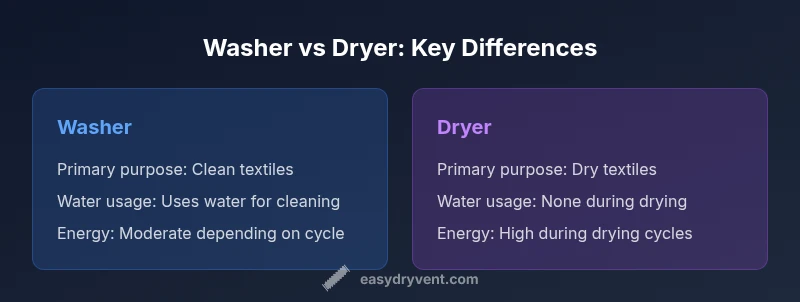
| Feature | dryer | washing machine |
|---|---|---|
| Primary purpose | Dry clothes after washing | Clean clothes by washing |
| Energy use | High during drying cycles | Medium during washing cycles (depends on heat source) |
| Water usage | None to minimal during drying | Uses water for washing |
| Heat source | Electric or gas heater for drying | Electric or hot water heated by supply |
| Cycle types | Drying cycles and moisture sensing | Washing cycles for soil and fabric care |
| Installation needs | Vent ducting, dedicated outlet | Water inlet and drain, power outlet |
| Maintenance focus | Ventilation and lint filters | Inlet hoses and filter maintenance |
The Good
- Clarifies appliance roles to prevent misbuy
- Helps plan space, hookups, and energy use
- Supports efficient laundry workflows when paired
- Reduces misuse and wear from cross-usage
- Guides budgeting for installation and maintenance
Negatives
- Requires separate space or stacking solution
- Higher upfront cost for a paired system
- Maintenance may be more involved with two machines
A paired washer and dryer setup is the most practical choice for most homes.
The difference between dryer and washing machine is clear: one cleans, the other dries. For most households, investing in both ensures efficient, reliable laundry cycles and reduces fabric wear by avoiding misuse.
Common Questions
What is the main difference between a dryer and a washing machine?
The main difference is their function: a washing machine cleans clothes using water and detergents, while a dryer removes moisture by applying heat and airflow. Each appliance has distinct cycles, energy needs, and installation requirements that influence how you plan a laundry space.
The dryer dries clothes using heat and airflow, while the washing machine cleans clothes with water and agitation. They serve separate roles, so plan space and hookups accordingly.
Can a dryer also wash clothes?
No. A dryer cannot substitute for washing because it does not remove soils or odors. Some combination units exist in compact formats, but separate washing and drying cycles are necessary for proper laundry care.
A dryer can't wash clothes. Use a washing cycle for cleaning, then a dryer for drying.
Do washers and dryers use different electrical outlets?
Yes. Most washers and dryers require dedicated circuits. Dryers may need a higher amp circuit and special outlets, especially gas-powered dryers that still require an electrical supply for controls. Always follow local codes and manufacturer guidance.
Yes. They usually need dedicated circuits, and some dryers require specific outlets.
Is it better to buy a stacked unit for small spaces?
Stacked units save floor space and can be convenient in tight homes, but ensure it fits your ceiling height, ventilation (for vented dryers), and accessibility for maintenance. Some buyers prefer separate machines for capacity and repair ease.
Stacked units save space but check venting, height, and access for maintenance.
What should I consider if I have limited space?
Prioritize compact, high-efficiency models and consider a vertical stacking option. Verify venting requirements and electrical load, as these often drive layout decisions. A well-planned setup minimizes trips and keeps maintenance manageable.
Choose compact, energy-efficient models and plan vertical stacking if possible.
How should I maintain a washer and dryer?
Regularly inspect hoses, clean lint traps, and run maintenance cycles or descaling products as recommended. Clean the dryer vent and filter after each use. Schedule periodic professional checkups to catch wear and extend lifespan.
Inspect hoses, clean lint traps, clean vents, and run maintenance cycles regularly.
Key Points
- Define each appliance's role before purchasing
- Assess space, venting, and hookups early
- Prioritize energy- and water-efficient models
- Plan for regular maintenance to prevent downtime
- Pairing a washer with a dryer is often the best approach