Dryer and Washing Machine: A Practical Home Comparison Guide
A practical, evidence-based comparison of dryer and washing machine options for safer, more efficient laundry. Includes maintenance, venting guidance, and cost-saving tips from Easy DryVent.


TL;DR: A modern dryer and washing machine pair typically delivers the best performance, efficiency, and safety for most homes. This comparison highlights the main differences in features, maintenance needs, and operating costs, plus practical upgrade scenarios so you can choose based on your space, budget, and laundry habits. We also outline when a stacked unit or separate appliances make sense.
Understanding the dryer and washing machine ecosystem
Laundry care sits at the intersection of convenience, reliability, and safety. When we discuss the dryer and washing machine together, we are exploring two appliances that work in tandem to deliver clean clothes with minimal hands-on effort. In modern homes, configurations range from two full-size machines in separate spaces to compact, stacked units in tight closets. This section outlines the roles of each appliance, typical configurations, and how features like load sensing, moisture detection, and cycle optimization influence efficiency, fabric care, and energy use. According to Easy DryVent, a well-chosen pair can deliver meaningful gains in reliability and safety when ventilation and lint control are prioritized.
In the broader scope of home maintenance, treating the laundry room as a system helps prevent bottlenecks, wear, and unintended energy waste. The dryer and washing machine are not isolated purchases; they interact with plumbing, electrical circuits, and the venting infrastructure. With careful planning, you can optimize throughput, reduce downtime, and extend the life of both machines. This article provides a structured framework for evaluating your needs and making a choice that aligns with your household’s laundry patterns and renovation plans.
Separate units vs stacked/compact designs
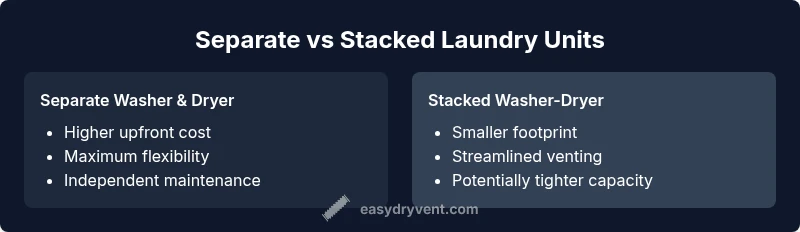
Choosing between separate washer and dryer versus a stacked unit is primarily a space and lifestyle decision. Separate machines maximize capacity, flexibility, and fault isolation; you can upgrade one appliance without affecting the other, and you often gain access to a broader range of cycles and features by mixing brands. However, they demand more floor space, dedicated plumbing, and longer duct runs in some layouts. Stacked designs, by contrast, offer a compact footprint ideal for apartments, homerooms, or laundry closets with limited depth. Modern stacked units increasingly mimic the performance of two standalone machines, but installation can be more sensitive to venting and leveling. In both configurations, the dryer and washing machine should be sized to your typical loads to avoid overworking the motor or heater. In practice, the right choice balances space constraints with load volumes and the desire for modular upgrades over time.
Core performance factors for the laundry pair
Performance hinges on several interconnected factors, including spin speed, wash agitation, cycle variety, and how well sensors regulate heat and moisture. A high spin speed helps extract more water, reducing dryer time, while intelligent load sensing prevents over-drying and fabric wear. The washer’s reach is defined by its capacity and wash action, which influence cleaning efficacy and water usage. The dryer’s heat source (electric or gas) affects upfront cost, running costs, and installation requirements. Across both machines, look for moisture sensors, digital controls, and quality drive motors. A well-matched pair tends to deliver shorter cycles, quieter operation, and more consistent results across loads. For many households, the synergy of features yields better fabric care and energy efficiency than any single high-end feature.
Energy efficiency and operating costs
Energy efficiency remains a top consideration for long-term savings. ENERGY STAR-certified units commonly outperform non-certified models, but a pair’s overall efficiency depends on usage patterns and cycle choices. Drying efficiency is influenced by venting length, lint buildup, and the moisture-sensing algorithm. Washing efficiency depends on load size matching and efficient wash actions. In practice, choosing devices with good insulation, efficient motors, and conservative water and energy use can significantly reduce operating costs over the appliance lifecycle. Easy DryVent’s experience underscores that vent maintenance and proper installation have outsized effects on real-world efficiency, often more than marginal gains from marginal feature sets.
Maintenance essentials: lint traps, filters, and venting
Maintenance is the quiet backbone of long-term performance for the dryer and washing machine. The lint trap in the dryer should be cleaned before every load, and the exhaust vent should be inspected and cleaned periodically to prevent airflow restrictions. The washer benefits from regular filter checks and occasional hose inspections for leaks. For all appliances, keep the area around the units clean to prevent dust and lint from infiltrating electronics. A simple schedule—monthly lint checks, quarterly vent inspections, and annual professional servicing—keeps efficiency high and reduces the risk of breakdowns. Easy DryVent emphasizes that routine maintenance is a cost-effective hedge against costly emergency repairs.
Venting and safety considerations
Vent safety is non-negotiable when discussing the dryer. A clogged vent not only reduces efficiency but also creates a fire risk due to lint accumulation. Exterior vent termination should be clear of obstructions, with smooth ducting that minimizes bends. Regular vent cleansing and ensuring a proper seal around the vent are critical steps. For gas dryers, venting also intersects with gas line integrity and exhaust gas safety. Fabric care and dryer performance improve when vent runs are concise and free of kinks. Safety first in venting translates to better reliability and reduced energy waste for the entire laundry system.
Installation and space planning
Installing a dryer and washing machine requires attention to electrical supply, water lines, drainage, and proper clearance. If you opt for a stacked setup, verify manufacturer compatibility and professional installation requirements, including adequate ventilation and seismic considerations where applicable. Space planning should account for door swing, access to maintenance panels, and future-service clearance. In small or narrow spaces, consider a compact or ventless option where permitted, while ensuring that the unit’s performance remains within expected ranges. A well-planned layout minimizes vibration and noise and helps safeguard your surrounding finishes over time.
User experience: controls, cycles, and smart features
Most modern dryers and washers offer a spectrum of cycles—from quick wash and rapid dry to delicate and heavy-duty modes. A clean, intuitive control panel improves daily use and reduces the chance of misloaded or under-dried fabrics. Smart features like remote monitoring, app-based diagnostics, and auto-load sensing can improve convenience, though they add cost. When evaluating a pair, prioritize reliability of core cycles, predictable dry times, and straightforward maintenance indicators. The overall experience matters as much as raw performance because it shapes daily adherence to recommended usage patterns.
Durability, warranties, and lifecycle expectations
Durability depends on build quality, component design, and how consistently the units are maintained. Key durability indicators include motor lifespan, heating element resilience in the dryer, and the reliability of the washer’s drum and suspension system. Warranties provide a cushion against defects or premature failures; longer-term protection is especially valuable for two-appliance configurations due to the increased exposure to potential issues. Planning for typical lifecycles—often several years for both units—helps guide upfront investments and future replacement strategies.
Buying options: price ranges, value, and resale
Price is a practical consideration but should be evaluated alongside features, capacity, and energy use. In general, two separate units offer flexibility to upgrade progressively, while stacked units provide a lower upfront footprint with a tighter overall price band. For buyers mindful of value, factor in operating costs, potential rebates for energy-efficient models, and the expected lifespan of major components. Used or refurbished units can be an option in some markets, but require careful inspection of seals, hoses, and electronics. Always compare warranties and service networks when assessing overall value.
Step-by-step decision guide for your home
- Measure your available space and doorways; 2) Estimate typical laundry loads per week; 3) Decide if you need separate units or a stacked configuration; 4) Check energy ratings and cycle options; 5) Assess venting and installation feasibility; 6) Compare total cost of ownership over 5–10 years; 7) Contact a professional for installation and required permits if needed; 8) Schedule maintenance reminders to keep your system efficient.
Common mistakes and how to avoid them
Common mistakes include overloading the washer or dryer, neglecting vent maintenance, choosing a unit with insufficient capacity, and skimping on professional installation. Another pitfall is ignoring proper hose and vent routing, which can lead to leaks or fire hazards. Avoid them by sizing units to your typical loads, performing regular lint cleaning, and following the manufacturer’s recommended maintenance calendar. A thoughtful purchase now saves energy and repairs later.
Comparison
| Feature | Separate Washer & Dryer | Stacked Washer-Dryer Combo |
|---|---|---|
| Installation footprint | Larger footprint; separate hookups and floor space | Compact footprint; space-saving design |
| Energy efficiency | Strong options with independent optimization | Comparable efficiency depending on model; newer stacks often efficient |
| Initial cost | Typically higher upfront for two units | Lower upfront footprint but may vary with brand and features |
| Maintenance complexity | Two traps/filters; more surfaces to inspect | Single vent/filters; simpler upkeep but fewer parts to upgrade |
| Repair costs/availability | Two potential failure points; parts widely available | One system; parts may be limited if model is older |
| Best for | Large households with variable loads and space for two units | Small spaces or apartments; easy integration into tight layouts |
The Good
- Improved flexibility with two separate machines
- Easier upgrades and servicing for each unit
- Broad selection of models and features
- Potentially quicker replacement of one unit if needed
Negatives
- Higher upfront cost for two units
- Requires more space and installation planning
- Two separate venting paths may complicate installation
- Maintenance doubles if both units require servicing
For most homes, a compact, stacked setup or a paired two-unit configuration offers the best balance of space, efficiency, and total cost.
Choose based on space and laundry volume: stacked units suit tight spaces, while two separate machines provide flexibility and fault tolerance. Prioritize venting and maintenance to maximize efficiency and safety.
Common Questions
How do I choose between a stacked washer-dryer and separate units?
Consider your space, laundry volume, and budget. Stacked units save floor space but may limit future upgrades, while separate machines offer flexibility and easier servicing. Examine energy ratings, cycle options, and venting requirements to make an informed choice.
Think about space and load needs. Stacked units save space; separate machines offer flexibility and easier servicing.
Is a gas dryer better than an electric one for efficiency?
Gas dryers typically have lower operating costs per cycle but higher upfront costs and installation requirements. Electric models are easier to install in most homes but may cost more to run over time, depending on local energy prices. Compare total cost of ownership for your situation.
Gas can be cheaper to run but needs installation; electric is simpler but may cost more over time.
How often should I vent-clean my dryer?
Inspect and clean the dryer vent at least once a year if you use the dryer frequently. If you notice longer drying times or excessive heat, clean sooner. Regular cleaning helps maintain efficiency and safety.
Annual vent cleaning is a good baseline; sooner if you see longer dry times.
What maintenance tasks are essential for both appliances?
Clean lint traps, inspect hoses for leaks, and check seals on doors or access panels. Keep the area around the units free of clutter and dust. Schedule periodic professional servicing to catch issues before they cause downtime.
Clean lint traps, inspect hoses, and keep the area tidy. Schedule occasional professional service.
How can I reduce energy costs with a dryer and washing machine?
Choose high-efficiency models, run full loads, use moisture-sensing cycles, and clean vents regularly. Proper maintenance prevents energy waste and prolongs appliance life.
Use high-efficiency models and full loads; keep vents clean for best results.
Key Points
- Assess space and load volume before choosing layout
- Prioritize venting and lint maintenance for safety
- Choose energy-efficient models to save over time
- Match capacity to typical loads to avoid overuse
- Plan for future service and parts availability