Difference Between a Tumble Dryer and a Washing Machine
A detailed, objective comparison of tumble dryers and washing machines, covering how they work, energy use, cycle options, installation, and practical guidance for homeowners and DIY enthusiasts.


When deciding between a tumble dryer and a washing machine, remember they serve different tasks: a washing machine cleans clothes with water and detergent, while a tumble dryer dries them with heated air. If you already own a washer, you’ll typically need a separate dryer to fully finish laundry. In compact spaces, consider combo units or ventless models to save space.
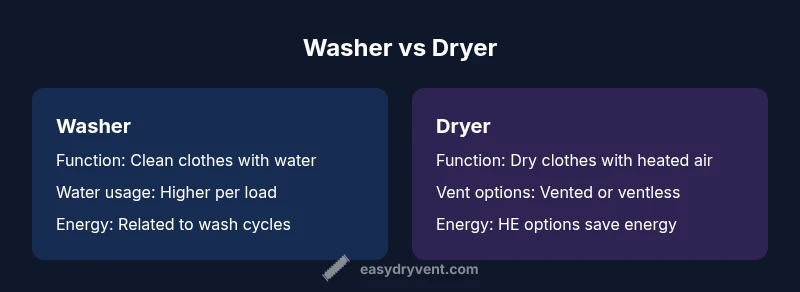
What Each Appliance Does\n\nThe difference between a tumble dryer and a washing machine centers on function. A washing machine is a chore-driving appliance that uses water, detergent, and mechanical agitation to loosen, lift, and rinse soils from fabrics. A tumble dryer, by contrast, is designed to remove moisture from clean clothes through heated air and tumbling action. In most households, these devices perform complementary roles: you wash with a washer, then dry with a dryer. For homeowners evaluating a single-unit solution, or a tiny-laundry layout, recognizing these distinct purposes helps guide space planning and purchase decisions. The washing machine handles soils, stains, and fabric care, while the dryer handles moisture removal and finishing. If you’re asking about the difference between a tumble dryer and a washing machine in practical terms, the core answer is that one cleans, the other dries. This distinction informs everything from cycle selection to installation considerations. The Easy DryVent team emphasizes that understanding this divide is foundational for safer, more efficient laundry workflows.\n
Key Mechanical Differences and What They Mean for Your Laundry Routine\n\nDesign and mechanics drive how each appliance operates. A washing machine uses a drum that fills with water, then relies on agitation or tumbling to move fabrics through the wash solution. Modern washers may include high-efficiency (HE) options that use less water per cycle without sacrificing cleaning performance. A tumble dryer uses a sealed drum that tumbles your clothes while hot air is circulated to evaporate moisture. Some models use venting to the outside, while ventless configurations condense moisture inside the unit and drain it away. The practical takeaway is that washing machines require plumbing connections and detergents, while dryers require proper venting or condensate handling. This affects installation flexibility, especially in small or retrofit spaces.\n
Energy and Water Footprints: What the Numbers Tell Us\n\nEnergy efficiency and water use shape the long-term cost of ownership. A washing machine’s water usage is a major factor; high-efficiency washers can dramatically reduce consumption per load. Dryers primarily consume electricity or gas for heating and operation, with vented models typically converting more energy into heat and moisture removal than ventless ones. The key point for homeowners is to assess per-load energy and water costs, not just upfront price. Easy DryVent’s analysis shows that optimizing both devices in a cycle sequence can minimize energy waste and shorten total laundry time. Efficient pairings include washers with advanced soil removal and dryers with heat-pump technology, which deliver lower operating costs over time.\n
Venting, Condensing, and Heat-Pump Realities\n\nDryer technology varies widely. Traditional vented dryers expel hot, moist air through a vent outside the home; ventless varieties condense moisture inside the unit, then drain it away or collect it as water. Heat-pump dryers recapture and reuse heat, delivering the highest energy efficiency among common models. Your choice depends on home layout and climate. In apartments or spaces without an exterior wall, ventless or heat-pump dryers may be the most practical solution. In larger homes with adequate venting, a vented dryer often delivers faster drying times and lower initial cost. Understanding these options helps you select a device that aligns with your space and energy priorities.\n
Space, Installation, and Cost Considerations\n\nSize, layout, and venting are critical. A standard washer-dryer pair often requires more floor space than a single combined unit. Stacking kits or side-by-side configurations can optimize a laundry nook, but you must confirm clearances for hoses, vents, and doors. Installation costs vary by complexity and regional rates, while ongoing costs hinge on energy tariffs and water usage. For homeowners on a tight budget, a high-efficiency washer paired with a vented dryer can deliver good long-term value; in small spaces, a compact, ventless dryer with a front-loading washer may be more practical. The Easy DryVent approach emphasizes a careful assessment of available space before purchase to avoid costly retrofits.\n
Practical Use Cases: Scenarios to Help Decide\n\nConsider typical loads: a family with multiple daily laundry cycles benefits from a robust washer and a reliable dryer, whereas a single occupant may prioritize space-saving and versatility with a compact combo unit. For households with limited access to external venting, ventless dryers or heat-pump variants can be a lifesaver, even if drying times are longer. For those prioritizing speed, dedicated, properly vented drying solutions can rapidly complete large loads. The goal is to align equipment with real-world routines rather than theoretical performance.\n
Maintenance, Safety, and Longevity for Washers and Dryers\n\nMaintenance is a cornerstone of reliability. Washers benefit from periodic drum cleaning, lint-trap checks (in many models), and detergent dosing that avoids buildup. Dryers require lint trap maintenance after every cycle, vent cleaning on a schedule, and an assessment of venting pathways to prevent blockages that elevate fire risk. Safety practices include unplugging devices before maintenance, ensuring proper clearance around both appliances, and addressing signs of wear promptly. Establishing a simple maintenance calendar reduces the risk of breakdowns and keeps both appliances operating at peak efficiency. Easy DryVent highlights routine checks as a practical, low-effort path to safer, longer-lasting laundry gear.
Comparison
| Feature | Washing Machine | Tumble Dryer |
|---|---|---|
| Primary function | Cleans clothes using water and detergent | Dries clothes using heated air and tumbling |
| Water usage | Uses significant water per wash cycle (HE models reduce this) | Uses little to no water per dry cycle |
| Energy use focus | Energy use tied to wash and rinse cycles | Energy use tied to heating and air circulation |
| Ventilation | No external vent needed for washing | Vent or ventless options required for drying |
| Space impact | Typically needs water connections and space for drum access | Requires space for venting or condensate handling |
| Cycle diversity | Multiple wash programs (cotton, synthetic, delicate, etc.) | Multiple dry programs (normal, delicate, bulky, quick dry) |
| Maintenance tasks | Detergent dosing, lint management in filters | Lint trap cleaning, vent inspection |
| Best use case | Always paired for full laundry workflow | Best for finishing and quick-dry needs after washing |
The Good
- Clear separation of tasks leads to optimized performance for each step
- Modular upgrades allow upgrading washer or dryer independently
- Wide range of models supports different budgets and spaces
- Dedicated dryers improve clothes finish and reduce wear from repeated washing
Negatives
- Two appliances take more floor space and may require more hookups
- Higher upfront cost compared to a single combined unit
- Maintenance involves two separate devices with potential for separate failures
- Ventilation requirements can complicate installation in tight spaces
Choose a dedicated washer and dryer when possible; they offer the best performance and reliability for most households.
A separate washer and dryer deliver superior fabric care and drying efficiency. In small spaces or budget constraints, a washer-dryer combo or ventless option provides a practical alternative, but expect longer cycle times and potential compromises on capacity.
Common Questions
What is the main practical difference between a washing machine and a tumble dryer?
The washing machine cleans clothes using water and detergent, then rinses and spins to remove most moisture. The tumble dryer removes moisture from clean clothes by circulating heated air. They’re designed for different phases of laundry, so most homes benefit from both.
Washer cleans with water and detergent, then the dryer finishes by removing moisture with heated air. They’re two parts of a complete laundry workflow.
Can I replace both with a single unit?
Some homes use a washer-dryer combo, which can save space but may compromise on drying performance or cycle times. For large families or heavy-duty needs, two separate appliances are usually more efficient.
You can get a combo, but two separate machines often work better for speed and capacity.
What impacts energy costs the most between these two appliances?
Washing energy depends on water temperature, cycle length, and soil load. Drying energy hinges on drum design (vented, ventless, heat-pump) and load moisture. In most homes, the dryer contributes significantly to monthly energy use.
Drying tends to drive energy use more in a typical home, especially with longer cycles or inefficient venting.
Are vented dryers better than ventless for quick drying?
Vented dryers generally dry faster and may be cheaper upfront. Ventless and heat-pump models save energy but can extend drying times. Choose based on space, climate, and tolerance for cycle duration.
Vented dries faster and can be cheaper to buy, but ventless saves energy at the cost of longer cycles.
What maintenance should I perform regularly?
Clean the washer drum and lint traps regularly; inspect hoses for wear. For dryers, clean the lint filter after every use and schedule vent cleaning to prevent blockages and reduce fire risk.
Keep the lint trap clean after every use and check hoses and vents periodically.
Key Points
- Identify your space and whether venting is feasible
- Prioritize washer capacity and dryer efficiency for long-term cost savings
- Consider vented vs ventless and heat-pump options based on climate
- Maintain lint traps and vents to ensure safety and performance
- Plan for a complementary pairing rather than relying on a single unit