Why Is Your Dryer So Hot? A Troubleshooting Guide
Urgent, practical guide to diagnosing why your dryer overheats, with safe steps, common causes, and maintenance tips for homeowners and DIYers.


If your dryer is overheating, the most likely causes are restricted airflow from lint buildup or a blocked vent, and possibly a damaged vent hose or a faulty safety component. Unplug the unit, clean the lint screen, inspect the vent path for obstructions, and test airflow. If the heat persists, stop using it and call a licensed technician.
What makes a dryer overheat? Why is dryer so hot in many homes? The root causes typically fall into airflow problems, vent blockages, and faulty safety components. When airflow is restricted, heat builds up inside the drum, making the interior dangerously hot. Common culprits include lint buildup, blocked exterior vents, and damaged vent hoses. Additionally, a failing thermal fuse or thermostat can let heat run away even with a clean vent. Understanding these drivers helps homeowners quickly isolate the issue and prevent a dryer fire.
- Airflow issues often start with a clogged lint filter
- Exterior vent blockages restrict exhaust
- Damaged ducting reduces airflow and increases heat
- Faulty safety components can bypass automatic shutoffs
Immediate safety steps you should take
Urgent safety considerations include power down and avoiding using the dryer while overheating. Unplug the unit and move it away from walls. Do not touch metal surfaces to avoid burns. If you smell burning plastic or see smoke, evacuate and call emergency services. After powering off, you can perform initial checks: inspect lint trap, confirm no visible obstructions, and ensure the vent path is clear. If you cannot determine the cause quickly, delay repairs and contact a qualified appliance technician.
Check the lint trap and venting system
Start with the lint screen and the path that exhausts hot air from the drum. A clogged lint screen limits airflow, making the dryer work harder and heat up. Clean the screen with warm, soapy water and a soft brush, then inspect the lint trap housing for buildup. Next, check the vent duct that carries hot air to the outside; look for kinks, crushed sections, or accumulated lint. A clogged vent can dramatically reduce airflow and raise operating temperature.
Inspect the vent hose and exterior vent
Examine the vent hose for kinks, cracks, or crushing. A damaged hose restricts airflow just as a clogged vent would. Detach the hose if necessary and visually inspect for dents or clogs. At the exterior vent, remove any accumulated lint, leaves, or debris blocking the opening. Ensure the vent hood flaps move freely and that the exhaust air exits cleanly outdoors.
Check electrical supply and thermostat/thermal fuse
Electrical issues can cause improper heating control. Verify the dryer is plugged into a dedicated circuit and that the circuit breaker hasn’t tripped. If you have access to the dryer’s internal components, test the thermostat and thermal fuse with a multimeter or follow the manufacturer’s service manual. A blown thermal fuse or a stuck thermostat can cause overheating even when airflow seems fine.
Signs of a failing thermal fuse, thermostat, or heating element
Look for blown fuses, scorched wiring, or a persistent glow indicating the heating element is stuck on. A dryer that runs but does not heat properly is a different symptom; overheating while the drum is drying is a red flag for a thermal fuse or thermostat problem. If you notice a burning smell, smoke, or heat radiating from unusual places, stop immediately and unplug the unit.
How to test and fix common issues (overview)
A structured approach: test airflow first, then inspect the vent path, followed by electrical components if the problem persists. Simple fixes like cleaning lint filters and straightening the vent hose are easy and safe, but testing thermostats or replacing a thermal fuse usually requires basic electrical knowledge and spare parts. If in doubt, opt for professional maintenance to avoid shock or fire risk.
When to call a pro and safety caveats
If you’re unsure about accessing internal components, or if you detect burning, melted plastic, or smoke, turn off power and contact a licensed technician immediately. Do not continue to use a dryer that overheats. Professionals can safely diagnose heating elements, thermostats, wiring, and venting issues that could otherwise cause a fire. Regular professional vent cleaning is recommended to keep airflow optimal.
Steps
Estimated time: 60-90 minutes
- 1
Power down and unplug
Ensure the dryer is fully disconnected from power. Move it slightly for access if needed, but avoid tugging on cords. This safety step prevents shocks while you inspect components.
Tip: Always disconnect power before starting any internal inspection. - 2
Inspect lint screen and housing
Remove the lint screen and clean it with warm soapy water. Check the lint housing for hidden clumps; remove them with a brush or vacuum. Replace the screen securely before testing the dryer again.
Tip: A clean lint screen improves airflow dramatically. - 3
Check the vent path
Follow the duct from the dryer to the exterior vent. Look for kinks, crushed sections, or lint buildup. Clean as needed and straighten bends to maximize airflow.
Tip: Use a vent brush and a vacuum to reach deep inside ducts. - 4
Inspect the vent hose and exterior vent
Detach the vent hose and inspect for damage. Replace cracked or crushed hoses. Clean exterior vent opening and ensure it vents outdoors freely.
Tip: Avoid flexible foil hoses; use rigid metal venting for safety. - 5
Check electrical components
If you have the tools, test the thermostat and thermal fuse with a multimeter. Replace faulty parts only if you have experience or hire a professional.
Tip: A faulty part can cause overheating and should be addressed promptly. - 6
Test airflow and heat after fixes
Reconnect power and run a short cycle to observe airflow and heat. If hot spots persist, escalate to a technician.
Tip: Do not run the dryer for extended periods while overheating persists. - 7
Know when to seek professional help
If you detect burning smells, smoke, or cannot identify the cause, call a licensed technician immediately.
Tip: Professional service is safer for electrical and internal component fixes.
Diagnosis: Dryer is excessively hot during operation
Possible Causes
- highLint buildup restricting airflow
- highBlocked exterior vent
- mediumCrimped or damaged vent hose
- lowBlown thermal fuse or faulty thermostat
- lowElectrical supply issues (overheating heater element)
Fixes
- easyUnplug dryer; clean lint screen and housing; clear path to vent
- easyInspect and clean ductwork; straighten or replace crushed vent hose
- easyClear exterior vent of debris; ensure vent hood flap operates freely
- mediumTest/replace thermostat or thermal fuse with a multimeter or professional help
- mediumCheck electrical circuit and power supply; call an electrician if needed
Common Questions
What causes a dryer to overheat?
Overheating is usually due to restricted airflow from lint buildup or a blocked vent, sometimes combined with a faulty safety component. Start with lint cleaning and vent inspection before considering component replacement.
Overheating usually comes from blocked air flow and vent blockages. Start by cleaning the lint and checking the vent.
Is a hot dryer dangerous?
Yes. An overheating dryer poses a significant fire risk and can cause burns. Do not ignore persistent heat and unplug the unit if you smell burning or see smoke.
Yes, it's dangerous. Unplug and inspect for blockages, then call a professional if it persists.
How often should I clean the lint filter?
Clean the lint filter after every load. Periodically inspect the vent and ducting for buildup and arrange professional vent cleaning annually or as needed.
Clean the lint trap after every load, and service vents as needed.
What tools do I need to inspect the vent?
Use a flashlight, a vent brush or flexible brush, and a vacuum with a hose attachment. Wear gloves and unplug the dryer before you start.
Bring a flashlight and vent brush; unplug first.
When should I replace the vent hose?
Replace a crushed, kinked, torn, or overly flexible vent hose. Choose a rigid metal or semi-rigid aluminum vent for safer, better airflow.
If the hose is damaged or kinked, replace it.
Can I fix overheating components myself?
Basic cleaning and hose replacement are doable for DIYers. For thermostats, thermal fuses, or heating elements, consult a professional.
You can do basic cleaning, but electrical parts are for pros.
Watch Video
Key Points
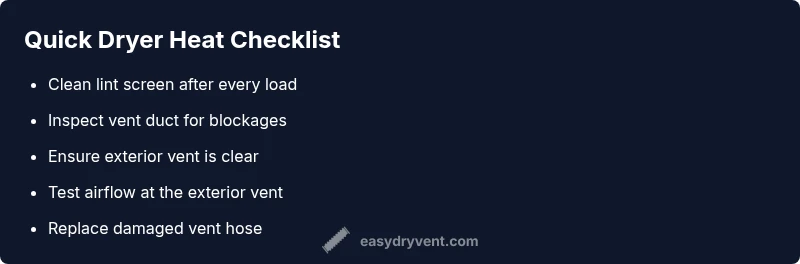
- Clear lint trap before every load.
- Inspect vent path and exterior vent regularly.
- Address persistent heat with a professional evaluation.
- Maintain annual dryer vent cleaning for safety.