Whirlpool Dryer No Heat: Troubleshooting and Fixes
Step-by-step troubleshooting for Whirlpool dryers with no heat. Diagnose electrical, vent, and component faults safely, fix common causes quickly, and know when to call a pro.


An electric Whirlpool dryer with no heat is most often caused by a blown thermal fuse, a faulty cycling thermostat, or a failed heating element. Start by confirming the outlet is live and the dryer isn't tripped on a breaker, then inspect the vent for obstructions. If these basics pass, continue with the diagnostic flow below.
What no-heat means for Whirlpool dryers
When a Whirlpool dryer has no heat, the problem is usually a heat-source interruption rather than a motor issue. The term whirlpool dryer no heat is a common consumer query that covers electric and gas models, though gas units have different heat generation paths. In many homes, cooling the drum spins but the clothes come out damp because heat never reaches the load. Start with the simplest checks and progress to component testing only as needed. For homeowners, safety is paramount—unplug the unit before inspections and avoid testing live circuits without proper training. Throughout this guide we reference the Whirlpool family of dryers and practical maintenance steps you can perform safely at home with standard tools.
Common no-heat symptoms you might notice
- Clothes are warm or cool but never hot, and the load remains damp
- The drum runs, but you don’t hear the hum of a heating element
- The lint screen and vent path feel unusually warm or you detect a burning odor
- The dryer stops mid-cycle or trips a circuit breaker during heat cycling
These symptoms often point to heat-source failures rather than a failing motor. The first steps are always safe, basic checks before you test components with a meter. By understanding typical Whirlpool dryer no heat scenarios, you’re better prepared to diagnose efficiently and reduce downtime.
Safety first before you begin
Before you touch any wires or internal parts, unplug the dryer and disconnect it from the power source. If you recently used the machine, allow it to cool to avoid burns. Wear eye protection and use dry hands when handling electrical components. Do not operate the appliance if you see damaged cords, melted insulation, or signs of electrical arcing. For gas models, ensure there are no gas leaks and turn off the gas supply before service. If you’re ever unsure, call a professional. Easy DryVent recommends erring on the side of caution—the heat path inside a dryer carries real fire and shock risks, so proper lockout/tagout procedures are essential.
Electrical checks you can perform safely
Power issues are a frequent cause of no heat. Start by confirming the outlet is live with a multimeter or by testing another appliance on the same circuit. Check your circuit breaker or fuse box for trips or blown fuses. If the outlet and breaker are fine, you can perform a basic continuity check on the dryer's thermal fuse using a multimeter. If the fuse reads open, replace it. Note: some Whirlpool models place fuses in hard-to-reach spots; consult your model’s manual before disassembly. Never bypass a fuse with a conductor; fuses exist to protect you from fire hazards.
Venting and lint: the overlooked culprits
A clogged vent or lint buildup is a leading cause of heat-related faults. Blocked air flow can trigger high temperatures and safety cutoffs that prevent heat from reaching the drum. Start by inspecting the lint screen and cleaning it thoroughly. Follow the duct path from the dryer to the outside vent, removing visible obstructions and cleaning the vent hood. Replace any damaged ducts and ensure there are no kinks. Regular vent cleaning is a practical maintenance habit that reduces energy use and extends dryer life. If you notice excessive lint behind the lint screen or in the vent, schedule a deeper vent cleaning.
Internal components to inspect
If electrical and vent paths are clear, the next focus is on components that generate heat: the heating element, cycling thermostat, high-limit thermostat, and the thermal fuse. A blown thermal fuse is the most common no-heat fault in Whirlpool units; it interrupts current to the heating coil. A faulty cycling thermostat can prevent heat cycling even when power is present. A damaged heating element will not produce heat and may show visible signs of wear. If you replace a component, verify the new part’s compatibility with your exact Whirlpool model and follow safe wiring practices or seek professional help to avoid miswiring.
Troubleshooting flow and when to call a pro
Following a systematic diagnostic flow minimizes unnecessary parts replacement. After safe electrical checks, verify ventilation integrity, then test individual components with a multimeter. If the no-heat condition persists after replacing a suspected faulty part, the problem could be a more complex control board issue or a gas valve problem on dual-fuel units. In such cases, or if you’re uncomfortable with electrical tests, contact a licensed technician. Regular maintenance reduces the odds of future heat failures and helps catch issues early.
Preventive maintenance to avoid no-heat issues
Create a simple maintenance routine: clean the lint trap after every use, inspect and clean the vent path every 6–12 months, and schedule professional dryer servicing every 2–3 years depending on usage. Replace worn cords promptly and ensure the dryer's power outlet remains clean and dry. Keeping the vent system clear not only lowers energy costs but also improves drying performance and safety. Easy DryVent emphasizes preventive care as the most reliable defense against no-heat problems.
Steps
Estimated time: 60-120 minutes
- 1
Power down and prep
Unplug the dryer and move it away from walls to access the back panel. Gather a multimeter, a replacement thermal fuse, and basic hand tools. Take photos of wiring before disconnecting components so you can reassemble correctly.
Tip: Label wires or take notes to avoid miswiring. - 2
Verify power availability
Plug in the dryer and test the outlet with a multimeter. If the outlet is dead, check the circuit breaker and the wall outlet for power. If the outlet is fine, proceed to internal checks.
Tip: Ensure the dryer is unplugged during testing. - 3
Inspect the thermal fuse
Locate the thermal fuse on the exhaust path or blower housing as per your model. Remove the fuse and test for continuity with a multimeter. Replace with an exact-match part if there is no continuity.
Tip: Never bypass a blown fuse; it protects against fire. - 4
Check the cycling thermostat
Find the cycling thermostat along the heating circuit. Test for continuity when cold and hot. Replace if readings are inconsistent or open. Secure all connections after testing.
Tip: Ensure the dryer is cool before testing the thermostat. - 5
Assess the heating element
Carefully inspect the heating element for breaks, blisters, or broken coils. If you see damage, replace the element. Re-check wires for corrosion and tight connections after installation.
Tip: Handle coils gently to avoid further damage. - 6
Clean and test venting
Disassemble the vent path and remove lint from the ducts, elbows, and outside vent. Reassemble and run a test cycle to confirm air flow and heat delivery.
Tip: Use a vent brush or vacuum to reach deep ducts. - 7
Run a full test cycle
With all components reinstalled, run a dry cycle with a light load to confirm heat comes on. Listen for the heating element and check for uniform heat at the drum. If heat still won’t come on, move to professional help.
Tip: Document results for the technician. - 8
Document and plan next steps
Record symptoms, parts tested, and outcomes. Decide whether to replace multiple components or call a pro. Keep a maintenance log to simplify future servicing.
Tip: Preventive tests save time and money later.
Diagnosis: Whirlpool dryer won't heat
Possible Causes
- highPower supply or circuit breaker issue
- highBlown thermal fuse
- mediumFaulty cycling thermostat or thermal limiter
- mediumFailed heating element (electric dryer)
- lowVent/duct obstruction causing heat build-up or safety cut-off
Fixes
- easyCheck that the outlet is live and the dryer isn’t on a tripped circuit; reset breakers as needed
- easyTest continuity of the thermal fuse with a multimeter and replace if open
- mediumTest and replace cycling thermostat or high-limit thermostat as needed
- hardInspect and replace the heating element if faulty
- easyClear lint and blockages from the vent/duct and clean lint trap
Common Questions
What is the most common cause of a Whirlpool dryer not heating?
The most common cause is a blown thermal fuse in the heat circuit. A defective cycling thermostat or a failed heating element can also prevent heating. Always start with power and vent checks before testing components.
The most common cause is a blown thermal fuse; cycling thermostats or heating elements can also fail. Start with power and vent checks.
Can a clogged vent cause no heat on a Whirlpool dryer?
Yes. A clogged vent can trigger heat-related safety shutoffs or reduce air flow, preventing heat from reaching the drum. Clean the lint screen and vent path before testing electrical components.
Yes. A clogged vent can trigger heat shutoffs and stop heat from reaching the drum; clean the vent and lint screen first.
Is it safe to test the thermal fuse myself?
Testing the thermal fuse with a multimeter is straightforward but requires unplugging the unit and locating the fuse. If the fuse is open, it must be replaced. Do not bypass the fuse, as it protects against overheating and fire.
Yes, with the unit unplugged, test the fuse with a multimeter. If it’s open, replace it; don’t bypass it.
When should I replace the heating element?
Replace the heating element if it shows visible damage or if continuity tests indicate a break. A faulty element will prevent heat generation and should be replaced with the correct Whirlpool-compatible part.
Replace the heater if it’s damaged or fails a continuity test. Use a model-matched part.
Should I call a professional for a no-heat issue?
If you’re unsure about testing electrical components or if the unit is gas-powered and you smell gas, contact a licensed technician. They can safely perform a full heat-path inspection and component testing.
If you’re unsure about electrical tests or gas considerations, call a professional to inspect the heat path.
How often should I maintain dryer vents to prevent no-heat problems?
Inspect and clean vents every 6–12 months depending on usage and dryer location. Regular maintenance improves heat delivery and reduces fire risk.
Clean vents every 6–12 months to keep heat flowing and reduce fire risk.
Watch Video
Key Points
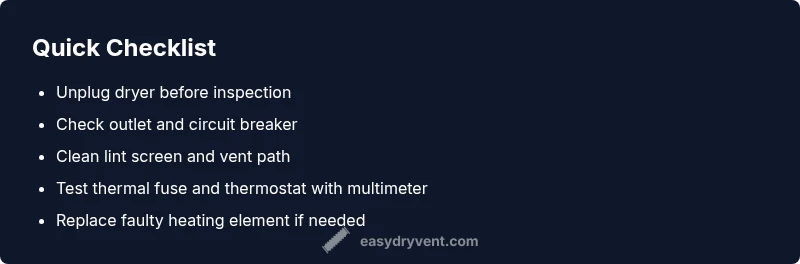
- Check power and breakers before anything else
- Vent cleaning is a frequent fix for heat issues
- Test thermal fuse and cycling thermostat safely
- Replace faulty heating components rather than bypassing
- Maintain regular vent and lint care to prevent no-heat