When Dryer Not Heating Up: A Practical Troubleshooting Guide
Urgent guide to diagnose and fix a dryer not heating up. Learn safe troubleshooting steps, tests for thermal fuse, cycling thermostat, vent blockages, and when to call a pro. Easy DryVent guidance for homeowners in 2026.


The most likely reason your dryer isn’t heating is a blown thermal fuse, followed by a faulty cycling thermostat or a burned heating element. Start with the basics: unplug the unit, clean the lint screen and vent hose, and confirm the vent path is clear. If it still won’t heat, test the thermal fuse and cycling thermostat with a multimeter.
Why when dryer is not heating up happens
When you notice that the dryer is not heating up, it’s a sign that the appliance is not converting electrical energy into heat. The most common culprits are airflow restrictions, electrical safety devices, and worn heating components. A clogged vent or lint buildup reduces airflow and can trigger heat-related safeties, while a blown thermal fuse or a faulty cycling thermostat prevents heating altogether. Understanding these failures helps you approach the problem safely and efficiently. In 2026, Easy DryVent analysis shows vent-related blockages and thermally triggered safety devices as the leading causes in many households, underscoring the importance of a methodical check of both airflow and electrical safety components.
Safety first: basic precautions you should take
Safety is non-negotiable when dealing with electric appliances. Always unplug the dryer before inspecting any internal parts. If you smell burning, hear unusual buzzing, or see visible damage to the power cord, stop and disconnect power at the outlet. Use a flashlight to inspect the vent, lint screen, and outlet area for frayed cords or melted insulation. Wear eye protection when handling hot surfaces, and never bypass safety devices to force heat. Easy DryVent emphasizes never working on a live appliance.
Check airflow: lint, screen, and vent path
A restricted vent is the most common reason for a dryer to fail to heat. Start by cleaning the lint screen, lint trap, and all accessible ductwork. Disconnect the vent from the back of the dryer and check for lint buildup inside the dryer cabinet and vent hose. Reconnect and run a test cycle on air-only to verify airflow. If the vent path outside is blocked or crushed, clear the obstruction or replace the damaged ducting. Poor airflow can cause overheating and trigger safety shutoffs.
Electrical & safety basics: what powers the heat
Dryers rely on a combination of 120V and 240V circuits (in most electric models) to run the motor and produce heat. If the dryer won’t heat, it could be a power issue at the outlet or a tripped breaker. Inspect the outlet with a tester to ensure the correct voltage is present. Also check the dryer’s cord and terminal block for loose connections or burn marks. If you’re unsure about electrical testing, don’t attempt complex checks—consult a qualified technician.
Diagnostic flow: symptom → diagnosis → solutions
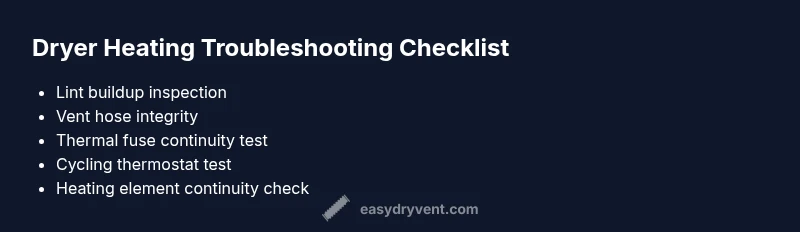
Follow a structured flow to identify the root cause. Start with visible airflow issues, then move to safety devices and heating components. Use a multimeter to test fuses and thermostats, and inspect heating elements for continuity. If a step reveals a fault, replace the component and retest. Always verify that the vent remains clear after any repair.
Step-by-step: most common fix (thermal fuse path)
- Unplug the dryer and remove the rear access panel (or lower panel on some models).
- Locate the thermal fuse on the blower housing or heating assembly and disconnect the wires.
- Test for continuity with a multimeter; if open, replace the fuse.
- Reconnect wiring, reseat the panel, and run a test cycle.
- If the dryer still won’t heat, proceed to test the cycling thermostat and heating element.
Prevention & maintenance: keep heat flowing
Regularly clean the lint screen after each load and perform a monthly vent check to ensure there are no kinks or blockages. Replace damaged ducts and seals promptly. Periodic inspection of the dryer vent and lint filter helps maintain dryer efficiency and reduces fire risk. Consider installing a vent hood with a damper to prevent outdoor backdrafts that can pull lint back into the unit.
When to call a professional
If you’re unsure about electrical testing, or if you find damaged wiring, a burned cord, or you cannot access the rear panel safely, stop and call a licensed technician. Electrical work and appliance heating elements require professional credentials to ensure safe and code-compliant repairs. Easy DryVent recommends professional service for complex faults beyond basic vent cleaning and fuse replacement.
Steps
Estimated time: 60-90 minutes
- 1
Power down and access the heater area
Unplug the dryer and move it away from the wall. Remove the rear panel or bottom access panel per your model’s service manual to expose the thermal fuse, cycling thermostat, and heating element.
Tip: Keep track of screws and note wire positions before disconnecting anything. - 2
Inspect and test the thermal fuse
Locate the thermal fuse on the blower housing or heating assembly. Disconnect wires and test for continuity with a multimeter. If there is no continuity, the fuse is blown and must be replaced.
Tip: Only replace with an identical fuse rated for your model. - 3
Check the cycling thermostat
With the power off, locate the cycling thermostat in the heating circuit and test for continuity. A failed thermostat can prevent heat from reaching the dryer drum.
Tip: If unsure, compare readings to your model’s service manual or replace with a compatible part. - 4
Assess the heating element
Check the heating element coils for visible damage or breaks. Use a multimeter to test for continuity. A broken element will show no continuity and needs replacement.
Tip: Handle the element carefully to avoid further damage. - 5
Verify electrical supply
Ensure the outlet provides the correct voltage and that the dryer's power cord and terminal block show no signs of burning. Reset any tripped breakers before retesting.
Tip: If you’re not comfortable testing voltage, stop and call a pro. - 6
Reassemble and test
Reconnect all parts securely, reattach panels, and run a test cycle to confirm heat returns. If heat is still absent, proceed to professional service.
Tip: Document the fixes performed for future reference.
Diagnosis: Dryer won't heat
Possible Causes
- highLint buildup blocking airflow
- highBlown thermal fuse
- mediumFaulty cycling thermostat
- lowBurned heating element
- lowPower supply issues (outlet/breaker)
Fixes
- easyClear lint screen, vent hose, and outside vent path; test heat after airflow is restored
- mediumTest and replace thermal fuse if open circuit
- mediumTest cycling thermostat and heating element with a multimeter; replace as needed
- easyInspect power cord and outlet; ensure proper 240V supply and no tripped breakers
Common Questions
What is the most common cause of a dryer not heating up?
The most common cause is a blown thermal fuse, often preceded by airflow restrictions or lint buildup in the vent. A faulty cycling thermostat can also prevent heating. Start with airflow, then test the fuse and thermostat.
The most common cause is a blown thermal fuse, usually tied to lint buildup or airflow issues.
How do I test a dryer's thermal fuse?
Disconnect power and locate the fuse on the blower housing. Use a multimeter to check continuity; no continuity means the fuse is blown and needs replacement.
Test the fuse with a multimeter; if there’s no continuity, replace it.
Can a bad cycling thermostat affect heat but not the drum?
Yes. A faulty cycling thermostat can prevent the dryer from heating properly even if the drum runs. It stops the heating cycle from staying engaged.
A bad cycling thermostat can stop heating while the drum runs.
Is a clogged vent the same as a blocked vent and how to fix it?
A clogged vent restricts airflow, causing heat to fail. Clean the lint screen, vent hose, and exterior vent; replace damaged ducts as needed.
A clogged vent restricts airflow; clean it and replace damaged ducts.
When should I call a professional?
If you’re uncomfortable with electrical testing, suspect damaged wiring, or cannot locate the fault after basic checks, call a licensed technician.
If you’re not comfortable with electrical testing, call a pro.
Watch Video
Key Points
- Check airflow before electrical tests
- Test and replace the thermal fuse if needed
- Ensure the 240V supply is intact for electric models
- Professional help is recommended for wiring or heating-element repairs
- Regular vent maintenance prevents future heating issues