Why is My Dryer Not Heating? A Practical Troubleshooting Guide
Practical, safe steps to diagnose why your dryer won't heat, identify common causes like thermal fuses and vent blockages, and decide whether to DIY or call a pro.


Quick fix: start with safety checks, then test the thermal fuse and cycling thermostat, followed by the heating element or gas valve as applicable. Unplug the dryer before any inspection, clean the lint trap, and verify the vent is clear. If this doesn’t fix the heat, follow the step-by-step guide for a full diagnosis.
Why a Dryer Not Heating (Root Causes and Immediate Checks)
In many homes, the question why is my dryer not heating comes down to safety-first checks and simple failures. The dryer relies on several interdependent parts that must operate in sequence: the power supply, the drum rotation, the timer or control board, the heating element or gas valve, and the airflow path. If any link fails, heat may not reach the drum. According to Easy DryVent, most heating issues stem from electrical safety devices tripping or airflow restrictions. Start with a calm, step-by-step assessment rather than guessing. Pull the vent cover, inspect the lint screen, and ensure the vent runs freely to the outside. If you find visible lint buildup, stop and clean; forced airflow is essential for both safety and heat production. Also verify the outlet and plug is providing the correct voltage; a tripped breaker or a loose connection can masquerade as a heating problem. Finally, confirm your model type (electric vs gas) so you know which components to test next. By broadening your view beyond “no heat,” you’ll catch issues you might otherwise miss.
Common Causes of No-Heat (Electric vs Gas) and Quick Diagnostics
Electric dryers most often fail to heat because a safety device or element has failed. A blown thermal fuse is a frequent culprit, followed by a faulty cycling thermostat or a burned-out heating element. Gas dryers may not heat if the gas valve or igniter isn’t functioning, or if the flame sensor is dirty. Ventilation problems also cause heat loss: a clogged vent or lint buildup reduces airflow and can trigger safety shutoffs. Finally, a malfunctioning timer or control board can interrupt heat even when components are fine. Understanding the distinction between electric and gas models helps you target the right tests without guessing.
Safety Checks You Can Perform Before Tools
Before you reach for tools, you should perform a few safe checks to avoid shocks or fire hazards. Unplug the dryer from the outlet. Inspect the lint screen and vent door: a dirty screen or blocked duct can impede airflow and trigger heat loss. Confirm the outlet provides power by testing another device on the same circuit or checking the breaker. If the dryer is on a dedicated circuit, verify the breaker hasn’t tripped. Do a quick drum-test to ensure the drum rotates smoothly and the belt isn’t broken—if the drum doesn’t rotate, heat may stay off as a protective measure. If you have a gas dryer, never attempt to light gas without proper knowledge; this guide covers safe steps for electrical dryers as a baseline.
Diagnostic Flow: Symptom → Diagnosis → Solutions
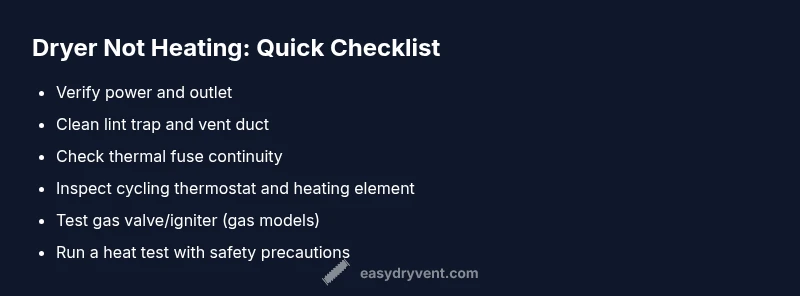
Start with the simplest issues: power, outlet, and vent. If power is stable, move on to safety devices: the thermal fuse and cycling thermostat. If these test OK, inspect the heating element (electric) or gas valve/igniter (gas). Airflow is a frequent root cause; even with a good heat source, a blocked vent will prevent heating. Use the diagnostic flow to narrow down: symptom first, then rule out each potential cause in sequence, applying the appropriate fix for each stage. This approach minimizes unnecessary disassembly and helps you decide when it’s time to call a professional.
Step-by-Step Fix: Most Common Cause — Blown Thermal Fuse (Electric Dryers)
- Power off and unplug the unit, then move it to a safe workspace. 2) Remove the back panel or access panel to locate the thermal fuse and nearby thermostat. 3) Disconnect the wires and test continuity with a multimeter; a reading with no continuity indicates a blown fuse. 4) Replace the fuse with a model that matches your dryer’s specifications, then reassemble. 5) Run a short dry cycle to confirm heat returns. 6) If heat is still absent, proceed to test the cycling thermostat and heating element as next steps. Pro tip: keep the screws organized and follow the wiring diagram closely. Safety warning: never bypass a blown fuse.
Vent, Airflow, and Lint: Preventing Future Heating Problems
Even a correctly functioning heat source can fail to produce heat if airflow is blocked. Regular lint removal from the trap helps, but you should also inspect and clean the vent duct and exterior vent cap. Blocked air makes the dryer work harder, overheats, and may trigger safety shutoffs that stop heating. Schedule a vent cleaning at least annually or more often if you have pets, long duct runs, or multiple dryers in one space. Ensure the exterior vent louver opens and closes freely. A clean vent path improves heat transfer efficiency and reduces drying times, keeping your home safer.
When to Call a Professional and Safety Considerations
If you’re dealing with a gas dryer, or if electrical tests reveal potential wiring issues, it’s wise to call a professional. Gas valves and igniters involve combustion safety that is not appropriate to diagnose casually. For electrical issues, if you don’t have a multimeter or the technical know-how to test continuity and resistance, a licensed technician should handle replacement parts. Always observe lockout/tagout procedures and never work on live circuits. Easy DryVent’s guidance emphasizes safety as the top priority when diagnosing and repairing heating problems.
Maintenance Plan to Prevent Future Heating Problems
Create a simple maintenance routine to minimize heating problems. Clean the lint trap after every load, inspect the vent for visible blockages, and perform a basic vent cleaning every 6–12 months depending on usage. Keep the area around the dryer free of dust and debris and check the dryer’s feet to ensure it sits level, which helps airflow. Use high-quality replacement parts and follow manufacturer guidelines for any component replacement. Regular checks can extend the life of your dryer and improve efficiency.
Steps
Estimated time: 45-90 minutes
- 1
Power off and unplug
Unplug the dryer and move it to a safe workspace. Disconnect any cords and ensure the area is dry. This prevents shocks during inspection.
Tip: Label wires before disconnecting for easier reassembly. - 2
Access the thermal fuse and thermostat
Remove the back panel or access panel following the model instructions. Locate the thermal fuse and cycling thermostat near the heating chamber.
Tip: Take photos of wiring before removing connectors. - 3
Test fuse continuity
Disconnect wires and use a multimeter to test continuity across the fuse. If there is no continuity, replace the fuse with a compatible part.
Tip: Always verify the model’s part number before purchasing a replacement. - 4
Inspect heating element or gas components
For electric dryers, check the heating element coils for breaks. For gas models, inspect the gas valve and igniter for proper operation.
Tip: Do not handle hot components; wait until cool. - 5
Check vent and blower system
Inspect the blower housing and vent duct for lint buildup. Clean the path to restore airflow and prevent overheating.
Tip: Use a vacuum and a long brush to reach difficult ducts. - 6
Reassemble and test
Reconnect all parts, replace the panel, and plug the dryer back in. Run a test cycle with a light load to verify heat returns.
Tip: If heat remains absent after steps, escalate to professional service.
Diagnosis: Dryer won't heat
Possible Causes
- highPower issue (outlet or circuit)
- highBlown thermal fuse (electric dryer)
- mediumTripped or failed cycling/high-limit thermostat
- mediumFaulty heating element (electric) or gas valve/igniter (gas dryers)
- lowVent/duct clogged leading to safety shutoff
Fixes
- easyCheck outlet and circuit breaker; test voltage at the receptacle
- easyReplace blown thermal fuse; test continuity with a multimeter
- easyTest cycling and high-limit thermostats; replace if open or stuck
- hardInspect heating element or gas valve/igniter; replace faulty part following manufacturer instructions
- easyClean and reconnect vent duct; ensure unobstructed airflow
Common Questions
What is the first thing I should check if my dryer won't heat?
Begin with safety: unplug the dryer, inspect the lint screen, and ensure the vent is clear. Check the outlet for power and verify the circuit hasn't tripped. These quick checks cover most basic heat issues.
First step is to unplug, check the lint screen and vent, and confirm the outlet has power.
Can a blocked vent cause a dryer to stop heating?
Yes. A clogged vent restricts airflow, causing the dryer to overheat and trigger safety cutoffs that shut off heat. Regular vent cleaning helps prevent this.
A blocked vent can prevent heat by triggering safety shutoffs due to poor airflow.
Is a blown thermal fuse dangerous?
The thermal fuse protects against overheating. While not dangerous to touch, replacing it should follow proper steps and use the correct part for your model.
A blown thermal fuse protects against overheating; replace it with the right part.
How do I test the heating element?
Use a multimeter to check continuity across the heating element. If there is no continuity, the element is faulty and should be replaced.
Test the heating element with a multimeter; replace if it’s open.
When should I call a professional?
If you suspect gas valve issues, complex wiring, or lack the necessary tools, it’s safest to hire a professional. They can diagnose safely and avoid further damage.
Call a professional if you suspect gas components or if you don’t have the right tools.
Key Points
- Test basics first: power, outlet, and vent.
- Identify the heat source: fuse, thermostat, or element.
- Clean airflow to restore proper heating.
- Know when to call a professional for gas or complex electrical issues.