How to Replace a Whirlpool Dryer Belt Yourself
Learn how to safely replace a Whirlpool dryer belt with our step-by-step guide. Identify wear, gather the right parts, route the belt correctly, and test for proper operation to restore drum rotation and drying efficiency.


By the end of this guide, you will safely replace a Whirlpool dryer belt and restore drum rotation and drying efficiency. You’ll identify signs of a worn belt, gather a model‑specific belt and basic tools, and follow a clear, step‑by‑step process. The instructions emphasize safety, routing accuracy, and testing the dryer before use.
Why replace whirlpool dryer belt matters
A worn dryer belt can silently undermine your clothes-drying performance. When the belt wears or cracks, the drum may fail to turn, reducing airflow and leaving clothes damp. In some cases you’ll hear squeaking or thumping as the belt slips over pulleys. Left unchecked, a frayed belt can break, potentially damaging the drum or adjacent components. Replacing the belt restores the drum’s rotation and improves efficiency, helping you save energy and time on every load. According to Easy DryVent, belt wear is one of the most common causes of reduced drying performance in residential settings, and a timely replacement down the line. The goal of this guide is to give you a clear, safe path to a working dryer without surprises. Even if the dryer seems to run, a slipping belt can waste heat and prolong cycles, which increases wear on the motor and heating elements.
Signs the belt is worn or failed
- Drum won’t rotate or spins slowly
- Squealing, thumping, or chirping noises during operation
- Clothes emerge damp or take longer to dry
- Visible cracks, fraying, or glazed areas on the belt
- Dryer becomes unusually hot on one side or the drum turns inconsistently
Detecting these signs early helps prevent belt breakage that could damage pulleys or the drum. If you notice any of these indicators, plan for belt inspection and potential replacement. Regular maintenance, including lint removal and vent cleaning, reduces belt wear, since restricted airflow forces the belt to work harder. Easy DryVent’s analysis shows wear is a leading cause of reduced performance, so catching it early saves time and money.
How belts fail and what to inspect
The belt is a loop that sits around the drum and the dryer’s drive motor pulley, with an idler pulley maintaining tension. Over time, heat, friction, and aging cause cracks, glazing, and a loss of tension. When the belt wears, parts rub or slip, producing noise and reduced drum speed. Before replacing, inspect the belt for cracks, glazing, and missing sections. Also check the pulleys and tensioner for wear; a wobbly idler or cracked pulley can kill a new belt prematurely. Think of the belt as the course that keeps the drum in motion: if it’s compromised, nothing else in the system will run smoothly.
Safety first: prep and protect yourself
Begin by unplugging the dryer and moving it away from walls to create space. Wear safety gloves to protect your hands from sharp edges and dust. Remove the dryer’s lint trap and clean the vent area to keep lint from falling when you open panels. If your model uses a top panel, consult the manual for removal steps to avoid damage. Never operate the dryer with panels removed or belts loosened; energized components can cause shocks. Finally, have a tray or magnetic dish to hold screws and fasteners so parts don’t get lost.
Belt routing basics and parts you’ll encounter
Belt routing is critical. The belt typically sits around the drum, with one path to the motor pulley and compression around an idler pulley. Some Whirlpool models use a single belt that routes differently depending on design; verify the exact path before removal. Look for a label or diagram on the dryer frame; if absent, consult the model’s service manual. When reassembling, ensure the belt sits flat in the grooves and is not twisted.
Belt replacement overview (non-step-by-step overview)
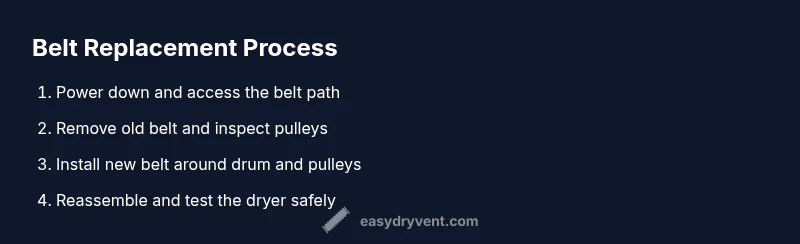
This section summarizes the replacement approach so you understand the flow without giving direct, step-by-step actions. You’ll confirm you have the correct belt, prepare the workspace, remove the front panel to access the belt path, take note of the belt’s routing, install the new belt around the drum and pulleys, reassemble, and test the dryer with a small load. The goal is to ensure the drum rotates smoothly and that the belt seats correctly on all pulleys.
Testing and verification after replacement
After reassembly, plug the dryer back in and run a short test cycle with no laundry to observe belt movement and drum rotation. Listen for slips or unusual noises; a properly installed belt should allow the drum to spin freely with consistent speed. If the belt slips or the drum sticks, power off and re-check routing and tension. Once confirmed, run a full drying cycle with a light load to verify heat and airflow.
Maintenance to extend belt life and prevent future failures
To maximize belt life, keep the vent clear and lint-free, as reduced airflow increases belt wear. Inspect the belt and pulleys every 6–12 months, especially in homes with frequent high-load drying. Gently wipe the drum interior to remove lint; avoid sharp cleaners that could degrade the belt. Store clothes properly and don’t overload the drum, which places extra strain on the belt and bearings.
Tools & Materials
- Replacement belt compatible with your Whirlpool dryer model(Check model number on the rating plate to ensure correct size and groove count)
- Flat-head screwdriver(For prying panels if necessary)
- Phillips-head screwdriver(For screws on access panels)
- Nut driver or socket set(To remove tension screws or support brackets)
- Pliers(For pulling or guiding belt edges)
- Magnetic tray or small container(Keeps track of screws)
- Work gloves(Protect hands from sharp edges)
- Clean rags or a small brush(Clean lint before reassembly)
Steps
Estimated time: 45-90 minutes
- 1
Power down and access the belt area
Unplug the dryer and move it to a clear workspace. If needed, remove the front panel to access the belt path. Keep screws organized on a magnetic tray. This step ensures you can reach the belt without electrical risk.
Tip: Use a magnetic tray and take photos of the setup before disassembly. - 2
Open the front panel and locate the belt
Carefully remove screws holding the front panel. Expose the belt and note its current routing before removal. If your model has a belt shield, remove it to view any tension components. Keep all removed parts in order.
Tip: Label screws by location to simplify reassembly. - 3
Inspect belt and pulleys
Before removing the old belt, inspect the drum, motor pulley, and idler pulley for wear or damage. Look for cracks, glazing, missing teeth, or a wobbling pulley. If you see damage beyond the belt, plan for additional repairs.
Tip: Take a quick photo of the pulley alignment for reference. - 4
Remove the old belt
Loosen tension when removing the old belt. Gently slip the belt off the motor pulley and the drum. Do not yank; ensure you don’t nick the drum edge. Compare the length and width with the replacement.
Tip: Keep tensioner parts intact to reuse or identify wear. - 5
Install the new belt around the drum and pulleys
Place the new belt around the drum, then route it to the motor pulley and the idler pulley as per the original path. Ensure there are no twists and the belt sits cleanly in the grooves. Confirm the belt is seated evenly across all pulleys.
Tip: Double-check the belt’s orientation against the diagram on the frame if it exists. - 6
Reassemble the dryer panel
Reinstall the belt shield and front panel. Replace screws in their original locations and check that no tools or debris are trapped inside. Ensure the lint trap is clean and correctly seated.
Tip: Secure panels snugly but don’t overtighten screws. - 7
Power up and perform a dry run
Plug the dryer in and run a short cycle with no clothes to verify the drum spins smoothly and the belt remains in place. Listen for squeaks or slips that indicate misrouting or tension issues. Stop the test and recheck if anything sounds off.
Tip: Use a non-load test to avoid damaging laundry. - 8
Test with a small load
Run a full cycle with a small load to confirm proper drying with good airflow and heat. If you notice issues, power down and recheck belt routing and tension before using normally.
Tip: If heat is weak, inspect venting and lint buildup as well.
Common Questions
Can I replace the belt myself, or should I hire a pro?
Yes, many homeowners can replace a dryer belt with basic hand tools, provided they follow safety steps and use the correct belt. If you encounter stripped screws, broken pulleys, or overheating during a test, consider calling a professional. Take your time and consult the manual for model-specific guidance.
Yes, you can replace the belt yourself if you follow safety steps and use the correct belt. If you see hardware damage or heat during testing, seek professional help.
How do I know which belt to buy for my Whirlpool dryer?
Check the dryer’s model number on the rating plate and compare it to belts listed by the manufacturer or trusted retailers. Look for the correct length, width, and groove count. If in doubt, ask a parts specialist or reference the service manual.
Check the model number and confirm the belt size and groove count with a parts specialist or the manual.
Will replacing the belt fix not heating a dryer?
Replacing the belt mainly restores drum rotation and airflow. Heating problems are usually caused by the heating element or high-limit thermostat, not the belt. If heat is absent after a belt replacement, inspect venting and heating components as well.
The belt mainly affects drum rotation; heating problems are usually separate.
Is it dangerous to work inside a dryer?
There is some risk from sharp edges, hot components, and electrical parts. Always unplug the appliance, wait for cooling, and wear protective gloves. Keep kids and pets away while you work.
Unplug the dryer and wear protective gloves to stay safe while working inside.
How long does a typical belt replacement take?
For a typical home unit with basic tools, plan for about 45 to 90 minutes, depending on model access and panel design. Allow extra time if you need to replace other worn parts found during inspection.
Most replacements take about 45 to 90 minutes, depending on access and any extra repairs.
What are common mistakes to avoid when replacing the belt?
Rerouting the belt incorrectly, over-tightening, or forgetting to reseal panels can cause slips or fires. Not checking for worn pulleys or lint buildup can shorten belt life. Take your time and verify routing with diagrams or photos.
Avoid misrouting, over-tightening, and missing pulley wear; verify with photos or diagrams.
Watch Video
Key Points
- Identify signs early to time belt replacement
- Use the correct belt size for your model
- Route the belt exactly and check pulleys
- Test with a small load before normal operation