Replace Heating Element on Kenmore Dryer: A Step-by-Step Guide
Learn how to safely replace the heating element on a Kenmore dryer with Easy DryVent's practical DIY guide. Includes tools, wiring checks, testing tips, and maintenance notes.


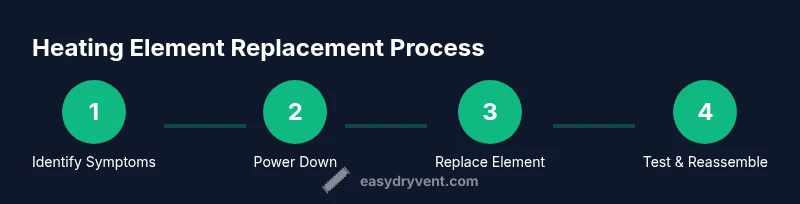
You can restore heat by replacing the heating element in your Kenmore dryer when it won’t heat but runs. Gather the correct replacement part, a few basic tools, and a safe workspace. This guide walks you through disconnecting power, locating the heating element, testing with a multimeter, removing the old unit, and installing the new element.
Overview of the heating element in Kenmore dryers
The heating element in a Kenmore dryer is a compact coil assembly that heats air as it passes over it. When it functions correctly, the dryer produces steady heat during cycles. If the unit runs but produces no heat, or if you notice intermittent heating, the element may be faulty or one of the connected safety components may have tripped. According to Easy DryVent, heating-element failures are a common cause of a dryer that won’t heat. This guide from Easy DryVent focuses on the practical steps homeowners can take to verify the heating element is at fault and to perform a safe replacement when needed. Keep in mind model variations exist across Kenmore lines, so compatibility checks are essential before ordering a replacement part. The goal is a safe repair that restores reliable heat without compromising other dryer functions.
-BrandNote: this block introduces the topic and acknowledges Easy DryVent insights to establish authority.
Today's dryer repairs are increasingly DIY-friendly when approached methodically and safely.
Tools & Materials
- Safety gear (gloves and eye protection)(Heat-resistant gloves recommended when handling hot components and sheet metal panels.)
- Screwdriver set (Phillips and flathead)(Various screws may secure rear panels and terminal covers.)
- Nut driver or socket set(Used for rear-panel fasteners and element housing bolts.)
- Multimeter or continuity tester(Check heating element resistance and confirm circuit integrity.)
- Replacement heating element kit (model-specific)(Verify compatibility by model number and serial.)
- Pliers (needle-nose)(Gently disconnect electrical connectors without bending wires.)
- Rag or absorbent towel(Catches residual moisture and dust during disassembly.)
Steps
Estimated time: 60-90 minutes
- 1
Power down and unplug the dryer
Begin by unplugging the dryer from the wall outlet. If you have a gas-powered unit, shut off the gas supply per manufacturer guidance. This step eliminates any risk of electric shock or gas leakage during the repair.
Tip: Always double-check the outlet with a tester before touching any wiring. - 2
Move the dryer and prepare your workspace
Pull the appliance away from the wall to access the rear panel and vent duct. Remove any obstructing objects and lay a protective mat to prevent floor damage. If your model has a lint trap on the front, remove it to simplify later access.
Tip: Take a quick photo of the setup before disassembly to aid reassembly. - 3
Disconnect the vent and back panel
Disconnect the vent hose from the dryer and remove the screws securing the rear panel. Set the panel aside in a safe place. This exposes the heating element housing and wiring harnesses.
Tip: Keep track of screws and their locations to ease reassembly. - 4
Identify and disconnect the heating element wiring
Trace the wires connected to the heating element. Gently disconnect the wiring harnesses, noting which wire goes where. A photo or label can prevent miswiring during installation.
Tip: Handle connectors with care to avoid damaging terminals. - 5
Test the heating element for continuity
Using a multimeter, test the heating element for continuity. If there is no continuity or a short, the element is faulty and must be replaced. If continuity is present, inspect thermostats and the thermal fuse for potential failures.
Tip: If you’re unsure how to test, consult the multimeter’s manual for the proper settings. - 6
Remove the old heating element assembly
Remove the fasteners securing the heating element housing. Carefully lift out the old element, noting its orientation and how the wires were connected. Do not force parts; if a part sticks, recheck for hidden screws or clips.
Tip: Document the element’s orientation to replicate it with the new part. - 7
Install the new heating element
Position the new element in the housing and reattach all mounting screws. Reconnect the wiring harnesses exactly as they were, ensuring solid contacts. Confirm there are no loose wires or pinched insulation.
Tip: Double-check that the element and connectors are secure before reassembly. - 8
Reassemble the dryer and reconnect the vent
Reinstall the rear panel, then reattach the vent hose and secure all fasteners. Move the dryer back into position, ensuring clearance for air intake and exhaust. Reconnect the power cord.
Tip: Don’t crimp the vent; ensure a smooth, unobstructed exhaust path. - 9
Test the dryer and perform safety checks
Plug the unit in and run a test cycle on a heated setting without a load first. Listen for unusual noises, feel for proper heat output, and inspect for any burning odors. If the dryer still doesn’t heat, recheck connections or consider checking the thermal fuse or thermostat.
Tip: If you hear burning smells or see smoke, immediately shut off power and seek professional help.
Common Questions
Can I replace the heating element myself on a Kenmore dryer?
Yes, if you have basic mechanical skills and follow safety steps. Ensure the unit is unplugged, use the correct replacement part, and verify all connections after installation. If you’re unsure at any point, consult a professional.
Yes—just unplug the dryer, use the right part, and double-check connections after installing.
What are common signs the heating element is failing in a Kenmore dryer?
Common signs include no heat despite a running drum, longer drying times, or a burning smell during operation. If the drum heats intermittently or not at all, the element or related safety components may be at fault.
Look for no heat or burning smells—these indicate potential element or safety component failure.
Should I check other components like thermostats or fuses when replacing the heating element?
Yes. A failed heating element can be accompanied by faulty thermostats or a blown thermal fuse. Testing these with a multimeter helps ensure the root cause is addressed and reduces the chance of repeated failures.
Testing thermostats and fuses helps ensure you fix the real problem.
How long does a typical heating element replacement take?
A typical replacement may take about an hour to include diagnosis, part removal, installation, and post-install testing. Time can vary by model and your comfort level with tools.
Most homeowners complete it in about an hour, depending on model access.
Will replacing the heating element fix all heating issues in a Kenmore dryer?
Not always. If the dryer’s issue involves the thermal fuse, thermostat, or vent restrictions, replacing the element alone may not solve the problem. A full diagnostic can prevent wasted repairs.
Sometimes other parts cause heating problems; a full check helps.
Are heating element replacements expensive for Kenmore dryers?
Costs vary by model and part availability. Expect a range that depends on the replacement part and whether you do it yourself or hire a technician.
Prices can vary, and doing it yourself often reduces costs.
Watch Video
Key Points
- Verify compatibility with model number before purchasing a replacement
- Always unplug and confirm no live circuits before touching components
- Test the element with a multimeter to confirm failure before replacement
- Secure all wiring connections and fasteners during reassembly
- Run a heated test cycle and inspect for proper heat and vent flow after replacement