Repair Whirlpool Dryer: A Practical DIY Guide 2026 Edition
Learn safe, practical steps to diagnose and repair common Whirlpool dryer problems. Easy DryVent guides homeowners through tools, testing, and decisions to save time and avoid service calls.


Learn how to repair whirlpool dryer safely at home. This guide covers common faults, essential tools, and a step-by-step process with safety checks. You’ll know when a professional service is needed to avoid injury or further damage. Follow your model’s manual and standard safety precautions throughout the repair.
Why the repair whirlpool dryer matters
Dryers are workhorses in most homes, but when a Whirlpool dryer falters, the impact is immediate: damp laundry, delayed chores, and potential safety risks. A practical, hands-on approach lets homeowners address simple issues without costly service calls. The Easy DryVent team has observed that proactive maintenance and straightforward diagnostics can prevent most minor failures from escalating into bigger, more expensive repairs. In this guide, we’ll spell out why tackling a whirlpool dryer repair at home makes sense, how to assess risk, and how to choose between fixes and replacements. You’ll also learn to use common tools safely and follow model-specific instructions so you don’t void warranties or compromise safety. By focusing on safety, airflow, and electrical checks, you’ll gain confidence to handle routine fixes and plan smarter maintenance. This topic is relevant for homeowners and DIY enthusiasts who want practical dryer maintenance guidance with a clear, actionable workflow.
According to Easy DryVent, safe dryer maintenance reduces fire risk and energy waste. The Easy DryVent team found that routine vent cleaning and lint management contribute significantly to performance and longevity. This article is designed to help you diagnose common Whirlpool dryer problems while keeping your family and home safe.
Common Whirlpool dryer problems
Whirlpool dryers share a core set of symptoms, but the root causes can differ by model and usage. Not heating is a frequent complaint and can stem from tripped breakers, a blown thermal fuse, faulty heating coils, or a bad cycling thermostat. A drum that won’t turn often points to a worn belt, a seized idler pulley, or a faulty motor switch. If the dryer runs but clothes stay damp, airflow restrictions (lint buildup in the vent) or a malfunctioning moisture sensor may be to blame. Noisy operation—rattling, thumping, or grinding—often signals a worn drum bearing, a loose blower wheel, or foreign objects inside the drum. When codes appear on digital panels, you’ll want model-specific error codes that point to the exact subsystem. In all cases, start with simple safety checks and a visual inspection before moving into parts testing. Recognize that Whirlpool designs span gas and electric models, so some fault domains differ by fuel type. Remember: never ignore unusual smells, smoke, or excessive heat, as they can indicate a dangerous fault.
Safety first: power down and safe handling
Before you touch any components, ensure complete power isolation. Unplug the dryer from the electrical outlet and, if your unit is gas-fueled, shut off the gas supply according to the installation manual. Wear protective gloves, use insulated tools, and keep a clear work area free of flammable materials. If your model has a rear access panel, place the dryer on a non-slip surface to prevent movement during disassembly. Avoid touching heating elements or exposed wiring until you’re certain the unit is fully de-energized. Dispose of lint responsibly and keep it away from heat sources. For gas dryers, never run the appliance with the access panel removed while the gas line is disconnected. Documentation: have your model number and user manual handy for part compatibility and safety instructions.
Diagnostic checklist for whirlpool dryer problems
A structured diagnostic approach helps you pinpoint the likely cause without unnecessary part replacements. Start with the simplest checks and move toward more involved tests.
- Power and door switch: Ensure the drum lights up when the door is closed and the unit receives power. A faulty door switch can stop the dryer from starting or cause intermittent operation.
- Thermal fuse and heating element: Use a multimeter to verify continuity on the thermal fuse and heating element coils. An open fuse or burned coils are common reasons for no heat.
- Belts and pulleys: Inspect the belt for cracks or fraying and check the idler pulley tension. A worn belt can slip or break, preventing the drum from turning.
- Vent and lint trap: Clear obstructions in the lint filter housing, vent path, and exhaust vent. Restricted airflow causes overheating and poor drying performance.
- Moisture sensor: Some Whirlpool models use moisture sensors; clean the sensor contacts and test with a light load to see if cycles terminate correctly.
Document findings as you go. If you identify an unsafe condition or a component you’re uncomfortable testing, pause and consult the model manual or contact a professional.
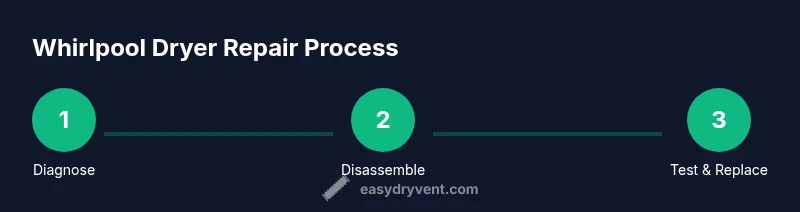
Step-by-step repair approach for common faults
This section provides a disciplined approach to repairing frequent Whirlpool dryer issues while keeping safety at the forefront. Use this as a guide to structure your repair workflow and reassemble carefully after testing.
- Prepare and access: Unplug the dryer, disconnect any gas lines if applicable, and move the unit to a clean, dry workspace. Remove the access panels according to your model’s instructions to reveal the drum, blower housing, and electrical components.
- Inspect and test: Visually inspect the drum belt, blower wheel, and pulleys for wear. Use a multimeter to test the thermal fuse, heating element, and cycling thermostat for continuity. Replace parts that fail the tests.
- Check wiring and sensors: Look for loose connections, burnt insulation, or damaged wires. If a sensor or switch is faulty, replace it with an OEM-compatible part and rewire carefully, maintaining correct polarity where required.
- Reassemble and test: Reinstall panels, reconnect power, and run a dry cycle without laundry to verify normal operation. Then test with a small load, confirming heat generation, drum rotation, and airflow.
- Clean and verify airflow: Reconnect the vent system and run a short high-heat cycle to confirm proper air movement and absence of overheating. If you notice heat at the exhaust, the vent path likely needs cleaning or duct replacement.
- Final safety check: Ensure all fasteners are tight, wires are secured, and no tools remain inside the cabinet. Keep safety manuals accessible for future reference and document the repair steps for future maintenance.
Estimated time for this repair workflow: 60–120 minutes depending on access and part availability.
When to replace vs repair your Whirlpool dryer
Deciding whether to repair or replace depends on fault severity, costs, and the dryer’s age. If a single component (like a belt or a sensor) fails and the rest of the unit is in good condition, a repair is usually cost-effective. If you’re facing multiple failures in heating, motor, or electronics, or if the appliance is beyond its expected lifespan, replacement may be the smarter financial decision. Consider energy efficiency gains with newer models, potential warranty coverage, and the cost of professional service when evaluating your options. Keeping an up-to-date maintenance log helps you make informed choices over time.
Maintenance habits to extend life and performance
Prevention is cheaper than repair. Establish a routine that focuses on airflow, cleanliness, and periodic checks. Clean the lint trap after every load, and inspect the vent pipe at least twice a year for buildup. Schedule professional vent cleaning and dryer inspections annually to catch problems before they affect performance. Keep the area around the dryer clear of dust and clothing lint, replace worn hoses or gaskets promptly, and ensure electrical connections remain tight and corrosion-free. A simple maintenance habit—seasonal checks of the vent, temperature settings, and drum seals—can significantly reduce the likelihood of breakdowns and help your Whirlpool dryer perform consistently for longer.
Tools & Materials
- Multimeter(test voltage, continuity, and heating element circuits)
- Screwdriver set (Phillips & flathead)(for front/back panels and terminal covers)
- Nut driver or socket set(remove cabinet screws and pulley nuts)
- Replacement thermal fuse/thermal fuse kit(carry the exact part or an approved generic fuse)
- Door switch assembly (if applicable)(replace if door does not latch or light fails)
- Drum belt or belt kit(only replace if worn or broken)
- Wire connectors & electrical tape(for temporary fixes or secure testing)
- Vent brush or cleaning kit(clear lint from vent path before testing airflow)
- Safety gloves(insulation and protection from sharp edges)
- Flashlight or headlamp(improve visibility inside cabinet)
- Model-specific user manual(verify part compatibility and wiring diagrams)
Steps
Estimated time: 60-120 minutes
- 1
Power down and prepare
Unplug the dryer and, for gas models, shut off the gas supply. Move the unit to a clear workspace and gather tools. This prevents accidental shock and ensures a controlled environment for inspection.
Tip: Double-check that power is completely disconnected before touching any internal components. - 2
Access internal components
Remove the rear or front panel per your model’s instructions to access the drum, belt, and electrical harnesses. Keep screws organized and take photos to reference during reassembly.
Tip: Label wires or use tape to mark connections as you disconnect them. - 3
Inspect belt, pulleys, and blower
Visually inspect the drum belt for wear and replace if cracked or stretched. Check the idler pulley and blower wheel for wobble or debris that could hinder rotation or airflow.
Tip: Rotate the drum by hand to detect stiffness or rubbing noises. - 4
Test electrical safety components
With the unit unplugged, use a multimeter to test continuity on the thermal fuse, cycling thermostat, and heating element. Replace any component that shows open circuit or abnormal resistance.
Tip: Record readings before replacement so you can verify post-repair function. - 5
Check door switch and sensors
Verify the door switch and moisture sensor (if present) operate correctly. Replace faulty switches to ensure the dryer starts and ends cycles as designed.
Tip: Test door switch with the door closed and verify the light behavior if applicable. - 6
Reassemble and run a test cycle
Reinstall panels, reconnect power, and run an empty or test cycle to verify heat, drum rotation, and proper airflow. Check for unusual noises or overheating during operation.
Tip: Do a short vent-assisted test to confirm airflow before adding laundry.
Common Questions
Is it safe to repair Whirlpool dryers yourself?
Yes, DIY repair is safe when you follow proper safety procedures: unplug power, avoid gas lines for gas models, and use insulated tools. Only perform straightforward repairs within your skill level and consult a professional for complex circuits or high-risk tasks.
Yes, you can repair Whirlpool dryers yourself if you follow safety steps and stay within your skill level.
Why won’t my Whirlpool dryer heat up?
Common causes include a blown thermal fuse, faulty heating element, or a blocked vent causing overheating and thermostat cutoff. Also check the power supply and door switch, as some dryers won’t heat if they don’t sense a closed door.
Most no-heat issues come from a blown fuse or blocked vent, plus the door switch.
How do I test the thermal fuse on a Whirlpool dryer?
Disconnect power, locate the thermal fuse, and test for continuity with a multimeter. If there is no continuity, replace the fuse. Always verify the heater circuit and vent path for proper airflow after replacement.
Test for continuity with a multimeter and replace if open.
Can I replace a broken drum belt myself?
Yes, replacing a drum belt is a common DIY fix. Remove the drum to access the belt, install the new belt properly around the motor pulley and drum, and ensure the idler pulley is aligned.
Yes, belt replacement is doable if you follow the steps carefully.
What causes unusual noises in Whirlpool dryers?
Grinding or thumping often points to worn drum bearings, a damaged blower wheel, or items lodged inside the drum. Loose cabinet screws or a misaligned belt can also cause unusual sounds.
Noises usually come from worn bearings or a misaligned belt.
When should I replace rather than repair a Whirlpool dryer?
If multiple major components fail or the unit is past its expected lifespan, replacement may be more cost-effective. Consider energy efficiency gains, warranty coverage, and repair costs when deciding.
If several big parts fail or the dryer is old, replacement may be wiser.
Watch Video
Key Points
- Diagnose safely before disassembly.
- Test components with a multimeter.
- Replace worn parts to prevent fire hazards.
- Vent cleanliness improves performance.
- Seek professional help for complex or risky repairs.