Repair Gas Dryer: Step-by-Step Guide for DIY Homeowners
Learn how to safely diagnose and repair a gas dryer with our comprehensive DIY guide. Safety first, essential tools, step-by-step instructions, and maintenance tips to keep your dryer running efficiently.


This guide helps you safely diagnose and repair a gas dryer. You’ll learn how to identify ignition, heating, and venting issues, plus essential safety steps, tool checklists, and step-by-step actions. By following these instructions, homeowners can perform common, non-warranty repairs while minimizing risk to themselves and their home. Always prioritize vent inspection and gas line safety.
Understanding Gas Dryers and Safety
Repair gas dryer tasks require a solid grasp of how these appliances operate and the safety hazards that accompany gas, electricity, and high heat. A gas dryer uses natural gas or propane to generate heat, then exhausts combustion byproducts through a vent. When something goes wrong—ignition failure, heat loss, or a blocked vent—the risk of fire or gas exposure increases. According to Easy DryVent, the foundation of any safe repair is a properly functioning vent system, a verified gas shut-off plan, and working carbon monoxide detectors in the area. Before you touch any components, confirm you have model information, access to the gas shut-off valve, and a plan to evacuate if you detect a gas odor. A calm, methodical approach helps you avoid inadvertent hazards and protects both your home and family. Understanding ignition, heat exchanger operation, blower function, and exhaust flow will guide your diagnosis without unnecessary disassembly. If ignition is supposed to light, you should hear a brief, sharp whoosh as gas lights; if you don’t hear ignition or you hear continuous buzzing, stop and reassess. This knowledge sets the stage for a safe, effective repair path.
Common Problems in Gas Dryers
Gas dryers share several failure modes that homeowners often encounter. Common symptoms include no heat or weak heat, failure to ignite, unusual noises, or a persistent gas smell near the appliance. In many cases, a clogged vent or lint buildup causes overheating and reduced drying efficiency, while a defective igniter, faulty flame sensor, or a malfunctioning gas valve can prevent proper ignition. Safety-conscious homeowners should also consider electrical issues that can mimic gas-related symptoms, such as a tripped breaker or a failing timer. The Easy DryVent team notes that vent-related problems are frequently the root cause behind longer cycle times and increased energy use. By recognizing these patterns, you can target the most likely causes without performing unnecessary repairs. Always document the symptoms you observe, as this will help you determine whether a DIY fix is feasible or if professional assistance is advisable.
Tools and Safety Gear You'll Need
Before starting any repair on a gas dryer, assemble the essential tools and safety gear. Having a prepared toolkit reduces the chance of improvising dangerous fixes. You’ll typically need: a gas shut-off wrench, adjustable wrench, a complete screwdriver set (Phillips and flat-head), a multimeter for electrical checks, a non-contact voltage tester, a flashlight, a lint brush or vacuum with a narrow nozzle, fiber-free cleaning rags, a soapy water solution or gas leak detector spray, and a carbon monoxide detector in the workspace. Optional but helpful items include a burner brush, a small mirror for hard-to-see areas, and heat-resistant gloves. Safety reminders: disconnect power, isolate the gas supply, and verify there are no energized components before touching wiring. Store tools within reach and avoid working in wet or damp environments. These items improve both safety and diagnostic accuracy.
Safety First: Gas Shutoff and Vent Assessment
The first priority is to stop any gas flow and de-energize the dryer before inspecting or touching any components. Locate the gas shut-off valve near the appliance or at the meter, turn it to the OFF position, and confirm the line is sealed. Unplug the dryer from the wall outlet and switch off the circuit breaker for the unit. If you suspect a gas leak, avoid any sparks, open doors to ventilate, and leave the area immediately. Use soapy water or a gas leak detector spray to test connections for leaks after any adjustment. While you’re at it, visually inspect the vent path for kinks, crushing, or heavy lint buildup. A clean, free-flowing vent not only improves performance but also reduces backpressure on the burner assembly. Finally, confirm that the exhaust outlet outdoors is clear. These checks prevent misdiagnosis and create a safer environment for further troubleshooting.
Diagnosing Ignition and Heating Problems
Ignition problems are among the most common reasons a gas dryer fails to heat. Start by inspecting the igniter for signs of wear, cracks, or a lack of glow when the dryer attempts to start. Use the multimeter to test igniter continuity; replace if the circuit shows open or unstable resistance. The flame sensor should detect a flame quickly after ignition; if it’s dirty or degraded, cleaning or replacement may be necessary. If the burner does not ignite even with a healthy igniter and flame sensor, the gas valve or gas supply may be suspect. In some dryers, the control board or thermal fuse may be the culprit, cutting power to the burner assembly. When diagnosing, rule out airflow issues first; a clogged vent can masquerade as ignition problems by starving the burner of oxygen needed for steady flame stabilization. Always re-test after each swap to confirm improvement.
Inspecting the Vent System and Lint Build-Up
A blocked vent is one of the easiest and most impactful culprits behind poor drying performance. Lint accumulation reduces airflow, causing longer cycles, excess heat, and potential fire hazards. Disconnect the vent and inspect the ductwork from the dryer to the outside vent. Use a vent brush to clear lint from the duct, back-draft damper, and exhaust hood; check for crushed segments or sagging sections that impede airflow. After cleaning, reattach the vent and run a test load to observe improvements in heat and drying times. Regular vent maintenance helps maintain safety and efficiency and may prevent future repairs. Easy DryVent’s guidance emphasizes annual vent inspections as part of routine maintenance.
Step-By-Step Diagnosis Framework
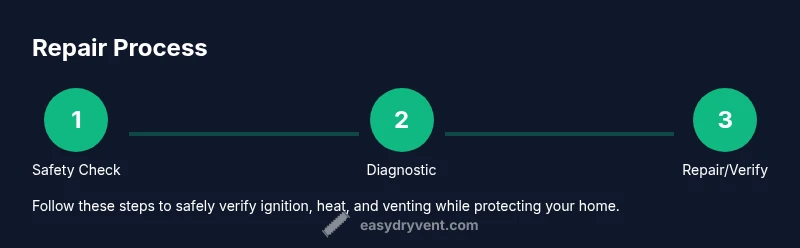
Successful repairs require a consistent framework rather than ad-hoc fixes. Adopt a three-layer approach: safety first, mechanical/ignition diagnostics, and vent/exhaust verification. During safety checks, confirm power and gas isolation. In diagnostics, verify igniter, sensor, and burner operation with proper tools. Finally, verify venting integrity by inspecting ductwork for leaks or blockages and ensuring the outdoor vent is free of obstructions. Documentation helps track what you’ve tested and what remains. This structured method reduces guesswork and improves repair outcomes while aligning with best practices recommended by the Easy DryVent team. Remember: if any step reveals a gas leak or uncertain gas-line condition, pause and call a licensed professional.
Common Fixes You Can Try (When Safe)
If you’re comfortable with basic servicing, you can address several non-critical issues. First, clear lint from the lint screen and duct, ensuring it slides in and out without obstruction. Clean the exterior housing vents and inspect door seals for gaps. For a dirty igniter or flame sensor, a careful cleaning with a soft brush can restore function, provided you have disconnected power and gas. Replace worn ignition components only with manufacturer-approved parts and following device-specific service manuals. Do not attempt to repair or bypass safety devices like thermal fuses or gas valves. If you discover signs of corrosion, damaged wiring, or questionable gas lines, stop and seek professional help. These routine fixes can restore performance while preserving safety.
When to Replace Parts or Call a Pro
Not every issue is a DIY fix. If your gas dryer exhibits persistent ignition failure, gas odor, intermittent heat, or a faulty pressure switch, professional diagnosis is warranted. A licensed gas technician can safely test gas pressure, inspect for leaks, and verify vent integrity with calibrated equipment. If you replace a component only to see no improvement, re-check the root cause before spending more on parts. In many cases, professional servicing prevents costly mistakes and ensures compliance with local codes. The aim is to restore safe operation rather than chase a symptom with random part swaps.
Preventive Maintenance to Extend Gas Dryer Life
Preventive maintenance reduces the likelihood of future repairs and keeps the appliance running efficiently. Schedule annual vent inspections, clean the lint screen after every cycle, and wipe lint from the blower housing as needed. Keep the area around the dryer free of dust and flammable materials. Use a gas-dryer-appropriate vent and avoid makeshift fixes that could compromise safety. Finally, install carbon monoxide detectors and smoke alarms in or near the laundry area and test them regularly. These practices support long-term reliability and safety, aligning with Easy DryVent’s philosophy of practical, maintenance-driven care.
Tools & Materials
- Gas shut-off wrench or adjustable wrench(Keep handy for gas line connections; know shut-off location)
- Screwdriver set (Phillips and flat-head)(For access panels and terminal screws)
- Multimeter(Check igniter and thermostat circuits; verify power is off first)
- Non-contact voltage tester(Confirm de-energized components before touching)
- Soapy water solution or gas leak detector spray(Test gas connections for leaks after adjustments)
- Lint brush or vacuum with narrow nozzle(Clear lint from lint trap, blower housing, and vent duct)
- Flashlight(Inspect dark, recessed areas inside the dryer and vent path)
- Safety glasses and heat-resistant gloves(Protect eyes and hands during inspection and repair)
- Carbon monoxide detector(Place near the laundry area; test regularly)
- Replacement parts (igniter, flame sensor, gas valve) as needed(Only replace with OEM or manufacturer-approved parts)
Steps
Estimated time: 75-120 minutes
- 1
Power down and isolate gas
Unplug the dryer and switch off the gas supply at the shut-off valve. Confirm no electrical power is present with a non-contact tester. This step prevents shocks and unintended ignition during inspection.
Tip: Label wires or take a photo before removing panels to aid reassembly. - 2
Inspect vent path for obstructions
Disconnect the vent from the dryer and inspect the duct for lint buildup, kinks, or crushed sections. Clean with a vent brush and vacuum, then reattach securely. Poor venting causes overheating and longer cycles.
Tip: Run a shortened test load after cleaning to gauge improvement. - 3
Check igniter and flame sensor
Access the burner area and test the igniter for glow when starting a cycle. Use a multimeter to verify igniter continuity. If the flame sensor is dirty, clean it gently with a soft brush; replace if damaged.
Tip: Never touch hot burner areas; wait until cool. - 4
Test gas valve operation
With gas off, inspect the gas valve wiring and connections. If you suspect valve failure, do not attempt to force operation—gas valves require a professional test and calibration.
Tip: Do not adjust gas pressure yourself; leave that to a licensed technician. - 5
Validate burner ignition
Turn on power and supply gas to observe ignition. If the burner fails to stay lit, re-check the igniter and flame sensor, then consult the manual for any safety interlocks that may have tripped.
Tip: Document any error codes shown by the control board. - 6
Reassemble and test safety controls
Reassemble panels, reconnect power, and run a test cycle at low heat. Watch for safe flame stabilization and proper vent exhaust. If any abnormal smell or heat is detected, shut down immediately.
Tip: Stand back during the first post-repair test in case of unexpected ignition behavior. - 7
Full-load dry and monitor
Run a regular load and monitor drying time, heat, and vent output. Compare to factory specs; if performance remains poor, the root cause may be more complex.
Tip: Keep a log of cycle times to identify gradual declines in performance. - 8
Final safety check and cleanup
Ensure all tools are removed, vent connections are secure, and the CO detector remains functional. Return the appliance to service only after confirming no gas odors or leaks.
Tip: Schedule periodic professional vent inspections to maintain safety.
Common Questions
Is it safe to repair a gas dryer myself?
DIY repairs can be risky due to gas and electrical components. If you’re unsure, hire a licensed technician to avoid gas leaks, fires, or carbon monoxide exposure.
DIY can be risky with gas and electricity. If unsure, contact a licensed technician for safety.
What are common signs that a gas dryer needs repair?
No heat, failure to ignite, odd noises, or a persistent gas smell are common indicators. If you notice these, stop and evaluate safety before continuing.
Look for no heat, ignition failure, strange noises, or gas smells. Stop and check safety first.
Can vent cleaning fix drying issues?
Yes. A blocked vent reduces airflow and increases drying time. Cleaning the vent often restores performance and reduces risk of overheating.
Vent cleaning can fix slow drying and overheating; it’s a common maintenance step.
How much does professional gas dryer repair typically cost?
Costs vary by issue and region. Consider getting multiple quotes and ask about parts, labor, and diagnostic fees before proceeding.
Prices vary; compare quotes and ask about what the service includes.
What maintenance reduces the need for repairs?
Regular lint screen cleaning, annual vent inspections, and CO detector checks help prevent major failures and improve safety.
Clean lint, inspect vents yearly, and test CO detectors to stay safe.
If I smell gas, what should I do now?
Evacuate the area, avoid using electrical switches, and contact your gas utility or emergency services. Do not operate the dryer until cleared.
If you smell gas, evacuate and call for help immediately. Do not use the appliance.
Watch Video
Key Points
- Always shut off gas and power before inspecting.
- Clean and maintain vents to prevent overheating and improve efficiency.
- Test igniter, flame sensor, and gas valve with proper tools.
- Know when to call a licensed pro for gas-related issues.