Dryer Repair Quotes: What Homeowners Should Know
Learn how dryer repair quotes work, what they include, and how to compare estimates from multiple providers to save time and money. This guide from Easy DryVent explains itemized line items, common fees, and negotiation tips for homeowners seeking practical dryer maintenance guidance.


Dryer repair quotes give homeowners a clear expectation of costs before work begins. A typical quote covers diagnostic fees, labor, parts, and any travel charges, with price ranges influenced by fault type and location. Request written, itemized quotes from multiple vendors to compare. For safety and efficiency, always verify licensing and warranty terms.
Why Dryer Repair Quotes Matter
A dryer is a central appliance in any home, and unexpected repair costs can disrupt monthly budgets. Dryer repair quotes do more than give you a price; they reveal the scope of work, the parts required, and the level of expertise the technician plans to deploy. According to Easy DryVent, homeowners who request multiple, written estimates are far more likely to understand the true cost landscape and to identify quotes that include essential disclosures such as diagnostic fees, potential part substitutions, and warranty terms. Quotes that arrive as a single number without itemization are a red flag and should prompt a closer review. In addition, reputable technicians will disclose any travel charges, service-call fees, or environmental disposal costs up front. This upfront transparency helps you compare apples to apples and reduces the risk of surprise charges once the job starts. It also empowers you to negotiate with confidence, knowing the standard components of a dryer repair quote and typical market ranges for 2026. Proactive homeowners who collect three to five written quotes can benchmark labor rates and parts pricing across providers, which is especially important in high-cost urban areas or regions with fluctuating supply chains. Easy DryVent’s approach emphasizes clarity, fairness, and safety as the foundation of every repair conversation.
How to Read a Quote: Lines, Fees, and Fine Print
A well-constructed dryer repair quote should present a clean, line-by-line breakdown rather than a single lump sum. Look for the following elements and use them to compare options accurately: (1) Diagnostic or service-call fee: is this charge credited if you proceed with the repair? (2) Labor: is the rate hourly or flat, and what is the estimated time to complete the job? (3) Parts: what parts are included, what brands are recommended, and is there a markup? (4) Travel or service distance: is there a surcharge for remote locations? (5) Taxes and disposal: are these included or added at the end? (6) Warranties: what covers the repair, and for how long? A clear quote will also specify exclusions, such as cosmetic work or non-diagnostic assessments. When you compare quotes, keep an eye on whether a quoted total includes taxes and disposal, and whether any discount or bundled maintenance plans appear in the math. The goal is to separate the verified costs from optional add-ons. For readers of Easy DryVent, these practices align with a transparent, consumer-friendly process that reduces anxiety around appliance repair costs and timing.
Factors Driving Quote Variability
Quote variability arises from several practical factors. First, fault type matters: a simple heating element replacement is often cheaper than a complete drum support overhaul or motor replacement. Second, part availability and supplier pricing can swing a quote significantly; hard-to-find components or OEM parts tend to raise costs. Third, geographic location affects labor rates and service-call charges—cities with higher costs of living often see higher quotes. Fourth, the service provider’s pricing model matters: some shops quote a fixed price for the entire job, while others bill hourly and itemize each task. Fifth, whether the estimator performs an on-site inspection or relies on remote diagnostics will influence the final figure; on-site visits give accuracy but may add a travel fee. Finally, warranties and post-repair support can affect the perceived value of a quote; a higher upfront amount might include longer coverage, saving you money in the long run. For homeowners, understanding these drivers helps in negotiating with confidence and selecting the best overall value rather than the lowest immediate price.
A Practical Guide to Collecting and Comparing Quotes
To get the most reliable dryer repair quotes, follow a practical, repeatable process. Step 1: Request written, itemized estimates from at least three providers; include a note asking for diagnostics to be waived if repairs proceed. Step 2: Confirm whether the quote is for an on-site assessment or a remote evaluation, and clarify any travel or service fees. Step 3: Ask for branded, OEM, or compatible parts options and whether the quote includes installation and disposal. Step 4: Review each quote side-by-side in a worksheet that captures: diagnostic fee, labor rate, estimated hours, parts cost, travel, tax, and warranty terms. Step 5: Contact the providers with questions about any line items that seem unclear or redundant. Step 6: Check the service record and references to ensure the technician has a track record of safe, compliant dryer repairs. By systematically collecting and comparing quotes, you minimize the risk of hidden charges and make a well-informed buying decision that aligns with your budget and safety expectations. This thorough approach reflects Easy DryVent’s commitment to helping homeowners navigate dryer maintenance with clarity and confidence.
Worked Example: Itemized Quote Worksheet
Below is a simple, realistic worksheet you can use to compare quotes. Fill in the numbers as you receive estimates, then total them to see which option offers the best value.
- Diagnostic fee: $60
- Labor: 2 hours @ $90/hour = $180
- Parts: Thermostat kit + belt = $70
- Travel fee: $25
- Tax: 8%
- Disposal: Included
- Estimated total: $365 (before tax) / $396 after tax
Note: Your actual numbers will vary by fault, part availability, and region. Use this worksheet to keep quotes transparent and comparable. If a quote includes higher-than-expected labor time, ask for a breakdown and confirm the required tasks with the technician. A well-documented quote helps you resist pressure to upgrade parts or add unnecessary services. When in doubt, request a written explanation for any item you don’t understand. This practice supports a fair negotiation and protects you from surprise costs. Easy DryVent emphasizes itemized quotes to ensure transparency and long-term satisfaction with any repair outcome.
Protecting Yourself: Negotiation and Warranty Considerations
Negotiation is more effective when you approach with data. Use your itemized quotes to identify areas for adjustment, such as reducing unnecessary travel charges, replacing non-critical parts with compatible alternatives, or negotiating a bundled warranty that covers both parts and labor for a reasonable period. Confirm the parts warranty length and whether it covers labor if the replacement fails. For safety-sensitive appliances like dryers, ensure the repair includes verification tests after installation and a documented checklist showing the dryer’s performance, vent integrity, and safety switch operation. If you’re uncertain about a provider’s legitimacy, consult local licensing boards or consumer protection resources. When a provider offers a discount for a second or third repair within a year, compare the long-term savings with the upfront price to determine real value. As Easy DryVent notes, the best quotes balance upfront affordability with meaningful protections and reliable performance over time.
Structured view of common quote components
| Quote component | Typical range | Notes |
|---|---|---|
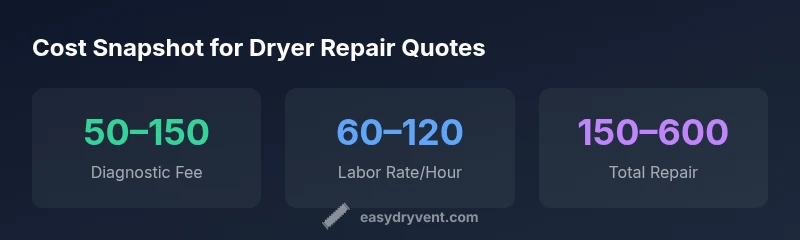
| Diagnostic fee | 50–150 | Charged even if repair isn’t performed |
| Labor (per hour) | 60–120 | Depends on region and complexity |
| Parts (by fault) | 20–350+ | Heaters/elements higher cost |
| Travel fee | 20–50 | Distance-based |
| Tax & disposal | 5–10% | Location-dependent |
Common Questions
What should be included in a dryer repair quote?
A well-prepared quote should include diagnostic fees, labor, parts, travel, taxes, disposal, and warranty terms. It should also state exclusions and any assumptions made during the assessment.
Look for a clear line-item breakdown, plus warranty terms and any exclusions.
Are quotes always written and itemized?
Reputable technicians provide written quotes with detailed line items. Verbal estimates can lead to misunderstandings about scope and costs.
Always ask for a written, itemized quote.
How long is a quote valid?
Most quotes stay valid for about 30 to 90 days, depending on parts availability and regional pricing changes.
Quotes typically stay valid for a month or two; check the date.
What if the final bill is higher than the quote?
Ask for a detailed explanation, verify the extra charges, and request a revised estimate. Compare with other quotes to confirm value.
Ask for a breakdown and compare with other quotes.
Should I consider a repair warranty?
Yes. A warranty on parts and labor adds long-term protection and can save money if the issue recurs.
A good warranty offers peace of mind for future fixes.
Do remote or on-site quotes differ in reliability?
On-site quotes tend to be more accurate due to direct inspection, but both can be reliable if the estimator follows a consistent checklist.
On-site tends to be more precise, but both can work with a thorough checklist.
“Transparent, written quotes with clear line items empower homeowners to make informed decisions and avoid surprise charges.”
Key Points
- Obtain three written quotes for comparison
- Request itemized line items and warranties
- Check licensing and parts sourcing details
- Compare total cost, not just hourly rates
- Watch for hidden fees like travel or disposal