Dryer Fixes: A Practical DIY Guide
Learn practical dryer fixes to improve efficiency, reduce lint buildup, and prevent fires with Easy DryVent's hands-on maintenance guide. This comprehensive tutorial covers diagnosis, safe troubleshooting, and routine maintenance for homeowners and DIY enthusiasts.


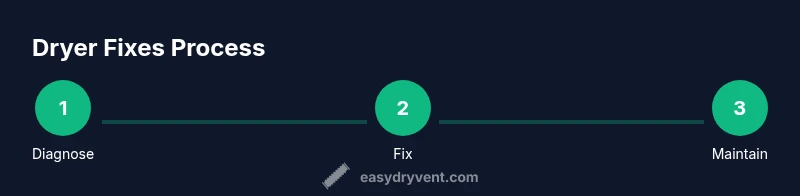
Learn how to diagnose and perform safe dryer fixes to restore heat, boost efficiency, and reduce fire risk. This step-by-step guide covers practical safety checks, common fault patterns, and easy DIY repairs you can do with basic tools. You’ll learn when to pause and call a pro, and how to establish a simple maintenance routine for long-term reliability. Designed for homeowners and DIY enthusiasts, it emphasizes safety and clear, actionable steps.
Why dryer fixes matter
Regular attention to dryer fixes is essential for safety, efficiency, and cost savings. A well-tuned dryer runs with fewer cycles, uses less energy, and reduces the risk of lint buildup that can lead to fires. For homeowners, the goal is not just to 'get it working' but to understand the sequence of checks that isolates the cause without unnecessary disassembly. Easy DryVent's approach blends practical steps with clear safety guardrails. By addressing common wear points—lint accumulation, vent restrictions, and faulty switches—you extend the life of your appliance and protect your home. In this guide you’ll learn how to diagnose problems, perform safe repairs, and establish a simple maintenance rhythm that keeps your dryer performing reliably.
Common dryer problems and quick checks
Most dryer issues fall into a few buckets: poor drying performance, no heat, strange noises, or door/drum not turning. Start with the simplest checks: dirt and lint in the lint screen, blockages in the vent path, and a plugged exterior vent cap. Clean the lint screen after every load and vacuum the vent path monthly if you dry often. If clothes stay damp after a full cycle, check the drum seals and door switch. If you notice an overheating smell or a burning odor, stop using the dryer and unplug it immediately; this indicates a serious safety risk. Easy DryVent recommends documenting your findings as you go—this helps you track recurring issues and plan repairs or maintenance.
Safe diagnosis and safety checks
Before you touch any electrical or gas components, unplug the dryer and turn off the gas supply if applicable. Wear protective gloves and eye protection when inspecting hot components. Use a multimeter to test fuses and thermostats when accessible, following the manufacturer manual. Never bypass safety devices; a functional thermal fuse or thermostat is there to prevent fires. When you suspect a blocked vent, perform a cautious re-check after cleaning; airflow restoration is a key indicator that your repair was effective.
Simple fixes you can do yourself
These fixes address common failure modes without specialized tools: clean lint trap, clear vent hose from lint, check exterior vent cap for obstructions, test the door switch, replace a frayed drive belt, and swap a faulty thermal fuse if indicated by a safety test. For belt replacement, remove rear panel screws and route the belt around the drum; align the idler pulley and test tension. After any repair, run a test cycle with a light or wet load to verify performance and safety. Record what you did and the date for future maintenance.
When to call a professional and maintenance routines
DIY fixes are great for many households, but some tasks require a licensed technician, especially for gas dryers or when electrical wiring is involved. If heating elements test OK but heat is inconsistent, or if you smell gas or encounter an unresolved electrical issue, contact a pro. Establish a simple maintenance calendar: clean lint trap after every cycle, inspect venting every few months, and perform a full vent cleaning every 6-12 months. By integrating these steps into your routine, you’ll keep your dryer safer and more efficient.
Tools & Materials
- Screwdriver set(Phillips head #2 and flathead for covers)
- Multimeter(Test continuity for fuses/thermostats)
- Lint brush and vent brush(Clean lint from lint trap and vent path)
- Vacuum with hose attachment(Remove lint from blower housing and heat vents)
- Replacement parts kit (thermal fuse, drive belt, thermostat)(Only replace if diagnosed faulty)
- Safety gear (gloves, goggles)(Protect hands and eyes during inspection)
Steps
Estimated time: 30-60 minutes
- 1
Power down and unplug the dryer
Unplug the power cord before any inspection. If the unit is gas-powered, shut off the gas supply per the manual. This prevents electrical shocks and accidental startups during checks.
Tip: If moving the dryer, have a helper and use a dolly. - 2
Inspect exterior vent path for blockages
Check the vent hose and exterior vent cap for kinks and lint buildup. Clear obstructions to restore airflow and improve drying efficiency.
Tip: Vacuum lint from the vent path using a brush attachment. - 3
Open the cabinet and inspect the drum belt
Remove the back panel and inspect the drum belt for cracks or fraying. A worn belt can cause poor turning or no drying.
Tip: Check belt tension; it should be snug but not overly tight. - 4
Test the thermal fuse and thermostat
With the dryer unplugged, locate the thermal fuse and thermostat, and test for continuity with a multimeter. Replace if open circuit or damaged.
Tip: Only test components when the unit is cool to avoid burns. - 5
Inspect the heating element and cycling thermostat
If heat is inconsistent, test the cycling thermostat and heating element for continuity and integrity. Replace faulty parts as needed.
Tip: Handle heating elements carefully; they can still hold heat even when unplugged. - 6
Reassemble and run a test cycle
Reconnect everything, replace covers, and run a short test cycle with a dry load to verify heat and airflow. Listen for unusual sounds or odors.
Tip: Observe for smoke or burning smells and stop immediately if detected. - 7
Create a maintenance routine
Record maintenance dates and set reminders for lint removal, vent cleaning, and part inspections to prevent future issues.
Tip: Schedule vent cleaning at least every 6-12 months.
Common Questions
Why is my dryer not heating?
Common causes include a blown thermal fuse, faulty thermostat, or heating element. Inspect these parts step-by-step and replace only with proper parts.
Dryer not heating is usually a safety fuse or heating issue.
Why does my dryer take forever to dry?
A clogged vent, full lint trap, or inefficient heating element can slow drying. Start with vent cleaning and lint removal, then test airflow.
Slow drying is usually vent or lint related.
Is it safe to DIY repair a gas dryer?
DIY repairs on gas dryers should be limited to non-fuel systems; working with gas lines requires a licensed technician. Prioritize safety.
Gas dryers are riskier; consult a pro for gas-related fixes.
How often should I clean my dryer's vent?
Clean the vent at least every 6-12 months, or more often with heavy usage or in humid climates.
Vent cleaning every 6-12 months is a good habit.
What parts should homeowners stock?
Keep a few spare components like a thermal fuse, belt, and thermostat; replace with model-specific parts.
Having spare parts ready helps you fix common issues quickly.
What safety steps are essential during DIY repairs?
Unplug the unit, dry hands, and ensure the area is dry before inspecting; wear protective gear.
Always unplug and wear safety gear.
Watch Video
Key Points
- Unplug before inspection and follow safety steps
- Prioritize vent and lint cleaning for efficiency
- Test safety devices first when heat is missing
- Replace worn belts and fuses to restore performance
- Maintain a simple schedule to prevent future failures