How Long a Dryer Takes to Dry Clothes: A Practical Guide
Learn how long a dryer takes to dry clothes, factors that affect time, and practical tips from Easy DryVent to dry safely and efficiently.

Easy DryVent Team
·5 min read

Understanding how long a dryer takes to dry clothes
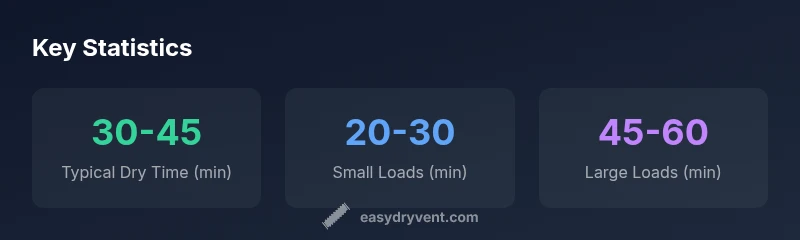
The question "how long a dryer takes to dry clothes" is not answered by a single universal number. In practice, you’re looking at a range that depends on load size, fabric, moisture level, and the dryer's design and settings. According to Easy DryVent, the average timing for a standard mixed load is influenced by the moisture content you start with and how evenly the load is distributed inside the drum. The goal is to reach a consistent level of dryness without over-drying, which wastes energy and can wear fabrics. Modern sensors help, but results still vary by item type and household habits.
Key factors affecting drying time
- Load size: Larger loads take longer to dry than small ones. If you overfill the drum, air cannot circulate, which traps moisture and extends the cycle.
- Fabric type and moisture content: Cotton absorbs more water than synthetics; towels can hold more moisture than t-shirts, so mixed loads differ in total time.
- Dryer design and cycle: Vented dryers with efficient moisture sensing tend to time cycles more accurately than older models. Condenser or heat-pump dryers can behave differently, especially on energy-saving settings.
- Sensor vs timer-based cycles: Sensors adjust the cycle based on moisture, often reducing over-drying. Timer cycles give a fixed duration but may waste energy if items finish early.
- Venting and lint maintenance: A blocked vent or clogged lint filter restricts airflow, increasing drying time and reducing efficiency.
- Ambient conditions and spin speed: Higher room humidity or higher spin speeds from the washing machine can affect residual moisture and dryer load balance.