How Long Is a Dryer Cycle? A Practical 2026 Guide
Discover how long a dryer cycle typically lasts, what affects duration, and practical tips to save time and energy while protecting fabrics. Easy DryVent provides expert guidance for homeowners and DIY enthusiasts.


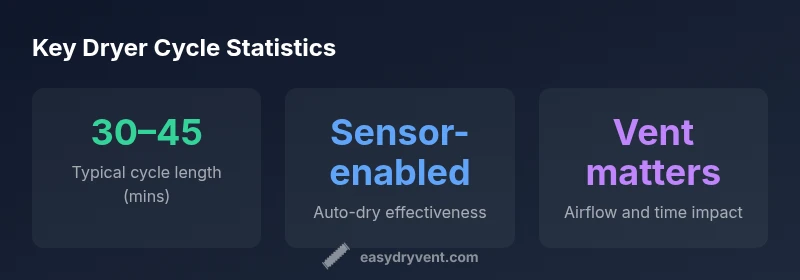
A typical dryer cycle lasts about 30–45 minutes on average, depending on load size, fabric type, and the dryer's sensor performance. For many households, the Auto-Dry setting runs around 35 minutes. Always check garment care labels and use the moisture sensor to avoid over-drying. Using a sensor-based cycle can help fine-tune duration based on actual dryness.
What a typical dryer cycle looks like\n\nA standard residential tumble dryer offers several cycle options that target different fabrics and moisture levels. When you start a normal Auto-Dry cycle, the drum tumbles while heated air is circulated to remove moisture. Most loads reach the desired dryness within about 30–45 minutes, but the actual duration depends on load size, fabric type, and the dryer's sensor performance. Lightweight fabrics such as cotton T-shirts dry faster than thick towels, while sheets can take longer due to weave and moisture content. It helps to read garment care labels for weight and recommended settings. If a cycle ends with damp areas, you can run a quick second cycle with a higher temperature or a second auto-dry pass. In practice, the moisture sensor should be the main driver of cycle length, not just the timer.\n
Factors that influence cycle length\n\nSeveral variables determine how long a dryer cycle lasts. Load size is the primary factor: more items require more air movement and longer moisture extraction. Fabric type matters too: bulky towels and bedding hold more water than lightweight fabrics like jersey. The starting moisture level also plays a role; sensors adjust duration to reach a target dryness, whereas fixed-timer cycles ignore actual moisture content. A clogged vent or dirty lint screen can restrict airflow, lengthening cycles and increasing energy use. The setting you choose matters: auto-dry with sensors typically ends sooner than timed-dry, because it stops when the load reaches the requested dryness. Finally, ambient conditions, such as vent length and duct routing, have a smaller but real impact on efficiency. Regular maintenance helps keep cycle times predictable.
How to estimate cycle time for your load\n\nBegin with a baseline: select Auto-Dry on a normal load and note the cycle duration. Run a small test load to calibrate the expected time for different fabrics. Record dryness results and adjust future cycles accordingly. For new fabrics or bulky loads, expect longer cycles initially and document the outcomes to refine your settings. Keep a simple log of cycle length and dryness to fine-tune timing over time. If you need faster results, reduce the load size, use the appropriate setting for towels or bedding, and avoid overloading, which can actually extend drying times. Consistency over time yields the most efficient results.
Differences between auto-dry, timed-dry, and sensor cycles\n\nAuto-dry uses moisture sensors to end the cycle when the fabric reaches the desired dryness. Timed-dry runs for a fixed amount of time, regardless of actual moisture content. Sensor-based cycles combine timer logic with moisture sensing to optimize duration; they’re generally the best compromise between speed and fabric care. For most households, Auto-Dry with sensors provides reliable results and energy efficiency, while timed-dry can be useful for specific bulk loads when you know exactly how long your items should run.\n
How to adjust settings for different fabrics\n\nDifferent fabrics require different care. For lightweight synthetics and cotton blends, Auto-Dry is usually sufficient. For heavy items like towels and sheets, consider a longer cycle or a two-pass approach, starting with a shorter auto-dry run and finishing with a second cycle to reach the desired moisture level. Always separate bulky loads from lighter ones to improve airflow and shorten drying times. If a fabric label recommends low heat, use it, but monitor the cycle closely to avoid under- or over-drying.\n
Tips to reduce drying time safely\n\nTo cut drying time without risking fabric damage, follow these practical steps:\n- Do not overload the drum; room for air improves efficiency.\n- Clean the lint screen before every load to maintain airflow.\n- Keep vents clean and ensure duct runs are as short and straight as possible.\n- Sort loads by fabric type to avoid unnecessary moisture removal delays.\n- Use sensor-based Auto-Dry instead of Timed-Dry whenever possible.\n- Remove items promptly when drying completes to prevent wrinkles and further moisture migration.\n
Common myths about dryer cycles\n\nMyth 1: Heavier fabrics always take longer. Reality: the moisture content and fabric structure matter more than weight alone.\nMyth 2: Running longer cycles saves energy. Reality: repeatedly running cycles can waste energy and over-dry some fabrics.\nMyth 3: High heat dries faster for all materials. Reality: high heat can damage delicate fabrics and shorten fabric life.\nMyth 4: Newer models always dry faster. Reality: performance depends on design, sensors, and venting quality.\n
Practical checklist for dryer cycle planning\n\nUse this quick checklist to plan your dryer cycles:\n1) Read care labels and separate fabrics by weight and texture.\n2) Clean lint trap and check vent condition.\n3) Start with Auto-Dry on normal loads.\n4) Observe cycle length and dryness; adjust future loads accordingly.\n5) Document cycle times for different fabrics to build your own reference library.
Estimated cycle lengths by load type
| Load Type | Typical Cycle Length (min) | Notes |
|---|---|---|
| Small load (socks, underwear) | 20-30 | Auto-dry often suffices |
| Regular load (t-shirts, jeans) | 30-40 | Auto-dry recommended if fabric allows |
| Heavy load (towels, bedding) | 40-60 | Timed or extended auto-dry advised |
Common Questions
How long is a typical dryer cycle?
Most cycles run 30–45 minutes depending on load size, fabric type, and the dryer's sensor performance. Auto-Dry with sensors helps you hit the right dryness level without guessing.
Most cycles take about half an hour to 45 minutes, depending on what you’re drying and your dryer’s sensors.
Does cycle length vary by fabric?
Yes. Lightweight fabrics dry quickly, while bulky materials like towels and bedding require longer cycles. Sorting by fabric type can reduce overall drying time.
Yes, fabric type makes a big difference. Heavier fabrics take longer to dry.
Can I shorten a cycle safely?
Shortening cycles can leave moisture, so use moisture sensors and keep loads from being overpacked. If in doubt, run a short test cycle and reevaluate.
You can’t safely halve a cycle without risking damp spots; test first and use sensors.
Will a newer dryer be faster?
Newer models with moisture sensors and better airflow often deliver shorter cycles and lower energy use when properly vented.
Yes, newer dryers with sensors usually dry faster and use less energy.
How do I estimate cycle time for a new load?
Check the care label, start with Auto-Dry, and run a test cycle. Record the time and dryness, then adjust future cycles accordingly.
Look at the label, try Auto-Dry first, and test a small load to estimate timing.
“Knowing how long a dryer cycle should last isn’t just about convenience—it’s about energy efficiency and fabric care. When sensors and proper settings are used, you can avoid over-drying while cutting drying time.”
Key Points
- Sort loads by fabric type to improve airflow.
- Use Auto-Dry with sensors for consistent results.
- Regular vent and lint-screen maintenance boosts efficiency.
- Do not overload the drum to avoid longer cycles.
- Keep a simple cycle-log for different fabrics to optimize timing.