How Long to Dry Clothes in Dryer: Timelines and Practical Tips
Learn how long to dry clothes in dryer with practical timelines for loads, fabrics, and vent conditions. Easy DryVent analyzes real-world drying times to help you save energy and prevent overdrying.


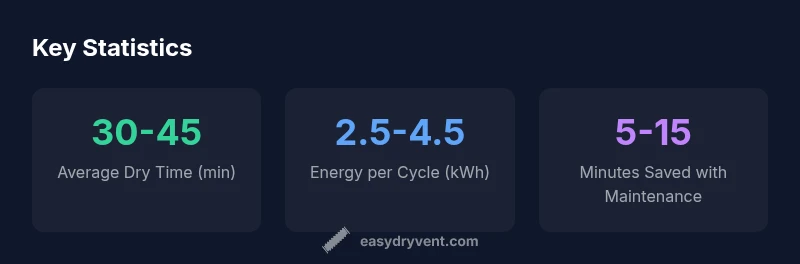
On average, a standard cotton load takes about 30 to 45 minutes to dry in a home electric dryer on a medium heat setting. The exact time depends on load size and fabric, moisture content, and vent condition; smaller or synthetic loads can finish in 15–25 minutes, while heavy towels may take 40–60 minutes.
Why timing for drying clothes matters
Drying time is not just a convenience metric; it affects energy use, fabric care, and safety. If you over-dry clothes, you consume more energy and can weaken fibers, shrink blends, or set wrinkles. Underdrying leaves damp garments that can develop odors or mildew. The keyword here, how long to dry clothes in dryer, is best understood as a range that depends on load type, moisture level, and appliance condition. According to Easy DryVent, small differences in humidity and vent efficiency can shift times by several minutes per cycle. A predictable drying routine helps you save energy, extend fabric life, and reduce laundry drama on busy days.
- Real-world timing varies by fabric and load size
- Drying efficiency improves with clean vents and lint screens
- Modern moisture sensors can trim cycle length without sacrificing dryness
Key factors that influence dry time
There are several interacting factors that determine how long a load will stay in the drum. These include the dryer type (electric vs. gas), heat setting, load size, fabric mix, initial moisture, and vent health. Heavier fabrics such as towels and denim will naturally take longer than lightweight synthetics. Overloading the drum reduces air circulation, which can dramatically extend drying time. If the vent is partially blocked, the dryer works harder and longer, consuming more energy and potentially overheating. Easy DryVent’s 2026 analysis shows that optimizing each factor can shave minutes off each cycle, sometimes more than a quarter of the total time.
- Load size and fabric weight are major drivers
- Airflow and vent condition directly impact efficiency
- Sensor-based cycles can adjust time automatically
How to estimate dry time for a load
Estimating dry time begins with understanding your load type and fabric mix. A practical approach is to categorize loads: lightweight synthetics, standard cotton, and heavy items like towels or jeans. Start with a baseline: 15–25 minutes for lightweight items, 30–45 minutes for standard cotton, and 40–60 minutes for towels. Use a moisture-test method: pull out a few items mid-cycle and check for dampness; if items still feel slightly damp, extend in 5-minute increments until dryness is achieved. If you have a moisture sensor, set it to auto-dry and monitor the total cycle time over several washes to build a personal timing profile. Easy DryVent emphasizes tracking times across different loads to predict future cycles more accurately.
- Baseline times by load category
- Moisture checks help fine-tune length
- Auto-dry sensors improve predictability
Practical timing strategies for different loads
To optimize drying time without sacrificing fabric quality, apply tailored strategies for each load type. For lightweight synthetics, use a lower heat or “air dry” option if your dryer supports it, which can shorten cycle time and reduce static. For standard cotton, a medium heat setting often provides a balance of speed and fabric care. Towels and denim benefit from hot or high heat, but consider a two-stage approach: a quick initial run at high heat, then a shorter cool-down phase to finish any remaining dampness. When possible, spin-dry clothes longer in the washer to remove more moisture before drying. These practices align with the general principle that removing moisture early reduces overall drying time.
- Tailor heat settings by fabric
- Consider two-stage cycles for heavy items
- Pre-spin reduces downstream drying time
Common mistakes that extend drying time
Homeowners frequently extend drying time by overloading the drum, leaving lint screens clogged, or using the wrong heat setting for fabric. Overloading prevents proper air flow, leading to longer cycles and higher energy use. A clogged lint screen also reduces airflow, which can dramatically increase drying times. Using high heat on delicate fabrics can overdry some fibers or cause shrinkage, while running a cycle with damp towels can require a follow-up cycle, effectively doubling the time. Implementing simple habits, like cleaning the lint trap before every load and not mixing heavy and light items, can keep times predictable and energy use reasonable.
- Avoid overloading the drum
- Clean lint screen before every load
- Separate heavy and light items for efficiency
How to improve efficiency and reduce drying time
Beyond proper loading, several maintenance tips can reduce drying time. Ensure the vent path from dryer to outdoors is clear; a clogged vent dramatically reduces efficiency. Clean the lint trap after every cycle to maximize airflow; if you notice longer cycles, inspect the vent hose for kinks or obstructions. Consider upgrading to a dryer with moisture-sensing technology, or enable auto-dry settings so the machine stops when clothes are dry—this prevents overdrying and saves energy. If you routinely dry bulky items, you can intermittently remove some items mid-cycle to speed up the overall process. Small changes compound into meaningful time savings.
- Regular vent and lint-cleaning routine
- Use moisture-sensing or auto-dry cycles
- Treat bulky loads with staggered dry passes
Safety considerations while drying
Never ignore dryer safety when chasing shorter times. Overheating due to blocked vents can pose a fire risk, so schedule periodic vent inspections. Keep combustibles away from the dryer and clean behind and around the unit to prevent lint buildup. Always ensure doors seal properly and avoid running cycles unattended for long periods. If you notice unusual heat, burning smells, or a dryer that feels unusually hot, stop the cycle and inspect the vent system and lint trap. Following these safety guidelines helps protect your home while you optimize drying times.
- Regular safety inspections are essential
- Maintain clear vent pathways
- Monitor for unusual heat or smells
Data-backed expectations and variability
Drying times vary by model, maintenance, and environmental conditions. Easy DryVent’s 2026 analysis shows a typical range for a standard load on electric dryers of about 30–45 minutes, with variations of ±10 minutes based on fabric mix and vent efficiency. In real-world homes, a small mixed-load might finish in 15–25 minutes, while a large heavy-load could exceed 60 minutes. The key takeaway is that there is no one-size-fits-all time; instead, build a personal timeline through observation and routine maintenance. Create a simple log of cycle lengths for different loads to refine your expectations.
- Expect a range rather than a single number
- Track cycle times to build a reliable profile
- Maintenance narrows the variability
Summary of best practices for predictable drying times
In practice, predictable drying times come from a combination of proper loading, fabric-aware settings, regular vent maintenance, and the use of smart dry options when available. Start with load categorization, clean the lint filter, ensure the vent is clear, and use appropriate heat settings for each fabric type. By integrating these habits, your dry times become less variable and more efficient. Over a few weeks, you’ll establish a reliable cadence that saves energy, extends fabric life, and makes laundry day smoother for busy households.
Dry time expectations by load type
| Load Type | Dry Time (min) | Recommended Heat Setting |
|---|---|---|
| Lightweight synthetics | 15-25 | Low to Medium |
| Cotton towels | 40-60 | Medium to High |
| Heavy jeans | 40-60 | High |
Common Questions
What factors most affect how long clothes take to dry?
The fabric type, load size, moisture level, and vent efficiency are the biggest drivers. Heavier fabrics and larger loads require longer cycles, while clean vents and sensors can shorten times.
The main factors are fabric, load size, moisture, and vent health. Heavier fabrics and bigger loads take longer, while clean vents help speed things up.
Can I speed up drying without harming fabrics?
Yes. Use the appropriate heat setting for the fabric, avoid overloading, spin-dry clothes more in the washer, and consider moisture-sensor cycles. Shorter, cooler cycles can prevent overdrying and preserve fibers.
You can speed things up safely by using the right heat, not overloading, and letting the sensor cycles do the work.
Is a higher heat setting always faster?
Not always. High heat can overdry or damage delicate fabrics. For towels or denim, it may shorten time, but for synthetics or blends, medium or low heat often preserves fibers while achieving dryness.
No—high heat isn’t always faster or better for every fabric. Check the garment care label.
How can I tell if my dryer vent is clogged?
Common signs include longer cycle times, heat buildup, and a dryer that feels unusually hot. A visible lint buildup in the vent or lint screen needs cleaning. Schedule a professional vent inspection if you notice persistent slow drying.
If cycles take longer than usual and the dryer gets very hot, the vent could be clogged.
Do dryer sheets affect drying time?
Dryer sheets can leave residue that reduces static and improve feel, but they may slightly slow drying by reducing airflow if used heavily. Use sparingly and follow garment care guidance.
Using too many sheets can impede airflow a bit, so use them in moderation.
Should I pause or stop a cycle to remove items early?
Interrupting cycles mid-way can help if items are still damp, but avoid frequent mid-cycle openings as it can waste energy and cooling cycles may re-warm the drum. Use this sparingly for best results.
Only pause if you need to check dampness; don’t do it often.
“Dry times are highly influenced by moisture content, airflow, and vent maintenance. With consistent habits, you can predict cycles more accurately and save energy.”
Key Points
- Estimate times by fabric and load size.
- Clean lint trap and vent for faster cycles.
- Use moisture-sensing settings when available.
- Avoid overloading to improve airflow.
- Track your cycles to build a reliable timing profile.