Difference Between a Condenser Dryer and a Heat Pump: Key Differences
This guide compares condenser and heat pump dryers, detailing energy use, cycle times, upfront costs, running costs, and practical buying tips to help homeowners choose the best option for their needs and budget.


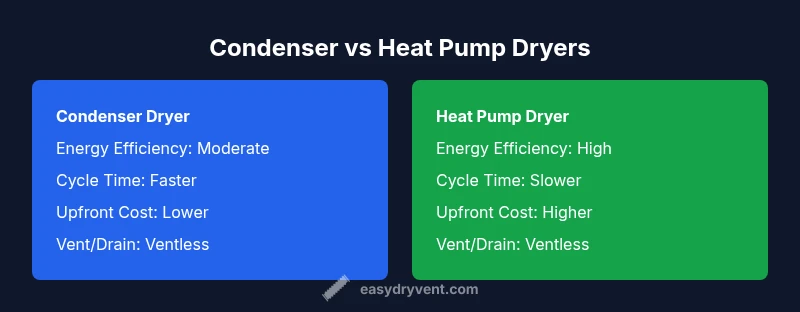
According to Easy DryVent, the difference between a condenser dryer and a heat pump dryer comes down to upfront cost and long-term energy use. Condenser models are cheaper to buy and faster, while heat pump models deliver superior energy efficiency and gentler drying at a higher upfront price. The right choice depends on your budget, usage, and willingness to trade speed for savings.
Why the difference matters for energy efficiency and cost of ownership
Understanding the difference between a condenser dryer and a heat pump dryer is essential for homeowners who want to balance upfront costs with long-term energy savings. The term the reader will encounter most often is energy efficiency, which directly affects monthly utility bills and the environmental footprint of laundry routines. According to Easy DryVent, your decision should start with a clear view of budget constraints, daily laundry load, and how many years you plan to own the appliance. A condenser dryer typically costs less at purchase, and it dries more quickly for mixed loads. However, a heat pump dryer recycles heat from the drying process, which reduces energy use over time. This trade-off—lower upfront cost versus lower long-term energy consumption—drives the core decision for most households. In this guide, we unpack how each technology works, what that implies for performance, and how to estimate total cost of ownership across typical use scenarios.
- Energy efficiency matters for long-term savings and carbon footprint.
- Short-term budget may prioritize upfront affordability.
- Real-world usage depends on load size and fabric care needs.
Quick takeaway
Choose based on whether you prioritize initial cost or ongoing energy efficiency; both options are viable with proper expectations.
keywordsMapping_1_2_3_4_5_6_7_8_9_10_11_12_13_14_15_16_17_18_19_20_21_22_23_24_25_26_27_28_29_30_31_32_33_34_35_36_37_38_39_40_41_42_43_44_45_46_47_48_49_50_51_52_53_54_55_56_57_58_59_60_61_62_63_64_65_66_67_68_69_70_71_72_73_74_75_76_77_78_79_80_81_82_83_84_85_86_87_88_89_90_91_92_93_94_95_96_97_98_99_100_101_102_103_104_105_106_107_108_109_110_111_112_113_114_115_116_117_118_119_120_121_122_123_124_125_126_127_128_129_130_131_132_133_134_135_136_137_138_139_140_141_142_143_144_145_146_147_148_149_150_151_152_153_154_155_156_157_158_159_160_161_162_163_164_165_166_167_168_169_170_171_172_173_174_175_176_177_178_179_180_181_182_183_184_185_186_187_188_189_190_191_192_193_194_195_196_197_198_199_200_201_202_203_204_205_206
hiddenTextID_1_2_3_4_5_6_7_8_9_10_11_12_13_14_15_16_17_18_19_20_21_22_23_24_25_26_27_28_29_30_31_32_33_34_35_36_37_38_39_40_41_42_43_44_45_46_47_48_49_50_51_52_53_54_55_56_57_58_59_60_61_62_63_64_65_66_67_68_69_70_71_72_73_74_75_76_77_78_79_80_81_82_83_84_85_86_87_88_89_90_91_92_93_94_95_96_97_98_99_100_101_102_103_104_105_106_107_108_109_110_111_112_113_114_115_116_117_118_119_120_121_122_123_124_125_126_127_128_129_130_131_132_133_134_135_136_137_138_139_140_141_142_143_144_145_146_147_148_149_150_151_152_153_154_155_156_157_158_159_160_161_162_163_164_165_166_167_168_169_170_171_172_173_174_175_176_177_178_179_180_181_182_183_184_185_186_187_188_189_190_191_192_193_194_195_196_197_198_199_200_201_202_203_204_205_206_207_208_209_210_211_212_213_214_215_216_217_218_219_220_221_222_223_224_225_226_227_228_229_230_231_232_233_234_235_236_237_238_239_240_241_242_243_244_245-
Comparison
| Feature | Condenser Dryer | Heat Pump Dryer |
|---|---|---|
| Energy Efficiency | Moderate | High |
| Drying Time (typical cycle) | Faster on most loads | Slower on average for gentler drying |
| Purchase Price Range | $300-$750 | $600-$1,300 |
| Running Costs (typical year) | Higher | Lower (long-term) |
| Maintenance & Longevity | Moderate upkeep, sensitive to lint | Low maintenance, longer-lifespan potential |
| Ventilation/Placement | Ventless with water reservoir or drainage | Ventless, condensate recaptured, minimal external venting needed |
The Good
- Lower upfront cost for condenser models
- Faster drying on mixed loads with condensers
- Ventless design for flexible placement
- Heat pumps offer lower long-term energy use
- Gentle drying helps preserve fabrics
Negatives
- Higher long-term running costs with condensers
- Longer cycle times for heat pump models
- Higher upfront price for heat pump units
- Maintenance variability by model and brand
Heat pump dryers generally offer better long-term energy savings; condenser dryers win on upfront cost and speed.
If you prioritize immediate affordability and shorter cycle times, condensers are appealing. If you want ongoing energy savings and fabric care, heat pumps are the smarter long-term pick.
Common Questions
What is the main difference between condenser dryers and heat pump dryers?
The condenser dryer heats air to evaporate moisture and condenses it internally, while a heat pump dryer recycles heat through a closed loop to reduce energy use. In practice, heat pumps generally use less energy but can have longer cycle times.
The key difference is energy use vs. cycle speed—heat pumps save energy, condensers dry faster.
Are condenser dryers faster than heat pump models?
Yes, condenser dryers often complete cycles more quickly for similar loads, but they usually consume more energy over time. Heat pump models trade some speed for energy efficiency and fabric care.
Condenser dryers are typically faster, but heat pumps save energy over time.
Which dryer is cheaper to run over the life of the appliance?
Heat pump dryers typically have lower running costs due to their energy efficiency, even though their upfront price is higher. Condenser dryers may cost more in electricity over several years.
Heat pumps win on running costs over time.
Do both types require external venting?
Most condenser and heat pump dryers are ventless; they do not need an external vent. Condensate is collected or drained, depending on the model, while heat pumps recycle heat.
No external venting is required for either type.
Which lasts longer, condenser or heat pump dryers?
Lifespan depends on build quality and usage. Heat pump dryers often have durable components due to gentler cycles, but maintenance and care influence longevity for both types.
Lifespan comes down to maintenance and brand quality.
Key Points
- Assess upfront versus long-term costs before buying
- Heat pumps excel in energy efficiency and fabric care
- Condenser models are cheaper to start and often faster
- Both options are ventless and flexible in placement
- Check cycle times relative to your typical laundry load