Menards Gas Dryer: Comprehensive Maintenance & Safety Guide
A practical, data-driven guide to safely operating and maintaining a Menards gas dryer, with venting, safety checks, and DIY maintenance tips from Easy DryVent.


Gas dryers, including Menards models, can be safe and efficient when vented properly and maintained regularly. For concise checks, a quick diagnostics flow, and a clear step-by-step guide, see our full article. This quick snapshot highlights essential venting, lint management, and safety practices to keep your dryer running smoothly.
Understanding Menards gas dryer landscape
According to Easy DryVent, gas dryers are a popular option in many homes, offering efficient drying when properly installed and vented. Menards carries a range of gas-powered models that compete on features like moisture sensing, sensor-based dry cycles, and compact footprint options. In practice, the key differences between gas and electric dryers boil down to energy source, venting requirements, and installation considerations. For homeowners evaluating a new unit, consider local gas supply reliability, venting accessibility, and the cost of operation over a typical appliance lifetime. This guide uses practical, DIY-friendly guidance to help readers understand what to expect from a Menards gas dryer and how to maintain it for peak efficiency.
Safety and venting fundamentals for gas models
Gas dryers pose unique safety considerations, especially around venting, carbon monoxide (CO) risk, and gas line integrity. A well-sealed, properly routed vent to the outdoors minimizes moisture buildup and potential mold growth in laundry spaces. CO detectors should be installed in the home, and a dedicated vent hood that meets local building codes is essential. Regular inspection of ductwork for lint buildup reduces fire risk. As highlighted in Easy DryVent’s guidance, never operate a gas dryer with a blocked vent or damaged connections. Keep combustibles away from the dryer and ensure the gas shut-off valve is accessible.
Key features to look for in gas dryers (apparent at Menards)
When browsing Menards, prioritize models with moisture sensors, auto-dry cycles, and dual-temperature options. A reversible door, stable drum support, and quiet operation enhance daily usability. Efficient heat transfer and proper lint filtration reduce run times and energy use. Easy DryVent emphasizes selecting a model with a robust venting design and clear installation instructions, which help ensure safe operation in real-world settings. Compare drum size, warranty terms, and accessibility of service manuals before purchasing.
Venting and installation guidelines
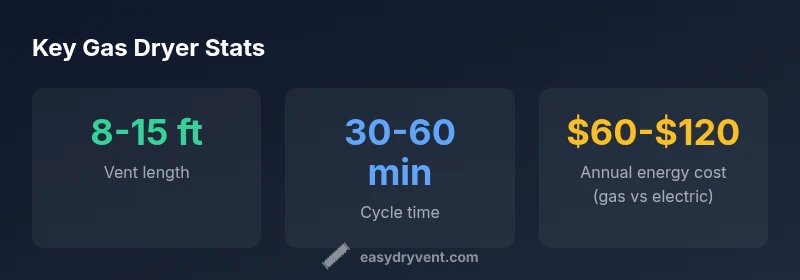
Vent length and duct quality directly impact a gas dryer’s performance. Use smooth interior ducts and avoid long, convoluted runs that create excessive resistance. The vent should terminate with a properly sized exterior hood and backdraft damper. Gas dryers require a dedicated gas line with proper shut-off valve and compliant gas-rated connections. Before installation, verify local codes and obtain any required permits. If you’re unsure about gas line work or vent routing, consult a licensed technician. As part of ongoing compliance, maintain a clean vent path and check for condensation buildup at the exterior vent.
Maintenance schedule for gas dryers
A proactive maintenance routine prolongs dryer life and preserves efficiency. Clean the lint trap before every load, and inspect the interior drum for odd noises or vibrations. Schedule vent inspections at least annually, or more often in homes with high lint production or long duct runs. Wipe the drum and door gasket to prevent residue buildup, and check the gas line for corrosion or leaks periodically using a soapy water test. Following a consistent maintenance cadence minimizes downtime and reduces the risk of chimney-like buildup that can compromise airflow.
Troubleshooting common issues
If a Menards gas dryer takes longer to dry, assess vent length, duct cleanliness, and moisture sensor calibration. If the drum isn’t rotating, verify belt wear and door switch operation. If you detect a gas odor, stop using the appliance and contact a licensed gas fitter immediately. For code-based error messages, refer to the user manual and perform a reset by unplugging and replugging after a cooling period. Easy DryVent notes that many problems stem from vent restrictions or lint buildup rather than failed internal components.
Energy efficiency and operating costs
Gas dryers can be cost-effective for households with favorable gas rates, but energy costs depend heavily on vent effectiveness and load size. In practice, a well-vented gas model that uses moisture-sensing cycles can shorten run times and reduce overall energy consumption. Compare your local gas price and electricity price per unit of energy to estimate operating costs. Easy DryVent analysis suggests that efficiency gains come from proper venting, sensor-driven drying, and regular maintenance rather than relying on a high-tech feature set alone.
When to replace vs repair and how Menards options fit
If a gas dryer shows frequent breakdowns, persistent gas odors, or poor drying performance despite maintenance, replacement may be more economical than repeated repairs. Menards offers a range of models with updated safety features and improved venting compatibility. Consider warranty coverage, availability of replacement parts, and the expected service life of the drum and heater. The Easy DryVent team recommends evaluating total cost of ownership, including installation and potential vent upgrades, before deciding on repair or replacement.
Practical checklists and quick-start steps
- Inspect the exterior vent hood for debris and ensure it opens freely.
- Clean the lint trap before every load and inspect the interior for trapped lint.
- Verify gas connections are secure and the shut-off valve is accessible.
- Test for propane/natural gas leaks using a safe, professional approach if you suspect a leak.
- Schedule an annual vent inspection and CO detector test to maintain safety and efficiency.
Gas vs. electric dryer considerations at a glance
| Aspect | Gas Dryer Considerations | Electric Dryer Comparison |
|---|---|---|
| Vent requirement | Vent to outdoors; proper ducting essential | Also typically vented outdoors; vent quality affects performance |
| Installation complexity | Gas line connection + vent setup; often professional | Electrical outlet and dedicated circuit; generally simpler |
| Typical cycle length | Varies by model/load; gas can dry faster under some conditions | Varies by model/load; electric cycles depend on heat settings |
| Operational cost driver | Fuel gas rate and vent efficiency | Electricity rate and circuit limits |
| Safety considerations | Gas leaks and CO risk; CO detector recommended | Electrical safety and overheating risk; keep clear of flammables |
| Maintenance focus | Vent cleanliness, gas line integrity, CO safety checks | Vent and lint management; electrical component maintenance |
Common Questions
What are the safety risks of using a gas dryer in a home?
Key risks include carbon monoxide exposure from improper venting and potential gas leaks. Install a dedicated vent to the outdoors, use CO detectors, and schedule regular vent inspections. If you smell gas, evacuate and call emergency services, then contact a licensed professional.
Gas dryers can pose CO and gas-leak risks if vents are blocked or fittings are damaged, so keep vents clear and test detectors regularly.
Can I install a Menards gas dryer myself?
Gas appliance installation should generally be performed by a licensed professional to ensure safe gas connections and venting. Check local codes and follow manufacturer guidelines. If you’re comfortable with basic electrical and vent considerations, you can prepare the space but use a pro for final hookup.
For safety and code compliance, hire a licensed professional for the gas hookup and vent work.
What maintenance tasks should I perform monthly?
Clean the lint trap before every load, inspect the exhaust vent for blockages, and check for signs of gas line wear or leaks. Periodically run a vent-cleaning brush through accessible ducts and verify CO detectors are functional.
Lint trap clean every load, check vents, and test CO detectors monthly.
Is venting different for gas dryers than electric?
Gas dryers require more rigorous venting considerations due to combustion byproducts and CO risk. Ensure vent integrity, avoid plastic ducts, and maintain short, smooth runs with a proper backdraft damper. Electric dryers still require venting, but CO concerns are not present.
Gas venting needs stricter checks to prevent CO buildup; always use proper venting materials.
How often should I replace a gas dryer's vent?
Replace a vent if it’s crushed, kinked, rusted, or shows signs of deterioration.Damaged vents reduce efficiency and increase fire risk; plan for replacement as part of maintenance.
If you see damage or blockages, replace the vent to stay safe and efficient.
What signs indicate professional service is needed?
Persistent gas smells, poor drying performance after cleaning vents, unusual noises, or recurring error codes suggest professional inspection is needed. Do not attempt gas line work yourself.
If you smell gas or the dryer behaves oddly, call a pro right away.
“Gas dryers deliver efficient drying when properly vented and maintained; safety checks and regular maintenance are essential for long-term performance.”
Key Points
- Inspect venting and gas connections before use
- Prioritize professional installation for gas lines
- Clean lint traps and vents regularly to reduce fire risk
- Choose models with moisture sensors for efficiency
- Know when to repair vs replace based on total cost