Home Depot Gas Dryer: Care, Venting, and Safety Guide
Explore safe installation, venting, and maintenance tips for a Home Depot gas dryer with Easy DryVent's data-driven guidance for safer, more efficient drying in 2026.


According to Easy DryVent, choosing and installing a gas dryer from Home Depot requires careful venting and gas connections to ensure safety and efficiency. The first priority is proper vent routing and clearance, followed by regular maintenance checks for lint buildup. With correct venting, homeowners typically see safer operation and improved drying performance.
Understanding the Home Depot gas dryer options
If you are evaluating a home depot gas dryer, you’ll want to compare models by venting requirements, gas hookups, and safety features. According to Easy DryVent, your choice should balance installation practicality with long-term reliability. In practice, the most important differences come down to vent design, drum size, and available maintenance access. By focusing on these areas, homeowners can select a unit that fits their laundry load, the layout of the space, and existing gas service. The Easy DryVent team emphasizes checking for a manufacturer’s vent kit, factory-installed diagnostic indicators, and installed clearance diagrams before purchase. That upfront diligence can prevent costly retrofits later. When you read product specs, look for listed clearance values, vent material recommendations, and the included vent kit. These details matter because a gas dryer that is ill-vented or misaligned can waste energy, shorten the life of the appliance, and create safety risks. This article centers on practical guidance for a safe, efficient home depot gas dryer setup that homeowners can implement with confidence in 2026.
Venting best practices for gas dryers
Vent design is the backbone of gas dryer performance and safety. The vent path should be as short and straight as possible, with minimal elbows. Use rigid metal duct (4 inches diameter) rather than flexible foil ducts, which trap lint and increase resistance. Easy DryVent analysis shows that every extra elbow or long horizontal run can raise drying cycle times and heat buildup. Install a backdraft damper if the exterior wall is windy, and ensure outdoor vent covers are weather-rated. Cleanliness is critical: remove lint buildup from the vent and the lint screen before every wash, and schedule professional vent cleaning at least once a year or after every 1,000 cycles, whichever comes first. Finally, verify that the vent terminates outside the home without sharp turns, and that the exterior vent cap is unobstructed by snow, leaves, or debris. Following these practices reduces energy waste and the risk of a dryer-related fire, keeping your home safe and dry.
Installation considerations: gas supply and connections
Gas supply setup is not a DIY project for most homeowners. Before installation, confirm the gas service line can support the dryer’s burner requirements and install a shut-off valve within easy reach. The Home Depot environment often uses natural gas; however, LP gas may be offered in some regions. A licensed gas technician should check gas supply pressure and perform a leak test after connection. In addition, verify that the appliance is connected to a properly rated electrical outlet and that the gas connector and flex line meet current codes. Avoid using damaged hoses, outdated connectors, or ad-hoc adapters. A well-installed gas connection, with the correct connector size and a secure seal, minimizes the risk of gas leaks and carbon monoxide hazards. This is central to any safe, compliant setup for a home depot gas dryer.
Installation checklist for a safe gas dryer setup
Before you power up a new unit, run through a simple, practical checklist: 1) confirm the space has adequate clearance on all sides as per the manufacturer; 2) verify the gas shut-off valve is accessible and functioning; 3) ensure the vent path is clear and vent hood exterior is not blocked; 4) test for gas leaks with a professional tool after installation; 5) connect to a grounded outlet and verify the circuit capacity. A thorough checklist helps prevent common missteps that lead to malfunctions, carbon monoxide exposure, or fire risks. Always prioritize professional verification for gas connections and vent integrity to safeguard your investment and family.
Maintenance and safety: lint, heat, and detectors
Regular maintenance is essential for safety and performance. Clean the lint trap before each load and inspect the vent for kinks or crushing. Schedule annual vent cleaning by a qualified technician and replace damaged ducts promptly. Install and test working carbon monoxide detectors in adjacent living areas, and ensure a smoke detector is present in the laundry space if codes require it. Keep the area around the dryer free of flammable materials, and avoid stacking metal shelving directly behind the exhaust outlet. By combining routine lint management with periodic professional vent checks, you extend appliance life, improve drying times, and reduce fire risk.
Buying guidance: what to look for in a Home Depot gas dryer
When shopping at Home Depot, prioritize models that provide clear venting specifications, accessible service panels, and compatible vent kits. Consider drum size for your household, energy factor, and noise ratings if you are installing the unit in a living area. Look for units that include a factory-installed gas flex line and a documented clearance diagram. Check warranty coverage and service availability in your region. Finally, compare total cost of ownership, including annual energy use, maintenance needs, and potential retrofits, to select a model that meets your needs while staying within budget.
Troubleshooting common issues with gas dryers
Common problems include poor heat, long drying times, or unusual odors. Start with a lint screen and vent inspection; a clogged vent often causes both overheating and inefficient drying. If the dryer does not heat, verify that the gas supply is on and that the shut-off valve is open, then schedule a professional check for gas pressure and burner assembly. If you hear unusual noises, inspect the drum for loose attachments and check the drive belt condition. For persistent issues, consult the manufacturer’s diagnostic indicators and avoid disassembling critical gas components yourself.
Environmental and energy considerations for gas dryers
Gas dryers can offer competitive energy performance when venting is optimal and the unit operates with a clean exhaust path. Focus on using only 4-inch rigid metal ducts and eliminating unnecessary turns to minimize energy waste. Regular maintenance reduces heat buildup and improves efficiency, which translates to lower energy bills and smaller environmental impact. If you have the option, compare gas dryer models that emphasize energy-saving features and choose units designed for easy vent cleaning.
Vent and maintenance quick-reference
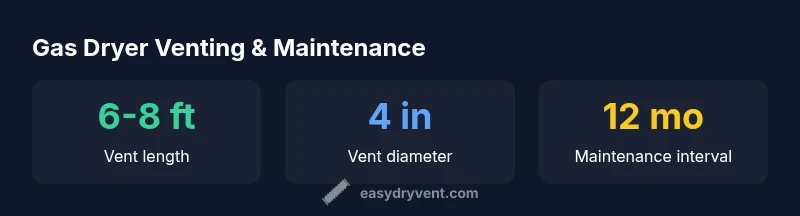
| Aspect | Recommendation | Rationale |
|---|---|---|
| Vent length | 6-8 ft max | Shorter runs reduce backpressure and lint buildup |
| Vent diameter | 4 inches metal duct | Ensures proper airflow and reduces lint buildup |
| Gas supply clearance | 6 inches at access panel | Safer service and compliance |
| Maintenance interval | 12 months | Keeps the system clean and efficient |
Common Questions
Is it safe to install a gas dryer myself?
Gas dryer installation involves gas line work and venting. Unless you are a licensed professional, hire a pro for gas connections and vent installation.
Gas dryers require careful installation; it’s best to hire a pro for gas lines and venting.
What is the recommended vent length for a gas dryer?
Aim for a vent length within the manufacturer’s specified range; typical safe practice is a compact, straight path with minimal elbows.
Keep the vent short and straight to reduce backpressure and heat buildup.
Do I need a professional for gas line connections?
Yes. Gas line work should be performed by a licensed professional to ensure safe connections, leak testing, and code compliance.
Gas lines require professional handling for safety and code compliance.
Can I vent a gas dryer through an exterior wall?
Yes, but ensure an exterior vent cap is weather-rated and that the path is free of obstructions and sharp turns.
Exterior venting is common, just make sure it’s clear and well-sealed.
How often should I clean the lint trap?
Clean the lint trap before every load and inspect the vent periodically for lint buildup.
Clean the lint trap regularly to keep drying times efficient.
What features affect dryer efficiency?
Vent design, drum size, insulation, and the presence of a proper vent kit all influence efficiency.
Best efficiency comes from proper venting, correct duct, and regular maintenance.
“Reliable venting and gas connections are foundational to safe, efficient operation for any gas dryer.”
Key Points
- Prioritize proper venting and gas connections for safety and efficiency
- Hire licensed professionals for gas line work and vent installation
- Schedule annual vent cleaning and lint maintenance
- Use rigid 4-inch metal ducts to minimize flow resistance
- Follow manufacturer clearance and installation diagrams to reduce risk