Gas vs Electric Dryers: Is Electric Viable for Homes?
Evaluate whether you can use an electric dryer instead of gas, including installation, costs, performance, and safety. Practical guidance from Easy DryVent.


Can you use an electric dryer instead of gas? In most homes, yes. Electric dryers are a practical alternative when there is no gas supply or when upgrading existing hookups is more convenient. The choice depends on access to a 240V circuit, local energy prices, and typical laundry load. This comparison will help you assess installation, performance, and operating costs to decide which option fits your home. According to Easy DryVent, electric models are often easier to install and maintain, which makes them a compelling default choice for many households.
Can you use an electric dryer instead of gas?
Yes, you can use an electric dryer instead of gas in most homes, especially when a natural gas line isn’t available or when adding a gas line would be impractical. The Easy DryVent team notes that electric models are typically easier to install and maintain, which makes them a common default for many households. When weighing the switch, consider your home’s electrical capacity, local energy prices, and your family’s laundry horizon. If your space already supports a 240V dryer circuit, transitioning to electric can simplify maintenance and reduce combustion-related concerns. Your decision should center on access to power, energy costs, and how you dry clothing over time.
- Availability of a 240V circuit and the appropriate outlet
- Gas line access if you’re considering switching from electric to gas in the future
- Real-world drying performance and cycle options for common loads
- Relative energy costs and regional price differences
- Safety considerations for both heat sources
Brand note: Easy DryVent emphasizes that electric dryers offer straightforward installation paths for many homes, reducing upfront complexity compared with gas options.
How electric and gas dryers work
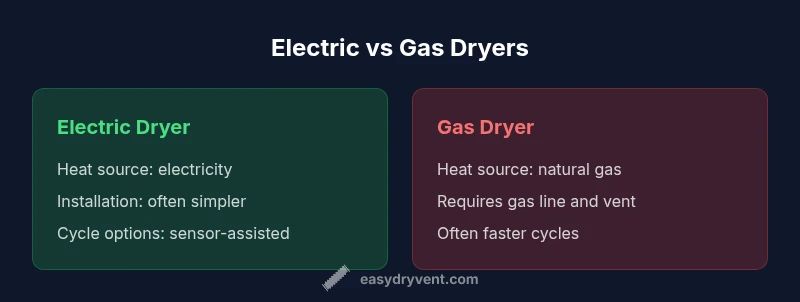
Electric and gas dryers operate on the same basic principle: heat and airflow transform damp clothes into dry garments. An electric dryer uses resistance coils to generate heat, paired with a blower that moves air through the drum and out the vent. A gas dryer relies on a burner to create heat that is transferred to the air circulating within the drum. In both cases, moisture is removed by venting hot, humid air outside. Modern dryers also include sensors that detect moisture and temperature, automatically adjusting cycle duration to optimize energy use and fabric care. The key distinction is the heat source: electricity versus natural gas. This difference can influence startup costs, installation requirements, cycle times, and long-term operating expenses. Choosing between them should consider the home’s existing utility infrastructure and energy pricing in your region.
Installation and venting differences
Installation and venting requirements create a practical venn diagram for gas versus electric models. Electric dryers typically require a dedicated 240-volt circuit and a compatible outlet, plus venting to the outdoors. Gas dryers require a gas line hookup, a vent for exhaust, and adherence to local building and safety codes. In many homes, the electrical infrastructure is simpler to upgrade than installing a gas line, especially in older residences. When planning venting, use appropriately rated ductwork and ensure a vent hood that escapes to the exterior with minimal bends to reduce lint buildup and improve efficiency. Clearances around the appliance matter for service access and safety. If your laundry room is tight, verify installation space and vent routing with the manufacturer’s guidelines and local codes.
Drying performance and cycle times
Drying performance varies by model and cycle design rather than by heat source alone. Gas models can reach peak heat quickly, which can shave some cycle time on heavy or bulky loads. Electric models may take longer per cycle but can offer very consistent performance, especially with modern moisture sensors and auto-dry settings. The real-world difference often depends on drum size, insulation, and sensor accuracy. If you frequently dry large or heavy items, a gas unit may show modest time savings, but top-tier electric machines with smart sensors can deliver comparable results for most loads. When evaluating options, look for sensor-driven cycles, humidity-based drying, and efficient heat management rather than heat source alone.
Operating costs and energy efficiency
Operating costs hinge on local electricity and natural gas prices, as well as how efficiently a given model uses energy. Electricity price volatility means electric dryers may be cheaper in regions with low rates, but more expensive where power is costly. Gas priceswax and the efficiency of the burner play a significant role in long-term costs for gas dryers. Modern electric models with high-efficiency motors and smart sensors can offset some energy costs, while efficient gas models with sealed heat exchangers can remain cost-effective in regions with cheap gas. When comparing, consider projected annual energy use based on your typical load volume and the energy rates in your area.
Safety considerations and maintenance
Gas dryers carry a combustion risk and require proper venting to remove exhaust products, including the potential for carbon monoxide buildup if venting is blocked or damaged. Regular vent cleaning, lint trap maintenance, and professional servicing are crucial for any dryer but particularly important for gas units. Electric dryers eliminate combustion byproducts but still pose electrical and fire hazards if lint accumulates or vents become blocked. Routine drum seal checks, lint trap cleaning, and vent inspection help maintain safety and efficiency for both heat sources. Always follow manufacturer guidelines and local codes to ensure safe operation.
Cost considerations and long-term value
Upfront costs can differ notably between electric and gas dryers. Electric models generally have lower installation complexity and may require only electrical upgrades, while gas models necessitate gas line work, venting, and sometimes code-related permits. Over the life of the appliance, operating costs depend on energy prices, cycle frequency, and efficiency ratings. If you already possess a ready 240V circuit and no gas line, electric can offer easier maintenance and simpler future upgrades. If your household runs many high-volume cycles and local gas rates are favorable, a gas dryer could yield savings over the long term. Assess both installation costs and energy costs when evaluating total cost of ownership.
Practical decision guide: electric vs gas in real homes
For most homes without existing gas infrastructure, electric dryers present a straightforward, safe, and reliable option. Gas dryers tend to appeal to households with high drying demands, existing gas connections, or strong preference for quicker cycles in certain climates. Run a side-by-side checklist: installation feasibility, energy price in your area, expected load sizes, and the importance of cycle speed. This practical guide helps homeowners align a choice with daily routines and home infrastructure. In regions with stable electricity prices and scarce gas supply, electric often wins on simplicity and reliability.
Practical steps to switch or choose a dryer
- Inventory your space: confirm outlet type, panel capacity, and available venting.
- Check energy costs: compare local electricity and natural gas prices to estimate annual operating costs.
- Evaluate models: prioritize moisture sensors, load sensors, and cycle options rather than heat source alone.
- Confirm installation requirements: verify 240V circuit availability for electric, or gas line and vent clearance for gas.
- Plan for professional help: hire licensed technicians for electrical upgrades or gas line work and vent installation.
- Review warranties and maintenance needs: consider costs for vent cleaning, lint filter care, and routine servicing.
- Make a final decision: weigh installation complexity, operating costs, and family laundry patterns to choose Electric or Gas.
This can help homeowners move from decision to installation with confidence.
Environmental impact and emissions
Environmental considerations differ between electric and gas dryers. Electric dryers rely on the regional electricity mix, which may include low- to high-emission energy sources. Gas dryers emit combustion byproducts during operation, including CO, though proper venting mitigates exposure. If your home prioritizes low emissions and you have access to a clean electricity grid, electric may be the better environmental choice. Conversely, in areas with low natural gas prices and high hot-water or heating demands, gas could be a favorable option when paired with efficient venting and modern burners. The best environmental choice varies by location and energy sourcing.
Comparison
| Feature | Electric Dryer | Gas Dryer |
|---|---|---|
| Energy Source | Electricity | Natural gas |
| Typical Drying Speed | Depends on model; sensors optimize cycles | Often faster cycles due to rapid heat generation |
| Installation Requirements | Dedicated 240V circuit; exterior vent | Gas line hookup + vent; code-compliant installation |
| Ventilation | Exterior venting required | Exterior venting required (combustion exhaust) |
| Maintenance | Lint trap, drum, and electrical components | Burner, heat exchanger, and vent system maintenance |
| Operating Costs Factors | Electric rate; cycle efficiency | Gas price; burner efficiency; vent efficiency |
| Environmental Impact | Grid-based emissions; varies by region | Combustion emissions associated with gas use |
| Safety Considerations | Electrical safety, fire risk if lint accumulates | CO risk from combustion; proper gas line safety |
The Good
- No gas line required for most homes, simplifying installation
- Lower risk of combustion-related hazards in the living space
- Broad compatibility with standard 240V circuit and common laundry spaces
- Modern electric models with smart sensors can match gas performance for many loads
- Easier regulatory path in retrofit projects
Negatives
- Electric dryers may incur higher operating costs in regions with expensive electricity
- Gas dryers require a gas line installation and proper venting, which can raise upfront costs
- Gas dryers introduce combustion byproducts and CO risk if venting is compromised
Electric dryers are the safer default choice for most homes
For households without existing gas infrastructure, electric models offer easier installation, lower upfront complexity, and robust performance. If you frequently run large, high-volume loads or live in a climate where gas is inexpensive and readily available, a gas dryer may offer cost advantages—evaluate local energy prices with Easy DryVent.
Common Questions
Can I convert a gas dryer to electric?
Converting a gas dryer to electric is generally not practical. Most homeowners replace the appliance to ensure electrical safety and reliable performance. A licensed professional should evaluate the feasibility only if a model conversion kit exists for a specific unit, which is uncommon.
You’ll usually replace the unit—gas-to-electric conversions aren’t common or straightforward.
Is electric cheaper to operate than gas in my area?
Energy costs vary by region. In many places electricity is more expensive per unit than natural gas, but electric dryers can be highly efficient with modern sensors. Compare local rates and estimated annual usage to determine which is cheaper for your home.
Prices vary by region; calculate your annual use and local rates to see which is cheaper.
Do electric dryers dry clothes slower than gas?
Gas dryers can heat faster, which may shorten cycles for certain loads. However, modern electric models with moisture sensors and efficient drums can match or closely approximate gas performance for everyday laundry. The actual difference often depends on model design and load characteristics.
Gas can be faster sometimes, but good electric models often catch up for typical loads.
Is venting required for electric dryers?
Yes. Electric dryers require venting to the outdoors to remove heat and moisture, just like gas models. Some ventless electric options exist, but they are less common and often have trade-offs in cost or drying performance.
Electric or not, you usually vent outside to remove moisture.
What safety concerns differentiate gas dryers from electric ones?
Gas dryers pose carbon monoxide and gas-leak risks if not ventilated or maintained properly. Electric dryers primarily involve electrical safety and fire risk from lint buildup. Regular vent cleaning and adherence to codes are essential for both.
Gas units need venting and maintenance to prevent CO risks; electric units require electrical safety and lint care.
What upfront costs should I expect when switching?
Upfront costs depend on installation needs. Electric upgrades may involve panel or outlet work, while gas installations require gas line hookups and permits. Compare total upfront cost with expected energy savings over time to determine value.
Upfront costs vary—electric tends to be simpler if you already have the right outlet.
Key Points
- Assess your home’s hookups before choosing a dryer
- Electric is typically easier to install and maintain
- Gas may offer faster cycles and lower long-term energy costs in the right conditions
- Modern electric models with sensors can match gas performance for everyday use
- Prioritize energy-efficient features and proper venting in any model