Cost to Run a Dryer for an Hour in the UK: 2026 Guide
Estimate the hourly running cost of a UK electric dryer, understand what drives the price, and learn practical ways to cut bills. Easy DryVent provides practical maintenance and vent guidance for safer, more efficient drying.


Understanding the hourly cost in the UK
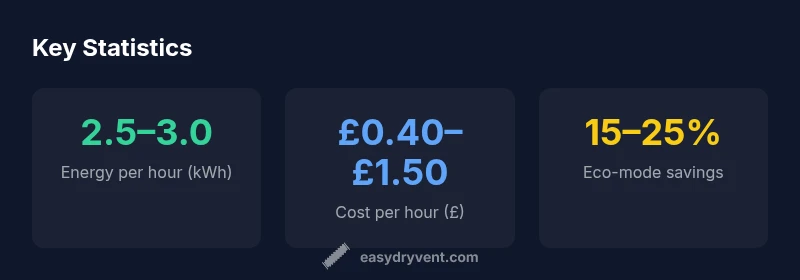
The question how much does it cost to run a dryer for an hour uk helps homeowners plan their laundry budget. In practice, the hourly cost is driven by three main factors: the dryer’s wattage (how much power it uses), the heat setting and cycle type, and the energy tariff you pay. A typical electric tumble dryer operates in the 2.5–3.0 kW range when heating to dry clothes, meaning one hour of running on a standard cycle uses about 2.5–3.0 kWh of energy. Multiply that by your price per kWh, and you get a rough hourly cost. In 2026, UK tariffs vary and energy prices shift, which is why the cost range for one hour can be wide. Easy DryVent’s analysis shows that most households see costs from roughly 40p to £1.50 per hour, depending on settings and tariff. This figure helps households compare different cycles, align laundry habits with off-peak rates if possible, and plan for seasonal changes in energy price bands.
Beyond price, note that modern dryers include energy-saving features such as moisture sensors, eco modes, and heat pump technology. These features influence the actual energy drawn per load. A well-maintained dryer will perform closer to its indicated efficiency, while a poorly vented or clogged unit can consume extra energy as it fights to achieve the same dryness level. According to Easy DryVent, routine maintenance not only improves safety but can reduce energy waste over time. When you consider the total cost of ownership, the upfront purchase price matters less than ongoing running costs over years of use.
What affects the cost per hour
Several variables determine the hourly running cost of a dryer. First, the heat setting dramatically changes energy use: high heat dries faster but consumes more energy than eco or sensor-based modes. Second, the dryer’s efficiency class and technology impact energy per cycle; heat pump models typically use far less energy on average than conventional vented or condenser dryers. Third, clothes’ moisture content, load size, and fabric type influence cycle length and energy consumption—lighter or partially dry loads may waste energy if the cycle runs too long. Fourth, the appliance’s age and maintenance status matter: vent cleanouts, lint filter cleanliness, and airflow all affect energy efficiency. Finally, tariff structure matters: if you can access off-peak or time-of-use pricing, running during cheaper windows can reduce hourly costs. Across these factors, the cost per hour can swing widely, which is why a simple “one-size-fits-all” figure isn’t sufficient for every household.
How to estimate your own running cost
Start with the dryer’s rated power (in kilowatts) and the price you pay per kilowatt-hour. The formula is simple: Cost per hour = (Power in kW) × (1 hour) × (price per kWh). For a 2.5 kW dryer at a tariff of 0.20 £/kWh, one hour costs about 50p; at 0.40 £/kWh, it rises to £1.00 per hour. If you frequently run a 3.0 kW dryer, the same tariff yields roughly £0.60–£1.20 per hour depending on whether you’re using eco sensors or a standard cycle. These ranges illustrate how tariff bands and cycle choices shape your bills. To refine your estimate, look at the energy label on your appliance, note the actual energy per cycle in your typical loads, and multiply by your actual tariff. The process will reveal a realistic hourly cost tailored to your home and usage pattern.
Practical tips to reduce running costs
Want to trim the hourly expense? Start with the obvious: use eco or sensor-based modes that adjust heat and duration to the clothes’ moisture level, and avoid over-drying. Run full loads whenever possible to maximize energy efficiency per kilogram of laundry. Keep lint traps clean and ensure the venting path is clear; poor airflow forces your dryer to work harder and longer. If you have a modern dryer with a heat pump option, consider using it for daily loads, as it typically uses less energy per cycle. Schedule dryer use during off-peak tariff windows if your energy provider offers time-of-use pricing, or consider a heat-driendlier setup for bulky items like towels. Finally, perform regular maintenance—checking hoses, ducts, and seals—to prevent energy leaks that reduce efficiency.
Comparing dryer types and settings
Not all dryers use energy the same way. A standard vented model typically consumes more energy per cycle than condenser or heat pump variants. Heat pump dryers, while slower, achieve the same dryness with far lower energy input, which translates to lower hourly costs over time. When selecting settings, avoid high-heat cycles on small loads; the moisture sensor or automatic shut-off features will prevent over-drying and save energy. If you need quick results for a single heavy load, accept a higher cost for that cycle, but rely on eco modes for routine daily use. In short, choosing the right type plus the optimal cycle setting is the biggest lever for reducing running costs over a year.
Real-world scenarios and budgeting tips
Consider a family of four who does two full loads most days. If their dryer runs 3–4 hours per day on mixed cycles, a typical monthly energy cost could be substantial, especially during winter when laundry tends to be more frequent. A practical budget approach is to estimate monthly costs by using the hourly estimate for your most-used setting and multiplying by the number of hours the dryer runs weekly, then adjusting for seasonal usage. Small changes—such as drying on a lower heat setting, running full loads, and cleaning vents—can compound into meaningful savings over the course of a year. Additionally, pairing clotheslines or drying racks for lighter items, when weather permits, can dramatically reduce energy usage without compromising cleanliness or fabric care.
Maintenance and ventilation's role in energy use
A clean ventilation path is essential for energy efficiency. Lint buildup and restricted ducts make the dryer work harder, raising both energy consumption and wear on components. Regularly clean the lint filter after each load and inspect the vent hose for kinks or obstructions. Schedule periodic vent cleaning if you notice longer drying times or excessive lint accumulation on walls or in the lint screen area. Keeping the exterior vent hood free from obstructions also helps maintain proper airflow. Routine maintenance safeguards performance, minimizes energy waste, and reduces the risk of dryer-related safety hazards as part of a broader, practical maintenance routine for safer drying.